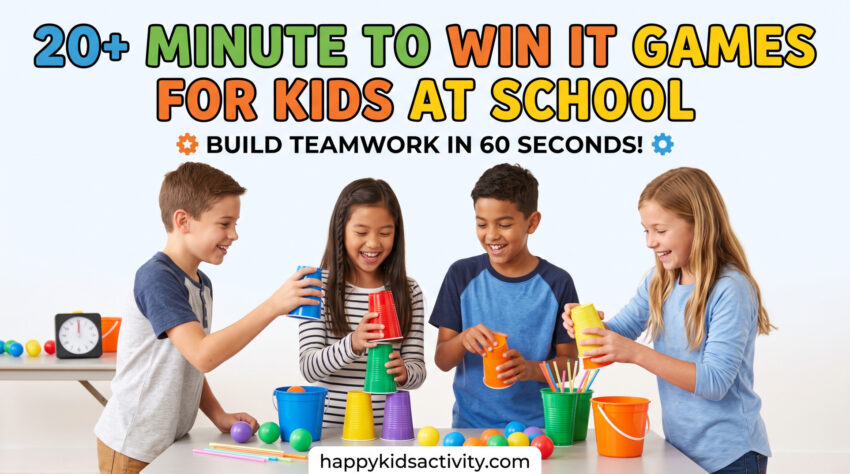
Minute to Win It games for kids at school are 60 second challenges played with cheap supplies like plastic cups, ping pong balls, cotton balls, and pencils, and they work in a classroom because one round lasts a minute and setup takes two. The easiest ones to run with a full class are Stack Attack, Junk in the Trunk, Cup Blow, and Speed Eraser, since they involve no food, no water, and no cleanup beyond picking things up off the floor. For kids under 8, swap balloons and small hard candy for pom poms and paper plates, because burst latex balloon pieces and small candies are genuine choking hazards.
The Friday Everything Fell Apart (and Cups Saved It)
The Friday before winter break, our third grade class had 40 minutes left, 24 kids who had each eaten two cupcakes, and a movie that refused to load. The teacher looked at me. I had a sleeve of red Solo cups in my trunk from a birthday party.
Twenty minutes later the room was almost silent, because 24 kids were hunched over cup pyramids, breathing through their mouths, trying not to knock them over. Then one boy strapped a tissue box to his waist and the whole class lost it.
That is the actual appeal here. One minute per round, supplies you already own, and buy in from kids who normally announce that everything is boring.
I’ve since run these at field day, at two class parties, and at home on a rainy Saturday. Some of them are much messier than they look on TV, a few need an allergy check before you even open the bag, and one of them I changed on purpose because I didn’t like the way it was set up. All of that is below, game by game.
We’re heading into the 2026 to 2027 school year, so indoor recess season is coming. This is the list I keep in my phone notes for exactly that.
Jump to Any Section
Use these links to jump straight to what you need. On mobile the menu stays with you as you scroll, so you can bounce between the supply list and the games without losing your place.
- The One Box You Should Actually Pack
- Pick Fast: Minute to Win It Games by Age, Mess Level, and Time
- Minute to Win It Games for Kids at School
- How to Run Minute to Win It Games for Kids at School Without Losing the Room
- Safety, Allergies, and the One Game I Changed
- Common Mistakes to Avoid
- Read Next
- Frequently Asked Questions
- Conclusion
The One Box You Should Actually Pack
You do not need 23 sets of supplies. One shoebox and a few zip bags covers almost every game on this list, and most of it is already in your house or the school supply closet.
| Item | Where I get it | Free or cheaper swap |
| Plastic cups (2 sleeves) | Dollar Tree party aisle | Ask families to send in clean yogurt or applesauce cups |
| Ping pong balls (30 to 60) | Bulk pack online is cheapest per ball | Foil balls, pom poms, or wadded scrap paper |
| Cotton balls (1 bag) | Dollar Tree or the drugstore | Torn tissue paper squished into balls |
| Balloons | Dollar Tree | Paper plates or one beach ball, which is also the safer pick under age 8 |
| Empty tissue boxes | Free, ask families and the front office | Empty cereal box with a hole cut in the bottom |
| Pantyhose or knee highs | Dollar Tree | A long tube sock, which is what I use now |
| Unsharpened pencils with fresh erasers | School supply closet | The box nobody has sharpened yet |
| Drinking straws | Cafeteria or Dollar Tree | Cut paper straws in half to double your count |
| Pennies or small coins | Car console and the change jar | Plastic bingo chips or flat metal washers |
| Ice cube tray | Dollar Tree | Egg carton, and the bigger cups are easier for little hands |
| Single ply toilet paper | Ask the custodian first, seriously | Leftover crepe streamers from a birthday party |
| A timer the whole room can see | Free countdown at Online-Stopwatch.com on the smartboard | Phone timer plus one kid calling out the seconds |
| Painter’s tape | Hardware store | Masking tape from the art cart |
| Gallon zip bags | Grocery store | Paper lunch bags labeled per station |
| Baby wipes and a trash bag | Grocery store | Damp paper towels and the classroom bin |
Sort each game into its own labeled bag before you walk in. It sounds fussy. It is the single thing that separates a smooth 30 minutes from you digging through a box while 24 kids get loud.
Practical note: Before you plan any food based game (Cookie Face, Oreo Stack, Suck It Up, Noodle Pick Up, Marshmallow Toss), clear it with the teacher and check the classroom allergy list. Plenty of districts do not allow outside food in classrooms at all, and one nut, dairy, wheat, or gelatin allergy can rule out a game entirely. The non food versions are just as fun, so ask first and plan around the answer instead of showing up with cookies.
Pick Fast: Minute to Win It Games by Age, Mess Level, and Time
If you have five minutes before the bell, read this table and pick two games. That is usually all you need.
| Game | Ages it actually works for | Mess | Prep time | Main thing to watch |
| 1. Cookie Face | 5+ seated | Medium, crumbs | 2 min | Food allergies, sit upright to eat |
| 2. Stack Attack | 7+ (use 21 cups under 7) | None | 1 min | Cups roll under desks |
| 3. Junk in the Trunk | 5+ | Low | 10 min, boxes need cutting | Slits tear, balls scatter |
| 4. Noodle Pick Up | 8+ | Medium, snapped pasta | 3 min | Dry pasta in the mouth, stay seated |
| 5. Defying Gravity | 4+ | None | 5 min inflating | Latex allergy, burst pieces |
| 6. Penny Tower | 7+ | None | 2 min | Coins near toddlers, wash hands |
| 7. Chopstick Race | 6+ | Low | 2 min | Pointed ends, no poking |
| 8. Paper Dragon | 5+ | High, paper everywhere | 1 min | Cleanup is longer than the game |
| 9. Elephant March | 6+ | None | 5 min | Do not put anything over a child’s head, see my swap |
| 10. Ping Pong Bounce | 7+ | None, but chaos | 2 min | Needs a hard smooth table, balls escape |
| 11. Mummy Wrap | 5+ | High, paper | 1 min | Never wrap the face or neck |
| 12. Oreo Stack | 6+ | Medium | 1 min | Food allergies, sticky hands |
| 13. Suck It Up | 7+ | Low | 2 min | Inhaling candy, use pom poms instead |
| 14. Balloon Pop | 8+ | Low but very loud | 10 min inflating | Latex, fragments, noise sensitivity |
| 15. Water Bottle Flip | 8+ | Low, small spills | 2 min | Caps tight, wet floor |
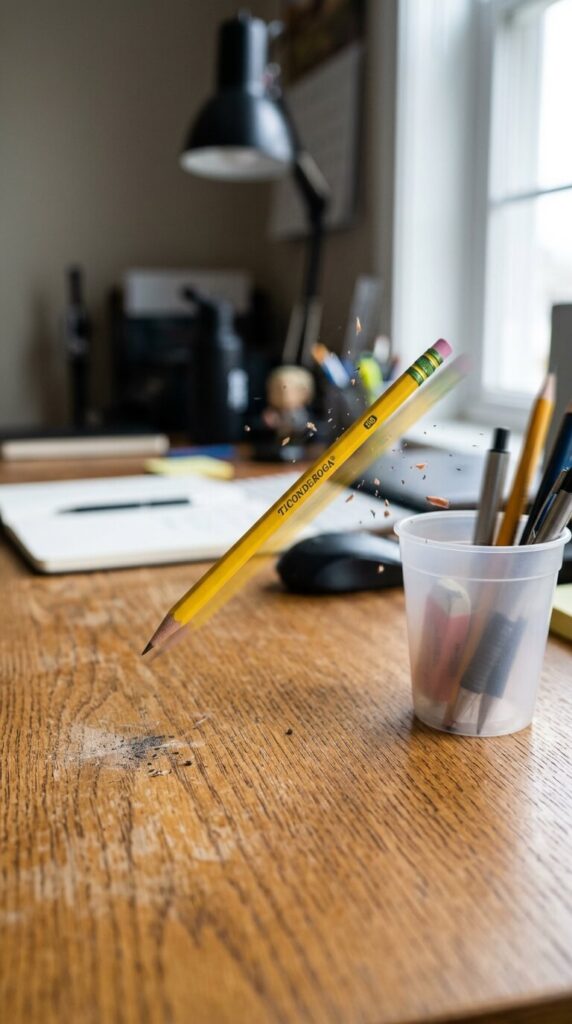
| 16. Speed Eraser | 8+ | None | 1 min | Unsharpened pencils only |
| 17. Marshmallow Toss | 5+ | Medium, sticky floor | 1 min | Gelatin, no eating floor marshmallows |
| 18. Nose Dive | 6+ | Medium, jelly and fuzz | 3 min | Individual dabs, keep clear of nostrils |
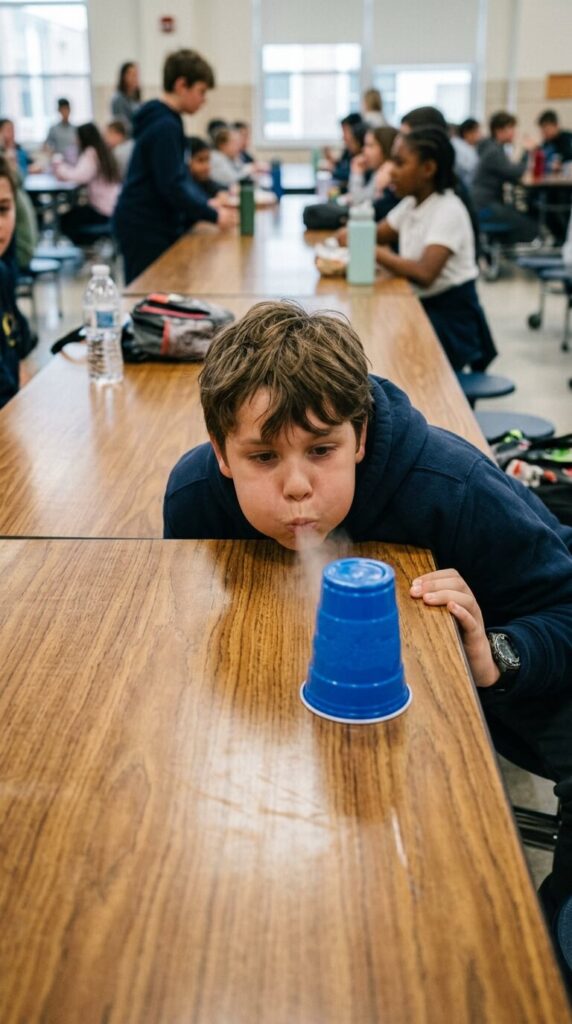
| 19. Cup Blow | 4+ | None | 1 min | Dry table, wipe it after |
| 20. Penny Stack | 7+ | None | 2 min | Coins, needs a quiet room |
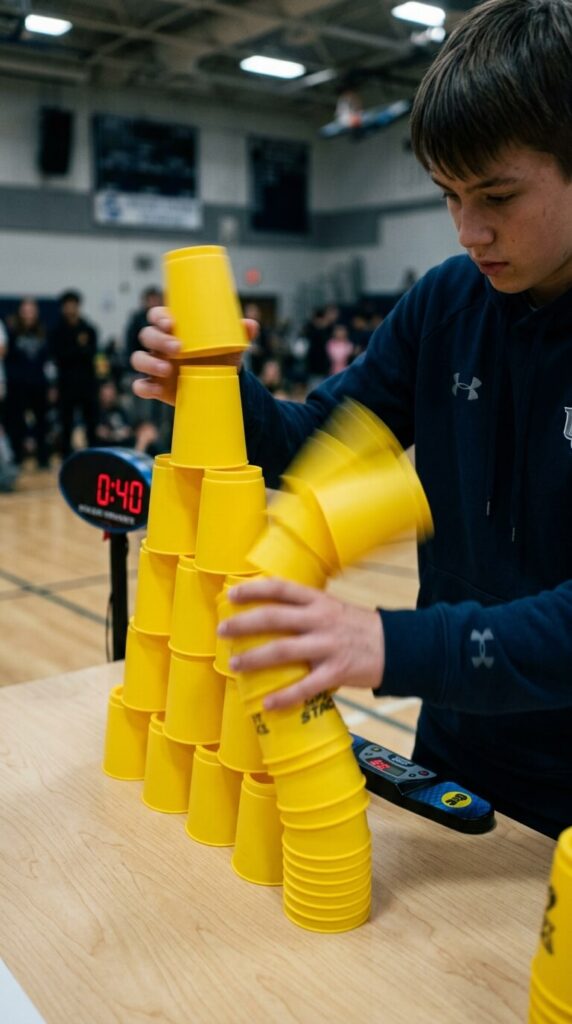
| 21. Cup Pyramid | 6+ | None | 1 min | Cups roll, count them back |
| 22. Spoon Frog | 7+ | Low | 2 min | Nothing hard, nobody in the flight path |
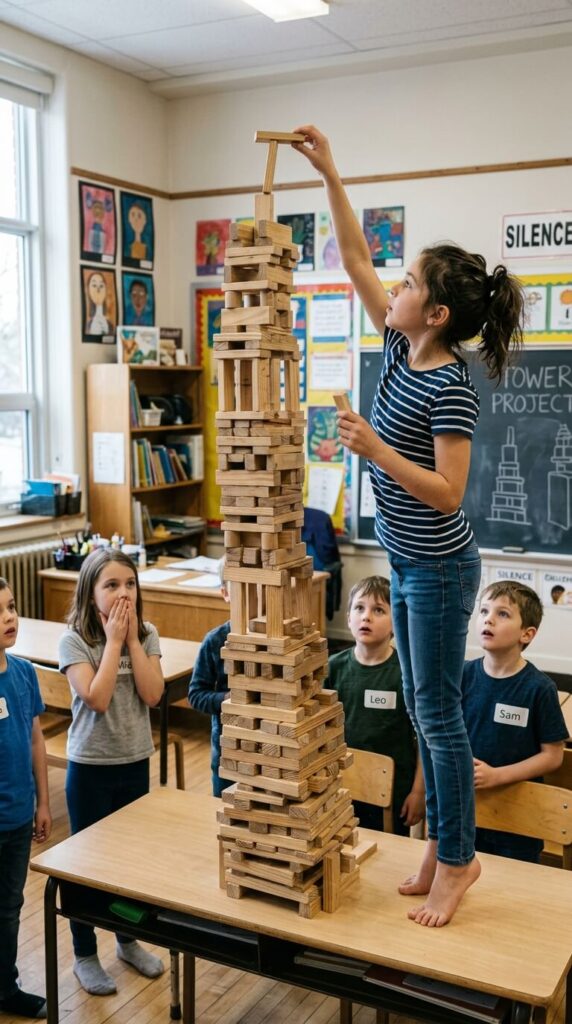
| 23. Stack It Up | 4+ | None | 2 min | Blocks land on toes |
Save this table for later. It is the part you will want on your phone when a teacher texts you at 8pm asking if you can run something tomorrow.
Minute to Win It Games for Kids at School
Each game below has the ages it truly works for, a real time estimate, how messy it gets, and the thing that goes wrong the first time you run it. Read the “Skip it if” line before you commit, because a game that bombs with your group is worse than no game at all.
1. Cookie Face

Ages 5+ (seated) · Prep 2 min · Play 60 sec · Cleanup 2 min · Mess: medium, crumbs on shirts and floor · Supervision: hands on the whole time
What You Need
- Oreos or any flat sandwich cookie. Oreos beat chocolate chip cookies here because the flat, slightly gritty surface grips the natural oil on a forehead instead of skating off it.
- Baby wipes for foreheads and hands.
- One chair per player.
- Budget swap: store brand sandwich cookies from the dollar aisle work exactly the same. For a no food version, use a clean plastic milk jug cap and have kids move it from forehead to chin and drop it into a cup.
How to Play
- Check the allergy list, then wipe each player’s forehead so it is clean and dry.
- Have players sit and tip their heads back so they are looking at the ceiling.
- You place the cookie on the center of the forehead. Kids doing this themselves takes twice as long.
- Start the timer. Faces only, no hands. Nose scrunching, eyebrow wiggling, cheek stretching.
- If the cookie hits the floor, it goes in the trash and they restart with a new one.
- When the cookie reaches the mouth, the player sits upright before biting or swallowing.
Tip: Run this in the morning. By afternoon, especially after recess, foreheads are warm and damp and the cookie slides off in about three seconds, which frustrates everyone.
Educational and Developmental Value
This is the best icebreaker on the list because nobody can look cool doing it, which levels the room fast. It builds facial muscle control and a surprising amount of patience, and it gets a whole class laughing at each other in a way that is warm rather than mean.
Safety wise, do not let a child chew or swallow while their head is tilted back. That is how food goes down the wrong way. Make sitting up a rule from the start, not an afterthought.
Skip it if: you have food allergies in the room, a child who dislikes things touching their face, or kids who wear glasses and won’t take them off. Also skip it if nobody nearby can wash their hands afterward.
2. Stack Attack
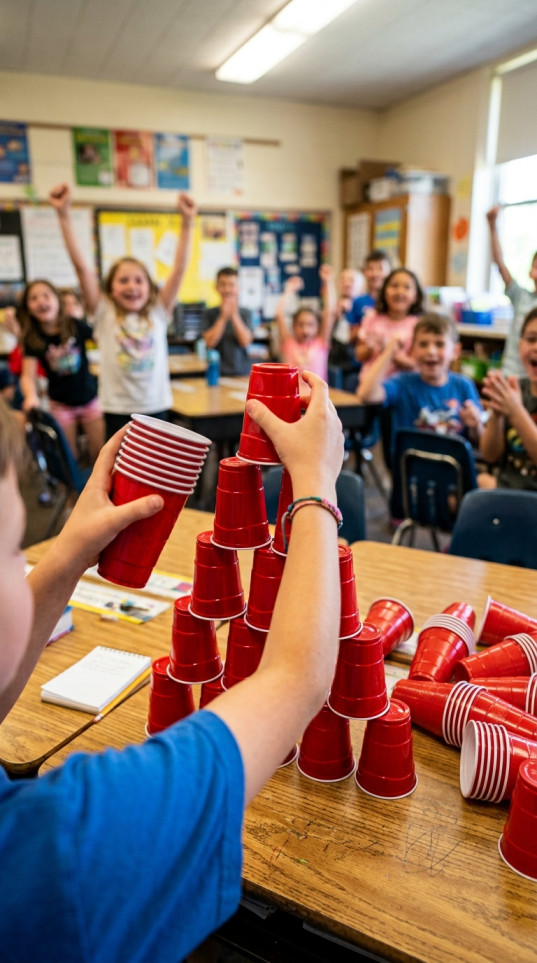
2. Stack Attack
Ages 7+ (use the 21 cup version under 7) · Prep 1 min · Play 60 sec · Cleanup 3 min · Mess: none · Supervision: check in every few minutes
What You Need
- 36 sturdy party cups per player, the 16 ounce kind. Flimsy 9 ounce water cups buckle the moment a second row goes on.
- A flat desk or table per player.
- Budget swap: Dollar Tree party cups do fine. Speed Stacks are the official sport stacking cups and they slide beautifully, but they cost real money and you do not need them for this.
How to Play
- Give each player one stack of 36 cups.
- On go, they unstack and build a pyramid with a base of eight cups, tapering to one at the top.
- The pyramid has to stand on its own for three seconds.
- Then they collapse it by sliding cups diagonally into each other until it is a single stack again.
- Fastest complete cycle under 60 seconds wins.
Tip: For anyone under about third grade, drop to 21 cups and a base of six. The 36 cup version almost never finishes inside a minute for younger kids, and watching the timer run out on an unfinished pyramid over and over is deflating.
Educational and Developmental Value
This is the one that goes quiet, and the silence is the tell that it is working. It hits bilateral coordination hard, since both hands have to move at once doing different jobs, and it is genuinely good practice for fine motor skills, focus, and holding it together under time pressure.
The first time out, expect the collapse phase to be the wall. Kids build the pyramid fine, then grab handfuls of cups and jam them, and the stack splays. Show them the diagonal slide once, slowly, before you start the clock.
Skip it if: your kids are done with sitting still, or you cannot spare the three minutes to count cups back into sleeves. Loose cups vanish under desks and you will be short next time.
3. Junk in the Trunk
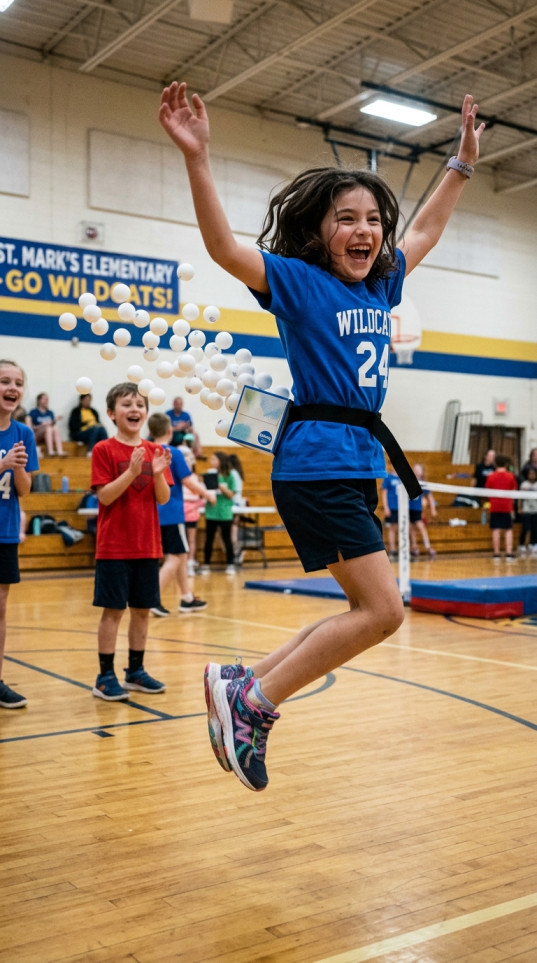
Ages 5+ · Prep 10 min the night before · Play 60 sec · Cleanup 3 min · Mess: low · Supervision: check in every few minutes
What You Need
- One empty rectangular tissue box per player.
- A belt, jump rope, or length of thick string per box.
- 8 ping pong balls per box.
- Packing tape, which is not optional.
- Budget swap: an empty cereal box with a hand sized hole cut in one face works, and pom poms replace ping pong balls for free.
How to Play
- Cut two slits in the bottom of the box and thread the belt or rope through. Tape around every slit, because unreinforced cardboard tears on the second kid.
- Widen the tissue box opening a little so balls can actually escape.
- Load 8 balls in and strap the box low across the hips, not up at the waist. Too high and the box tips forward and dumps everything at once.
- On go, players jump, shake, and wiggle to get every ball out. No hands.
- First player empty, or the most balls out at 60 seconds, wins.
Tip: Tape a square on the floor with painter’s tape and keep each player inside it. Then assign two kids as ball retrievers per round or you will spend the rest of the period on your knees fishing balls out from under bookshelves.
Educational and Developmental Value
Kids love this one because it looks ridiculous and there is no skill barrier, so the shy kid and the athletic kid are on equal footing. It gets a sluggish room moving and burns off the jitters before a test or after a long stretch of seat work.
It also teaches something real about body mechanics. The kids who win figure out that fast little hip shakes beat big wild jumping, and you can watch them work that out mid round.
Practical note: ping pong balls are smaller than 1.75 inches across, which the Consumer Product Safety Commission treats as a choking hazard for children under 3. If you are running this at a family event with toddlers around, count the balls back into the bag before you move on.
Skip it if: the room is packed tight with desks, or you have a child who does not want anything strapped to their body.
4. Noodle Pick Up

Ages 8+ · Prep 3 min · Play 60 sec · Cleanup 3 min · Mess: medium, snapped pasta on the floor · Supervision: hands on, stay seated
What You Need
- Uncooked spaghetti, a strand per player plus spares.
- A box of penne. Barilla penne has a nice wide opening. For younger players use rigatoni or ziti, the holes are bigger and far more forgiving.
- One empty bowl per player.
- Budget swap: any store brand pasta. This is a two dollar game.
How to Play
- Break each spaghetti strand down to about six inches. Long strands poke and they snap constantly.
- Players sit at a table, hands behind their backs, and hold the spaghetti between their front teeth. Lips relaxed, light pressure. Clamping down is what breaks it.
- Scatter penne on the table in front of each player.
- On go, they lean over and thread penne onto the spaghetti, then tip their head to slide it into the bowl.
- Most penne in the bowl at 60 seconds wins.
Tip: Have kids stay seated for the whole round, no leaning off the chair, no standing. Dry pasta in the mouth plus a bumped elbow is how a kid ends up with a scratched palate.
Educational and Developmental Value
This is the most delicate game on the list and it separates the patient kids from the fast ones, which is worth watching. It demands neck control, steady breathing, and real visual precision, and the room gets tense in a good way as people get to four or five noodles.
Pasta is wheat, so this is off the table with a wheat or gluten allergy in the room. Sweep after, since broken dry pasta on a hard floor is slippery.
Skip it if: your group is under 8, wiggly, or in the middle of losing baby teeth. A loose front tooth makes this genuinely uncomfortable.
5. Defying Gravity

Ages 4+ with adult eyes on it · Prep 5 min inflating · Play 60 sec · Cleanup 2 min · Mess: none · Supervision: constant, see the balloon note
What You Need
- Three inflated latex balloons per player, all roughly the same size.
- A hand pump if you have one.
- Budget swap: for kids under 8, use three paper plates instead, or one beach ball. Same challenge, none of the balloon risk.
How to Play
- Inflate three balloons per player and tie them off. A pump gives you even sizes, which keeps it fair.
- Players stand in their own space, arm span apart.
- On go, they keep all three balloons off the floor using hands, arms, shoulders, or heads.
- One balloon touches down and that round is over for them.
- Last player with all three up wins.
Tip: Balloons you blow up by mouth go soft and drift sideways in a way that pump inflated ones do not, so if you are mouth inflating, do it right before you play, not the night before.
Educational and Developmental Value
For visual tracking and reaction speed, this beats anything else here, because the balloons drift apart on purpose and force kids to plan two moves ahead. Little kids find it magic. Older kids get competitive about it fast.
Practical note: The Consumer Product Safety Commission warns that children under 8 can choke or suffocate on uninflated balloons and on pieces of burst balloons. Balloons cause more choking deaths in children than any other toy. So keep a grocery bag in your hand, pick up every scrap the second one pops, and never hand a deflated balloon to a young child. Also ask about latex allergies before the bag comes out.
Skip it if: you have a latex allergy in the group, a low ceiling with fans, or kids under 8 without an adult per small group. Use the paper plate version instead.
6. Penny Tower

What You Need
Ages 7+ · Prep 2 min · Play 60 sec · Cleanup 2 min · Mess: none · Supervision: light, plus hand washing after
What You Need
- A jar of pennies, enough for each player to have a pile of 50 or more.
- A flat, solid table.
- An index card or sheet of paper per player.
- Budget swap: plastic bingo chips from Dollar Tree, or flat metal washers from the hardware store. Both stack better than worn pennies and neither one is filthy.
How to Play
- Put a sheet of paper under each player’s building spot. Coins slide on bare laminate and the paper stops that instantly.
- Give each player a pile of coins and assign a building hand. The other hand stays flat on the table.
- On go, they stack one vertical tower, one coin at a time.
- If it falls, they rebuild from the base. No restarting the clock.
- Tallest standing tower at 60 seconds wins.
Tip: Spread players out or use separate desks. One kid bumping a shared table takes out four towers at once, and that argument eats five minutes.
Educational and Developmental Value
This is the quiet one, and I use it deliberately after recess when the room needs to come down a few notches. It is precision work: dexterity, breath control, and the specific skill of slowing your own hands down.
The detail nobody expects is breathing. Kids lean in close, exhale onto the tower, and knock it over themselves. Once you point that out, they start holding their breath at the top, and their towers get noticeably taller.
Skip it if: there are toddlers or younger siblings in the room, since loose coins are a choking hazard for kids under 3. Also skip it with a group that cannot handle rebuilding from zero without melting down.
7. Chopstick Race
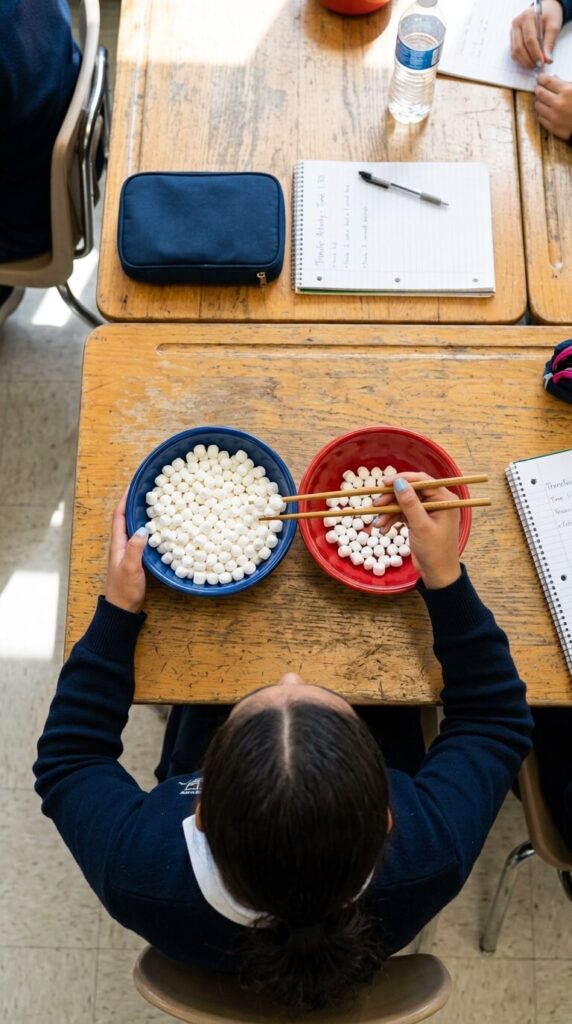
Ages 6+ · Prep 2 min · Play 60 sec · Cleanup 2 min · Mess: low · Supervision: check in every few minutes
What You Need
- One pair of chopsticks per player.
- Cotton balls to start with, mini marshmallows for a harder round.
- Two bowls per player.
- Budget swap: takeout chopsticks you already have in a drawer. For younger kids, training chopsticks like Edison Chopsticks help a lot, or rubber band a rolled paper wedge between the tops of a regular pair to make them spring open.
How to Play
- Set two bowls in front of each player, left one full, right one empty.
- Show the grip once. One stick rests still in the hand, the top stick does the moving.
- On go, players move objects one at a time from the full bowl to the empty one.
- Anything dropped on the table stays there. No hands.
- Most objects transferred in 60 seconds wins.
Tip: Start with cotton balls, always. They squish slightly and grip, so even a first timer gets ten or more. Move to mini marshmallows for round two and skip anything smooth like marbles or dry beans, which is just frustration with a timer on it.
Educational and Developmental Value
This is the strongest pincer grip and hand strength workout on the list, and it happens to open the door to a bit of cultural conversation if you want to take it there. Kids who have never used chopsticks improve visibly within two rounds, which feels good to them.
Blunt ends only, no pointed decorative pairs, and a firm rule about not pointing them at anyone. That is the whole safety story here.
Skip it if: you have kids with hand strength or coordination differences who would find this exposing in front of a group. Pair them up as a team of two instead and let them share a turn.
8. Paper Dragon
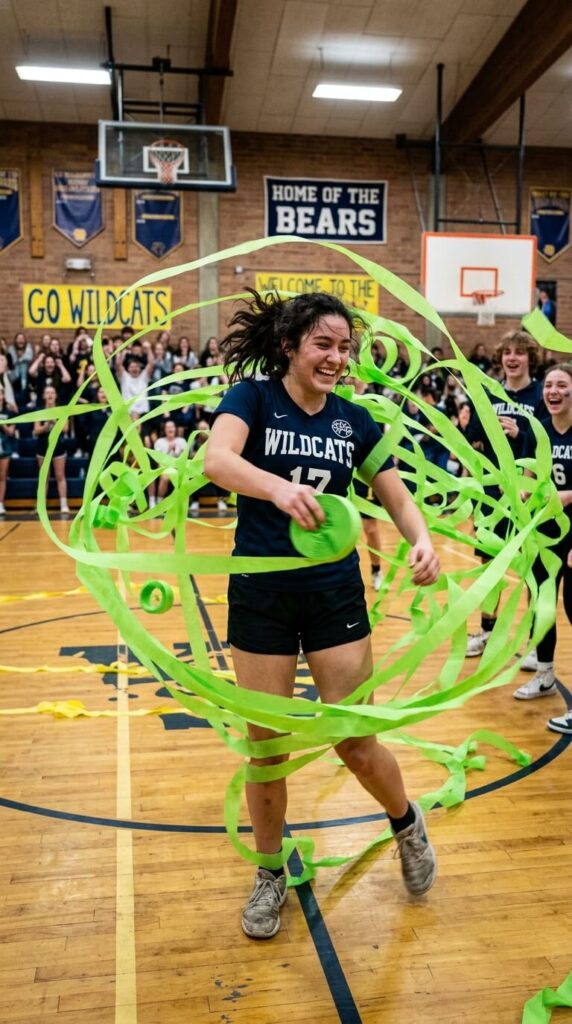
Ages 5+ · Prep 1 min · Play 60 sec · Cleanup 5 min, no shortcuts · Mess: high · Supervision: check in every few minutes
What You Need
- One fresh roll of crepe paper streamer per player.
- Open floor space, arm span apart.
- A plastic grocery bag per player for cleanup.
- Budget swap: leftover streamers from a birthday, or a roll of cheap toilet paper, which behaves almost the same and costs less.
How to Play
- Players stand well apart with the roll in one hand and the loose end pinched in the other.
- On go, they unroll the streamer with a hand over hand motion, spinning the arm in a wide circle.
- The goal is an empty cardboard center on the floor before 60 seconds.
- Ripping the paper is allowed. Skipping ahead by throwing the roll is not.
Tip: Hand out grocery bags and run cleanup as a second 60 second round, “most paper in the bag wins.” It sounds like a trick and it completely works. Save the paper for papier mache later instead of binning it.
Educational and Developmental Value
This is pure speed and repetition, and it works as a spectator moment because the room fills with color in seconds. It is a fine choice for the last ten minutes of a party day, in the same slot as the fast paced games you would run at a family get together.
Two honest warnings. One roll unrolls into enough paper to fill a grocery bag, so cleanup takes five times as long as the game. And the arm spinning makes some kids dizzy, so tell them to keep their feet planted and turn the arm, not the body.
Skip it if: you are in a carpeted room with no time to clean up properly, or you have kids who get overstimulated by fast movement and noise. Give those kids the timer job or the “official photographer” job instead. That is a real role, not a consolation prize.
9. Elephant March
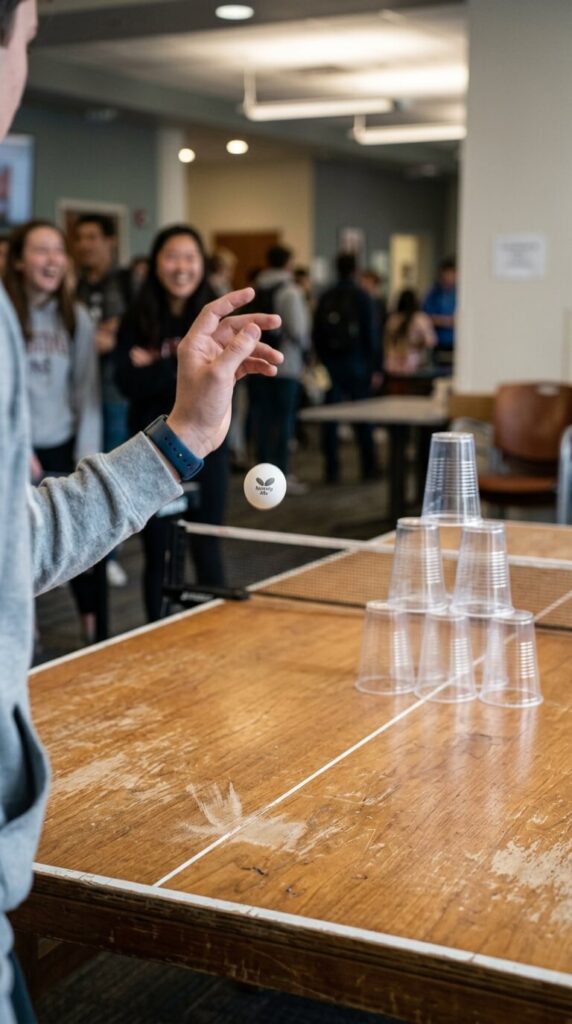
Ages 6+ · Prep 5 min · Play 60 sec · Cleanup 2 min · Mess: none · Supervision: hands on, and read my swap first
What You Need
- One knee high stocking or a long tube sock per player.
- A tennis ball per player.
- 10 to 12 empty plastic water bottles.
- A belt or jump rope per player.
- Budget swap: everything here is already in your house. Bottles come from the recycling bin, and a tube sock replaces pantyhose for free.
How to Play
- Set two parallel rows of water bottles on the floor about two feet apart to make a lane.
- Drop a tennis ball into the toe of the sock.
- Here is my change: tie the open end of the sock to a belt or jump rope and fasten it around the child’s waist so the ball hangs in front of their hips. I do not put stockings over kids’ heads.
- On go, the player walks the lane swinging their hips to knock over the bottles in their row.
- Most bottles down at 60 seconds wins.
Tip: If you insist on the classic version with the stocking over the head, cut the waistband so it cannot tighten, keep it clear of the neck, stay within arm’s reach, and never share the same stocking between kids. Shared headwear passes head lice around a classroom, which is the fastest way to end your run as the fun parent.
Educational and Developmental Value
The hip swinging version is just as funny to watch and it teaches better body awareness, because kids have to generate momentum from their core and time their steps to it. It is a strong team building moment since everyone in the audience is shouting counts.
Expect the first attempt to be too fast. Kids sprint, the ball flails behind them, and they knock nothing over. The ones who slow down and get a rhythm clear the whole lane. If you want more of this style of big movement play, pool noodle games run on the same idea.
Skip it if: the floor is slick, the lane crosses a walkway, or you have a child with balance or dizziness issues. Let them be the bottle resetter, which is a busy and genuinely important job.
10. Ping Pong Bounce
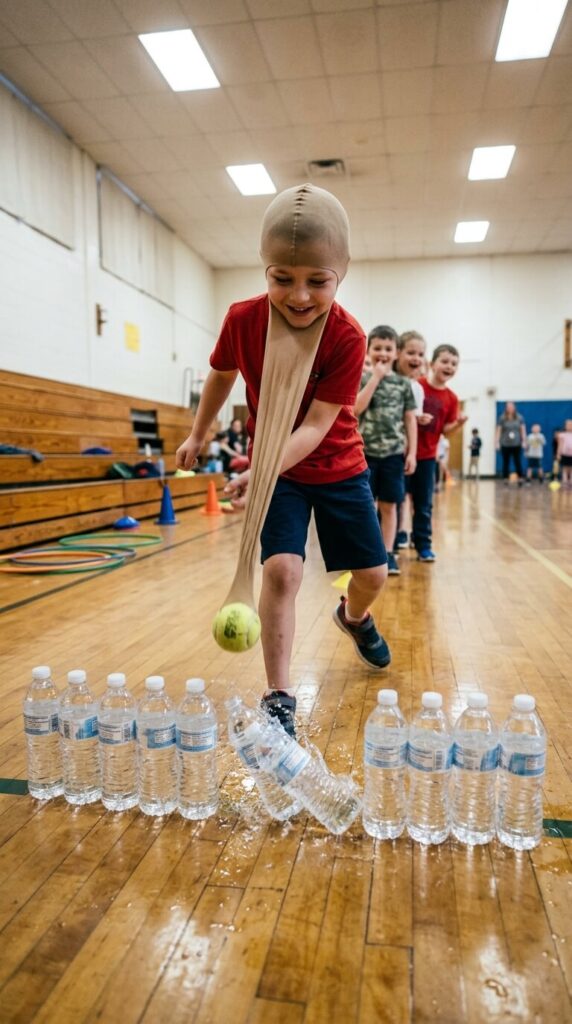
Ages 7+ · Prep 2 min · Play 60 sec · Cleanup 4 min · Mess: none, but the balls go everywhere · Supervision: check in every few minutes
What You Need
- 15 to 20 ping pong balls per player.
- 5 or 6 plastic cups per player.
- A hard, smooth table.
- Painter’s tape.
- Budget swap: foil balls bounce badly, so this is one game where the real ping pong balls matter. A bulk pack lasts years.
How to Play
- Tape a row of cups to the table with rolled loops of painter’s tape underneath. Untaped cups slide and tip on the first hit.
- Push the table against a wall so misses stop instead of rolling across the room.
- Players stand a couple of feet back with a bowl of balls.
- On go, they bounce balls off the table so they ricochet up and land in a cup.
- Most balls resting in cups at 60 seconds wins.
Tip: Test one bounce on your actual table before the kids arrive. Textured cafeteria tabletops absorb the bounce and carpet kills it completely. If the ball does not come back up to chest height, move to a different surface or pick another game.
Educational and Developmental Value
This is the best physics lesson on the list without ever calling it a lesson. Kids adjust their angle and force shot after shot, and by the second round most of them have found a repeatable technique they can explain to you.
The honest cost is retrieval. Twenty balls times six players is a lot of loose balls, so appoint retrievers with a laundry basket and count the balls back in before you move to the next station.
Skip it if: you cannot dedicate one hard table and a wall, or you have a group that will chase balls out the door. It is also a poor fit for a room where a neighboring class is testing, since the sound carries.
11. Mummy Wrap
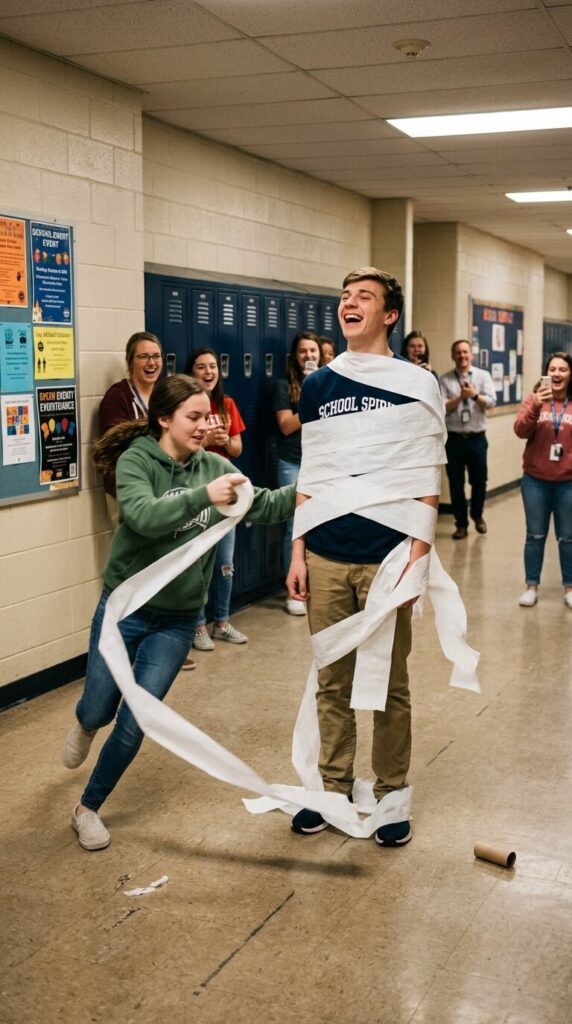
Ages 5+ · Prep 1 min · Play 60 sec · Cleanup 4 min · Mess: high, paper everywhere · Supervision: hands on
What You Need
- One roll of single ply toilet paper per team of two. Cheap and thin tears easily, which is part of the challenge.
- A trash bag.
- Budget swap: crepe streamers, or ask families for leftover party rolls. Ask your custodian before you raid the school bathroom supply.
How to Play
- Split into teams of two, one mummy and one wrapper.
- Set the rule out loud before you start: ankles to shoulders only. Nothing over the face, nothing around the neck.
- On go, the wrapper wraps. The mummy stands still with arms down.
- Have the mummy turn slowly in place while the wrapper holds steady tension. That is the actual winning technique, not sprinting in circles.
- Most complete wrap at 60 seconds wins, then the mummies burst out of the paper into the trash bag.
Tip: The paper always breaks across the shoulder blades. Tell the wrapper to slow their hands as they come up past the waist and to keep the roll close to their partner’s body.
Educational and Developmental Value
For cooperative teamwork this is the clearest one here, because a team that does not communicate physically cannot finish. Kids have to negotiate speed and tension with someone else’s body in about four seconds, and you can hear them problem solving out loud.
The safety line is not negotiable. No wrapping faces, no wrapping necks, and the mummy has to be able to step out of it on their own. If a child is being wrapped too tightly to move, stop the round.
Skip it if: you have a child who is not comfortable being touched or confined, or a group that cannot resist going for the head. Both are common, and both are reasons to pick a different game rather than to referee harder.
12. Oreo Stack

Ages 6+ · Prep 1 min · Play 60 sec · Cleanup 3 min · Mess: medium, crumbs and sticky hands · Supervision: light, plus an allergy check
What You Need
- Two packages of regular Oreos for a small group.
- A paper plate or napkin per player.
- Wipes.
- Budget swap: any flat store brand sandwich cookie. For a no food version, stack dominoes, checkers, or those flat wooden discs from the math closet.
How to Play
- Check allergies, then have everyone wash or sanitize their hands.
- Give each player a plate and a pile of cookies.
- On go, they stack cookies vertically using one hand only. The other hand stays behind their back.
- Touching the tower with the second hand ends their attempt.
- Tallest standing tower at 60 seconds wins, and yes, they can eat one after.
Tip: Use regular Oreos, not Double Stuf. The thicker cream layer rocks and squishes under weight, and towers built with them lean out around eight cookies. Warm hands make it worse, so keep the pack out of a sunny window.
Educational and Developmental Value
Stacking with one hand is a real test of grip control and structural thinking, and the built in snack keeps motivation high with zero prizes needed. Kids learn to rotate each cookie until it seats flat, which is a nice bit of trial and error.
On allergens, Oreos contain wheat and soy, and while they have no milk ingredients they are made on shared equipment with milk, so they are not safe for a serious dairy allergy. Read the package rather than trusting the internet, including me.
Skip it if: food is not allowed in the classroom, or you have any airborne or contact food allergies in the group. Swap to dominoes and the game is exactly as good.
13. Suck It Up

Ages 7+ · Prep 2 min · Play 60 sec · Cleanup 2 min · Mess: low · Supervision: hands on, eyes on every player
What You Need
- Two straws per player, because the tip goes soggy and floppy after about 20 seconds.
- Two bowls per player.
- Pom poms, or small candies if you have cleared food.
- Budget swap: pom poms from the craft aisle cost about the same as candy, cannot be inhaled, and can be reused forever. This is the version I run now.
How to Play
- Fill one bowl, leave the other empty.
- Players hold the straw in their mouth and hover the tip over one object.
- They suck gently and steadily to hold it, lift, move across, then stop sucking to drop it in the empty bowl.
- No hands, and no talking with an object stuck to the straw.
- Most transferred at 60 seconds wins.
Tip: Say the words “slow steady pull, not a big sharp sniff” before you start, and repeat it once mid round. The sharp inhale is what pulls something into a windpipe.
Educational and Developmental Value
This one builds breath control and precision, and it is a satisfying challenge for kids who like a slow technical game rather than a loud one. The difficulty is holding suction while the head moves, which is harder than it looks.
Practical note: if you use candy, this becomes an airway risk, full stop. A child who laughs mid pull can inhale a small hard candy. Pom poms remove the hazard entirely and the game plays the same. If you do use candy, plain M&M’s are labeled as possibly containing peanuts, so check the bag against your allergy list first.
Skip it if: the group is under 7, has anyone with asthma who is having a rough week, or includes a kid who cannot stop giggling. That last one is not a joke, it is the exact risk factor here.
14. Balloon Pop

Ages 8+ · Prep 10 min inflating · Play 60 sec · Cleanup 4 min · Mess: low, but it is loud · Supervision: hands on, with a scrap bag in your hand
What You Need
- 3 or 4 inflated balloons per player, inflated firm.
- A hard floor area.
- A grocery bag for fragments.
- Budget swap: balloons are already a dollar, so there is nothing to save here. For a younger group, save the idea for field day and run water balloon games outside instead.
How to Play
- Inflate balloons firm, not soft. Under inflated balloons squash instead of popping and the round stalls out.
- Scatter them across a taped off area on a hard floor.
- On go, players grab a balloon, set it on the floor, and pop it by sitting down on it. No hands, no feet, nothing sharp.
- Most pops at 60 seconds wins.
- Everyone collects fragments into the bag before anyone leaves the area.
Tip: Do this on the floor, not on chairs. Kids launching their body weight onto a chair seat is how a chair goes over backward, and I have seen that happen.
Educational and Developmental Value
The strategy piece is real. Kids work out within a few tries that a fast controlled drop on the center of the balloon works better than a big jump, and that is genuine problem solving under pressure.
Practical note: burst balloon pieces are the exact hazard the Consumer Product Safety Commission warns about for children under 8, so this game needs an adult collecting fragments as they happen, not at the end. Ask about latex allergies first. And a room full of popping balloons is genuinely painful for noise sensitive kids, so offer ear defenders and the scorekeeper role without making it a thing.
Skip it if: you have kids under 8, a latex allergy, a carpeted room, or a class next door that is testing. This is the loudest game in the article by a wide margin.
15. Water Bottle Flip

Ages 8+ · Prep 2 min · Play 60 sec · Cleanup 2 min · Mess: low, small spills · Supervision: light
What You Need
- One plastic bottle per player, filled one third with water, cap screwed on tight.
- A desk or hard table.
- Paper towels.
- Budget swap: empty bottles from the recycling bin. Free, and you can make a dozen in five minutes.
How to Play
- Fill each bottle about one third full. Too little water and it spins wildly, too much and it thuds over.
- Check every cap yourself. One loose cap soaks a desk and a worksheet pile.
- Players hold the bottle by the neck and toss it forward with one full rotation.
- Count only landings that stay upright.
- Most successful flips at 60 seconds wins.
Tip: Use a wider based bottle, the sports drink shape, for younger or frustrated players. It lands upright far more often than a tall thin water bottle, and that success rate is the difference between a kid staying in the game and quitting after four tries.
Educational and Developmental Value
Kids already know this one, which is exactly why it works as a warm up nobody needs instructions for. It rewards small calibrations in wrist force and rotation, and the feedback is instant every single time.
Two practical notes from running it indoors. Flimsy thin bottles crumple in the hand and flip unpredictably, and the repeated thunk on desks carries through walls. If a neighboring class is quiet, move to the gym or the hallway.
Skip it if: you are on carpet, since bottles will not land cleanly, or if wet floors near a doorway are a slip risk you cannot manage.
16. Speed Eraser

Ages 8+ · Prep 1 min · Play 60 sec · Cleanup 2 min · Mess: none · Supervision: light, with one firm rule
What You Need
- 6 to 10 unsharpened pencils per player with fresh pink erasers.
- 4 or 5 plastic cups.
- A hard table pushed against a wall.
- Budget swap: the school supply closet has these. If your pencils are all sharpened, bounce ping pong balls or pom poms instead and call it the easy version.
How to Play
- Line cups along the table against a wall so overshoots stop.
- Everyone stands on the same side. Nobody stands across from a thrower.
- Players hold a pencil horizontally, eraser end angled slightly down and forward.
- They bounce it off the table so it rebounds into a cup. Eraser first or it will not bounce.
- Most pencils landed at 60 seconds wins.
Tip: Unsharpened only. A sharpened pencil bouncing off a table at chest height near other kids’ faces is not a risk worth the fun, and blunt ones bounce better anyway.
Educational and Developmental Value
Older kids love this because it is properly hard and it looks easy, so the first few misses hook them. It is trajectory and force calibration in a form they will keep practicing on their own at home.
Two things I learned the annoying way. Brand new erasers straight out of the box bounce a bit dead, and they improve after a few scuffs on the table. And on carpet or a soft mat, this game simply does not function.
Skip it if: you have a group that throws things at each other for fun, or no hard table. There is no gentle version of a flying pencil.
17. Marshmallow Toss
Ages 5+ · Prep 1 min · Play 60 sec · Cleanup 4 min · Mess: medium, sticky floor spots · Supervision: hands on for the younger end
What You Need
- A bag of jumbo marshmallows. Jet-Puffed jumbo throw well.
- One wide mouthed cup, bowl, or paper bag per pair.
- A broom and a wipe for the floor.
- Budget swap: pom poms or crumpled paper balls if food is out, and they do not glue themselves to the linoleum.
How to Play
- Pair kids up. Catcher holds the container, thrower gets the bag of marshmallows.
- Set the distance with tape: three to four feet for kindergarten and first grade, six to eight feet for older kids.
- On go, the thrower tosses one at a time. The catcher can move the container but not their feet.
- Count only marshmallows that stay in.
- Most caught at 60 seconds wins.
Tip: Use jumbo, never mini. Mini marshmallows are too light to fly anywhere near where a kid aims, and the game turns into random confetti with no skill in it.
Educational and Developmental Value
This is the most genuinely cooperative game in the set, because scoring depends on two kids reading each other. Watch them start talking through the arc and the distance without being told to, which is the exact teamwork you were hoping for.
Two housekeeping realities. Marshmallows are gelatin, which matters for vegetarian families and for kosher and halal households, so offer the pom pom version alongside it rather than making anyone opt out publicly. And floor marshmallows go in the trash, not in mouths, especially in a gym.
Skip it if: you cannot sweep afterward. Marshmallow residue on a floor picks up dust and turns into gray sticky spots that the custodian will absolutely trace back to you.
18. Nose Dive

Ages 6+ · Prep 3 min · Play 60 sec · Cleanup 3 min · Mess: medium, jelly and fuzz on faces · Supervision: hands on
What You Need
- A bag of cotton balls.
- Two bowls per player.
- Vaseline, plus cotton swabs and one paper plate per player.
- Baby wipes.
- Budget swap: any petroleum jelly from the dollar aisle. You need a pea sized amount per kid, so one small jar lasts for years of parties.
How to Play
- Put a pea sized dab of Vaseline on a paper plate for each player. Never let kids dip into a shared jar, and use a fresh cotton swab per child.
- Each player swabs the very tip of their nose. The tip only, never inside a nostril.
- Fill one bowl with cotton balls, leave the other empty.
- On go, they touch their nose to a cotton ball, lift, move over, and shake their head to drop it in the empty bowl. No hands.
- Most cotton balls transferred at 60 seconds wins.
Tip: Glasses off before you start, and hair tied back. Also warn them not to sniff while they are hovering over the bowl, because cotton fluff up a nose ends the fun immediately.
Educational and Developmental Value
This is the biggest laugh of any game here, and it takes creative physical problem solving, since shaking the cotton back off the jelly is harder than picking it up. Kids invent techniques and teach each other within one round.
The detail that surprised me the first time: the fuzz does not stay on the nose. It ends up on eyebrows, chins, and the front of shirts, and it clings through several wipes. Have wipes in hand and expect a two minute cleanup for faces alone.
Skip it if: you have a child with sensory sensitivity around sticky textures or things near their face, or anyone with a skin reaction to petroleum products. It is also a no for kids under 6, who tend to inhale rather than shake.
19. Cup Blow

Ages 4+ · Prep 1 min · Play 60 sec · Cleanup 2 min · Mess: none · Supervision: light
What You Need
- One lightweight plastic cup per player, plus one spare.
- A long, smooth, dry table.
- A disinfecting wipe for after.
- Budget swap: paper cups are even lighter and work better for little kids, and you already have some.
How to Play
- Wipe and dry the table. A single damp patch stops a cup dead and kids will insist you rigged it.
- Set each cup upside down at one end of the table.
- Players crouch so their face is level with the tabletop.
- On go, they blow against the side of the cup to push it along the surface.
- First cup off the far edge wins. Put a bin at the end to catch them.
Tip: Short forceful puffs beat one long breath, and aiming low on the cup keeps it from tipping onto its side. Tell them to take a normal breath between puffs so nobody gets lightheaded.
Educational and Developmental Value
The simplest game in the article and one of the most competitive, which is a fair trade. It builds breath control and it works beautifully as a spectator event, since the whole class can see the cup moving and will start yelling on its own.
It also scales down to preschoolers better than anything else here, which makes it my go to when there is a mixed age crowd with a four year old sibling hanging around.
Skip it if: anyone in the group has asthma that is currently flaring, or you cannot give each kid their own cup. Sharing cups in this game is a cold spreading machine, so label them or toss them.
20. Penny Stack
Ages 7+ · Prep 2 min · Play 60 sec · Cleanup 2 min · Mess: none · Supervision: light, plus hand washing
What You Need
- One hard plastic ice cube tray per player.
- A bowl of pennies per player.
- Budget swap: an egg carton, which has bigger wells and is much kinder to younger hands. Plastic bingo chips work if you would rather not hand out coins.
How to Play
- Give each player a tray and a bowl of coins.
- Using one hand only, they place exactly one coin flat in every compartment.
- Once every well has one, they start a second layer.
- Coins that land on edge or lean do not count.
- Most filled compartments at 60 seconds wins.
Tip: Check your trays before you buy in bulk. Trays with sloped or curved wells let the coin slide down and lean, and kids lose half their score to a design flaw. Flat bottomed trays are the ones you want.
Educational and Developmental Value
This is the calmest activity here and it earns its spot for that reason alone. It is precise, quiet, focused work, so it is what I reach for right after a loud game when the room needs to settle before the next transition.
Be realistic about the second layer. For most elementary kids, filling one full tray inside a minute is already a strong result, so praise a completed bottom layer rather than treating it as the halfway point.
Skip it if: there are toddlers around loose coins, or your group is coming in hot off the playground and cannot do quiet work yet. Run it second, not first.
21. Cup Pyramid
Ages 6+ · Prep 1 min · Play 60 sec · Cleanup 3 min · Mess: none · Supervision: check in every few minutes
What You Need
- 21 cups per player, bright colors if you can get them.
- A flat desk.
- Budget swap: mixed color Dollar Tree cups. Different colors per row actually helps younger kids see the structure they are building.
How to Play
- Hand each player a stack of 21 cups.
- On go, they build a pyramid, base of six, then five, four, three, two, one.
- Push the base cups tightly together first. A loose base is why the second row splays outward.
- Once the top cup is on, they take it down in reverse and restack into one stack.
- Fastest full cycle under a minute wins.
Tip: For kindergarten, drop to 10 cups with a base of four. For older kids who find 21 easy, make it a pair event where each partner may use one hand only. The teamwork version is funnier and much harder than it sounds.
Educational and Developmental Value
Cup stacking is popular for a reason. It demands quick sequencing, both hands working together, and steady nerves, and kids can see themselves improving round over round, which keeps them asking for another go.
One maintenance note: cups get dented, and dented cups stop nesting cleanly, which slows the restack and frustrates whoever gets them. Pull the crushed ones out at the end of the day rather than passing the problem to the next kid.
Skip it if: you are on a wobbly table or your group is too small to make heats worthwhile. It also works poorly outside, since any breeze takes the top rows down.
22. Spoon Frog

Ages 7+ · Prep 2 min · Play 60 sec · Cleanup 3 min · Mess: low · Supervision: hands on
What You Need
- Two metal spoons per player. Plastic ones flex and snap.
- Pom poms or mini marshmallows to launch.
- One large bowl as the shared target.
- Budget swap: the spoons in your kitchen drawer and a bag of pom poms. Do not use marbles, glass beads, or coins here, no matter what other versions of this game say.
How to Play
- Put the target bowl in the center of the table with a folded paper towel in the bottom so objects stop instead of bouncing out.
- Seat players around the table, all launching inward, and make sure nobody is standing behind the bowl.
- Each player lays one spoon flat, loads an object in the bowl of it, and strikes the handle with the second spoon.
- Objects that land in the bowl and stay count.
- Most landed at 60 seconds wins.
Tip: A light tap near the very end of the handle gives a high soft arc. Hard strikes send everything across the room. Let them test two or three before the timer starts, because otherwise the whole minute is wild.
Educational and Developmental Value
This is a lever and leverage lesson disguised as a competition, and it is the game where I most often hear a kid explain the physics to a neighbor without being asked. Aim, force, and arc all get adjusted in real time.
The eye safety rule is the reason for the pom poms. Launching anything hard across a table at seated kids’ faces is a genuinely bad idea, and soft objects keep the game exactly as fun with none of that risk.
Skip it if: you cannot supervise it directly, or your group has anyone who will launch at people rather than at the bowl. That is one warning, then they take the scorekeeper job.
23. Stack It Up
Ages 4+ · Prep 2 min · Play 60 sec · Cleanup 3 min · Mess: none · Supervision: light
What You Need
- A pile of uniform stacking material per player: wooden blocks, plastic cups, or rinsed milk cartons.
- A flat, hard floor or table.
- Budget swap: clean cardboard milk cartons and cereal boxes are free, light, and land on toes without hurting. This is the best option for the youngest kids.
How to Play
- Give each player an identical pile of material.
- On go, they build the tallest free standing tower they can.
- Nothing may lean against a wall, a person, or a desk.
- When the timer stops, hands off. The tower has to stand three seconds on its own to count.
- Tallest standing tower wins.
Tip: The winning move is a two by two base for the first few layers, then single stacking above it. Kids default to a single column immediately and top out around eight or nine before it wobbles.
Educational and Developmental Value
For the youngest players this is the best game on the list, because there is no technique to master and no way to be embarrassed. It is early engineering: base width, center of gravity, and the patience to place rather than drop.
Keep it to lightweight materials and no standing on chairs to reach higher. A tower of wooden blocks coming down onto bare feet or over a small child’s head is the only real hazard, and it disappears entirely with cartons.
Skip it if: you are on thick carpet, where towers lean no matter what, or if you only have heavy blocks and toddlers in the room.
How to Run Minute to Win It Games for Kids at School Without Losing the Room
The games are the easy part. Running Minute to Win It games for kids at school with 24 children and one of you is the part that goes wrong, and it goes wrong in predictable ways.
Do not have the whole class play at once. Set up four to six stations around the edges of the room, put four or five kids at each, and rotate every three to four minutes. Six stations at four minutes each fills about 25 minutes, which is a real class period with transitions.
Put the countdown where everyone can see it. A free 60 second timer on the smartboard from Online-Stopwatch.com does more for the energy in the room than anything you say out loud.
Here is the 30 minute plan I actually use:
| Time | What is happening |
| 0:00 to 3:00 | Three rules, then I demo one game badly on purpose |
| 3:00 to 22:00 | Five stations, four minutes each, rotate on a bell |
| 22:00 to 26:00 | Champions round, station winners play one final game in front of everyone |
| 26:00 to 30:00 | Everyone cleans their own station, quiet game running while they do it |
The three rules are always the same: when the timer buzzes, hands up and step back. Nothing leaves your station. Cheer for other people, do not coach them.
Practical note: Demo the game badly. If you show them a perfect cup pyramid, the kids who are already nervous about looking foolish will opt out. Fumble it, laugh at yourself, and watch the whole room relax. This one move has saved more of my sessions than any supply list.
Not every kid wants to compete, and that is not a problem to fix. Hand out real jobs: timer, scorekeeper, ball retriever, photographer, and referee. Rotate those the same way you rotate stations, so it never looks like the bench.
Finish on a quiet game. If you end on Balloon Pop and hand a wired class back to a teacher who has to teach math next, you will not be asked back. Penny Stack or Penny Tower during cleanup brings the room down about four notches.
Safety, Allergies, and the One Game I Changed
These are children’s games with household objects, and most of the risk sits in a handful of specific places. Here is the whole list in one spot so you can scan it before you pack.
Steps an adult does, not a child: Cutting the slits in tissue boxes, inflating and tying balloons, breaking spaghetti down to size, taping cups to tables, portioning out the Vaseline, and placing the cookie on a forehead.
Choking hazards to plan around:
- Small hard candy in Suck It Up. A giggle mid pull can send it into an airway. Pom poms remove the risk.
- Coins in Penny Tower and Penny Stack, and marbles in any version of Spoon Frog. Keep both away from children under 3.
- Ping pong balls, which are under 1.75 inches across, the size the Consumer Product Safety Commission treats as a choking hazard for under 3s.
- Uninflated and burst balloons, which the CPSC flags for children under 8. Balloons cause more choking deaths in children than any other toy, so collect every fragment as it happens.
- Rule of thumb at home: if it fits through a toilet paper tube, a toddler can choke on it.
Allergens and food rules: Check the classroom allergy list and your district’s food policy before planning Cookie Face, Oreo Stack, Noodle Pick Up, Marshmallow Toss, or the candy version of Suck It Up. Oreos carry wheat and soy and are made on equipment shared with milk. Marshmallows are gelatin, which matters for vegetarian, kosher, and halal families. Plain M&M’s are labeled as possibly containing peanuts. Latex balloons are a separate allergy question, so ask before the bag comes out.
Pointed and hard objects: Unsharpened pencils only for Speed Eraser, blunt chopsticks only, nothing glass, and no launching anything harder than a marshmallow across a table.
Nothing over the head or neck. This is why I changed Elephant March to hang the weighted sock from a belt at the waist instead of putting pantyhose over a child’s head. Same game, funnier to watch, and no fabric near a face. In Mummy Wrap, ankles to shoulders only, and the child must be able to step out of it themselves.
Sensory and health considerations: Balloon Pop is painfully loud, Nose Dive is sticky on the face, and Mummy Wrap involves being touched and confined. Any of those can be a hard no for a specific child, so have jobs ready instead of pressure. For breath games like Cup Blow and Suck It Up, check quietly about asthma first.
Hygiene: Individual Vaseline dabs on paper plates with fresh swabs, one cup per child in Cup Blow, hand sanitizer after coin games, and nothing eaten off the floor at any point.
Practical note: The two games I will not run without a second adult in the room are Balloon Pop and the candy version of Suck It Up. If it is just me, I run the pom pom version and save the balloons for field day, where I have parent volunteers and an outdoor space.
Common Mistakes to Avoid
These are the mistakes I have personally made, not a generic list.
- Bringing cookies without asking first. I once showed up with two packs of Oreos for a class with a dairy allergy and a no food policy. Ask the teacher a week out.
- One box, unsorted. Digging for ping pong balls while 24 kids wait is how you lose the room in 90 seconds. One labeled zip bag per game.
- Running the TV version with little kids. The 36 cup pyramid does not finish inside a minute for second graders. Use 21 cups and watch the mood change.
- Letting everyone play at once. It looks generous and it creates chaos plus 20 kids with nothing to do. Heats of four, stations, rotate.
- Not budgeting cleanup time. Paper Dragon takes five times longer to clean than to play. Build it into your 30 minutes or the teacher inherits it.
- Copying a video’s supply list without thinking. Sharpened pencils, glass marbles, and small hard candy all show up in these videos. All three are avoidable.
- Prizes for winners only. Five station winners means everyone else got nothing. Give a raffle ticket for personal bests and draw at the end.
- Demoing it perfectly. Nervous kids read that as a standard and opt out. Be visibly bad at it first.
- Skipping the surface test. Two minutes checking that your table bounces a ping pong ball and slides a cup saves a game that dies in front of everyone.
- Ending on the loudest game. Wire them up and hand them back mid sugar crash and you will not be invited to the next party. Close quiet.
Read Next
If the weather cooperates and someone opens the door to the field, forest school style activities are the natural next stop. Same short attention span format, more space, and the mess stays outside.
And when you get asked to run field day with a budget of zero, outdoor games that need no equipment will get you through an hour with nothing but tape and your voice.
Frequently Asked Questions
Are Minute to Win It games appropriate for all grade levels?Yes, with adjustments. For kindergarten through second grade, stretch the timer to two minutes, cut the target numbers roughly in half, and use bigger objects, so 21 cups instead of 36 and cotton balls instead of marshmallows. For middle schoolers, add a blindfold, force the non dominant hand, or make it a partner event where each player may only use one hand.
How do I manage the chaos of 20 kids playing these games simultaneously?Never have the whole class play at once. Set up four to six stations, put four or five kids at each, and rotate every three to four minutes on a bell, which keeps the noise survivable and gives you one group to watch at a time. The 30 minute plan earlier in this article is the version I use with a class of 24.
What are the best prizes for Minute to Win It school games?Privileges beat objects every time. Line up front of the lunch line, VIP seating for the day, a homework pass, extra recess minutes, or picking the class read aloud, and none of it costs you anything. If you want something physical, fun erasers and stickers from the dollar aisle are plenty.
Can these games be played outdoors during field day?Yes, and Junk in the Trunk, Elephant March, Balloon Pop, and Water Bottle Flip all travel well to grass or asphalt. Watch the wind, though, because anything light (balloons, streamers, ping pong balls, cotton balls) turns unplayable in a breeze, and cup pyramids will not survive at all.
Are these activities genuinely educational?They are, even though that is not why kids will ask for them again. You get fine and gross motor practice, hand eye coordination, real trial and error with force and angles, and the harder social skills of taking a turn, losing in front of people, and following multi step directions under time pressure.
Is this safe for a 3 year old?Most of these are not, and it is worth being blunt about why. Coins, marbles, small candies, ping pong balls, and balloon pieces are all choking hazards at that age, so a 3 year old should stick to Stack It Up with cardboard cartons, Cup Blow with their own cup, and a paper plate version of Defying Gravity, with an adult right there.
How do I get marshmallow and Vaseline out of clothes and off the floor?Marshmallow is sugar, so warm water dissolves it: wipe the floor with a warm damp cloth and rinse clothing under warm water before it goes in the wash. Vaseline is oil, so scrape off the excess with a spoon edge, work a drop of Dawn or another dish soap straight into the fabric, leave it 10 minutes, then wash warm. Do not rub either one while it is dry.
What if I only have 15 minutes and no time to prep?Run Cup Blow, Stack It Up, and Cup Pyramid. All three come out of one bag of plastic cups, need no food and no cutting, and you can explain each of them in under 20 seconds.
Conclusion
You do not need 23 games. You need two, a bag of cups, and a timer everyone can see. If you are running something this week, my shortlist is Stack Attack, Junk in the Trunk, and Cup Blow. No food, no allergy calls, nothing sharp, and everything fits in a grocery bag. Text the teacher today to ask about food and floor rules, because that answer decides half your plan.
Then go back up to the table, pick two games that match the ages in the room and the amount of mess you can live with, and put them in your phone notes. That is the whole job. One last thing, from experience. The kid who does not want to play is not being difficult. Give them the timer and the clipboard, and by round three they will be refereeing louder than anyone else in the room.