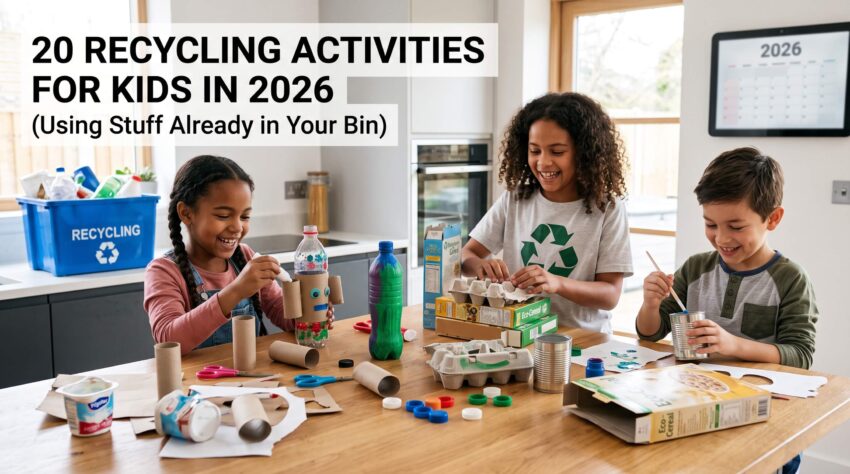
The best recycling activities for kids use what is already in your bin: cardboard boxes, bottle caps, egg cartons, toilet roll tubes and clean food trays. Sorting games and bin matching work from about age 2 and need almost no prep, while building projects like cardboard castles and robots suit 4 and up and can fill an entire afternoon. Wash anything that held food, let an adult do all the cutting, and keep bottle caps and small lids away from children under 3.
Key takeaways
- Zero cost. Every activity below uses household recycling, plus tape, glue and paint you likely own.
- The full list gives real age ranges, mess levels, total time including cleanup, and how much supervision each needs.
- Fastest to set up: Cap Sorting, Sorting Game, Recycling Race. All under two minutes.
- Longest lasting: Cardboard Castle and Robot Build, both good for multiple days.
- Adult only steps: every cut with a craft knife, every hot glue gun, and all of the sawing in Wood Building.
The cereal boxes multiply overnight. I genuinely do not know how. There are four of them flattened by the back door, a bag of toilet roll tubes I started saving “just in case,” and a kid standing in the kitchen at 9:40 on a Saturday morning saying she’s bored.
I used to feel a bit ridiculous about the tube collection. Then I realised the pile is the activity. It costs nothing, it does not need a trip to the craft store, and my kids treat a delivery box with more excitement than most things we have actually paid for.
The catch is that most recycling craft lists tell you to “make a robot” and stop there. They don’t tell you that printed cardboard resists paint, that a hot glue gun gives a real burn, or that half these projects fall apart the second a kid picks them up.
So this list tells you the boring practical parts. What age it actually works for, how messy it really gets, what goes wrong the first time, and which ones you can walk away from.
It’s autumn 2026, which means delivery boxes are about to start arriving faster than you can break them down. Good timing.
How Can Recycling Activities Help Kids Build Creativity And Problem-Solving Skills?
Because there are no instructions, and no correct result to fall short of.
Hand a kid a craft kit and there’s one right answer sitting on the box lid. Hand them a yogurt pot, a cereal box and a roll of tape and they have to decide what it becomes, then work out how to make it stand up.
That second part is where the thinking happens. The arm falls off the robot. They tape it. It falls off again. They try a different spot. Nobody taught them that and nobody had to.
The other quiet benefit: kids who believe they’re “bad at art” do much better with recycling crafts. A wonky cardboard castle looks exactly as it should. There’s nothing to compare it to.
Practical note: Resist the urge to show them a picture of what it “should” look like first. The moment they see a finished example, the project becomes copying instead of designing, and the whole problem solving part vanishes.
All 20 Recycling Activities at a Glance
Listed in the order they appear below. Total time includes prep and cleanup.
| Activity | Best ages | Mess | Total time | Supervision | Main skill |
|---|---|---|---|---|---|
| Cardboard Castle | 4 to 9 | Low | 90 min plus | Light, adult cuts | Planning, spatial |
| Tray Printing | 2.5 to 7 | High | 45 min | Hands on | Pattern, cause and effect |
| Cap Sorting | 3 to 6 | None | 20 min | Constant under 4 | Colour sorting, pincer grip |
| Robot Build | 4 to 9 | Medium | 60 min | Hands on, glue | Design, fixing mistakes |
| Bin Hunt | 3 to 8 | None | 30 min | Light, outdoors | Categorising, movement |
| Peel Art | 3 to 7 | Medium, sticky | 35 min | Medium | Texture, fine motor |
| Tube Binoculars | 3 to 7 | Low | 30 min | Medium | Pretend play |
| Paper Pit | 2 to 6 | High | 40 min | Constant under 3 | Sensory, searching |
| Bin Match | 3 to 6 | None | 25 min plus prep | Light | Recycling knowledge |
| Box Painting | 2 to 8 | High | 60 min plus drying | Medium | Gross motor, colour |
| Nature Box | 2 to 8 | Low | 45 min | Light, outdoors | Observation, sorting |
| Carton Sorting | 2.5 to 5 | None | 20 min | Constant under 4 | Colour, counting |
| Wood Building | 5 to 10 | Low | 60 min | Constant, tools | Construction, testing |
| Recycling Race | 3 to 8 | None | 20 min | Light | Speed sorting |
| Earth Craft | 4 to 8 | Medium | 40 min | Medium | Making, Earth Day themes |
| Sorting Game | 2.5 to 6 | None | 20 min | Constant under 4 | Classifying |
| Campfire Play | 3 to 7 | Low | 45 min | Light | Storytelling, pretend play |
| Tube Goal | 4 to 8 | Medium | 40 min | Medium | Building, aim |
| Waste Sorting | 2.5 to 6 | None | 25 min | Light | Matching, vocabulary |
| Recycling Tray | 3 to 6 | Low | 30 min | Light | Fine motor, focus |
Before You Start: What Is Safe to Reuse and What Goes Straight in the Bin
Read this once and the rest of the article gets easier.
Wash everything that held food. Yogurt pots, trays, jars, plastic tubs. Anything that held raw meat, raw egg or fish gets recycled, not reused, no matter how well you scrub it.
Skip these entirely: containers that held cleaning products, bleach, detergent or any chemical, broken glass, anything with a cut metal edge including can lids, and any packaging with mould on it. A cleaned out bleach bottle still carries residue.
Toilet roll tubes are worth a thought. They sit in a bathroom, which is not the cleanest room in the house. Paper towel tubes cut into thirds give you the same shape with fewer questions. If you’re using toilet rolls, use fresh ones and skip them entirely for kids who still mouth things.
Choking. Bottle caps, milk lids, pom poms, buttons, small beads and bits of foil are all choking size. Under 3s need you in the room for every sorting activity in this list.
Adult only tools. Craft knives, box cutters, scissors on thick card, and hot glue guns. Hot glue reaches around 190°C on a high temperature gun and gives a real burn that sticks to skin while it cools. Low temperature guns exist and are still not for preschoolers.
Plastic bags and large sheets of film are a suffocation risk. They don’t go in the craft pile
Recycling Activities for Kids in 2026
1. Cardboard Castle
Ages 4 to 9 · 90 minutes plus, often days · Mess: low · Supervision: light, but you do all the cutting
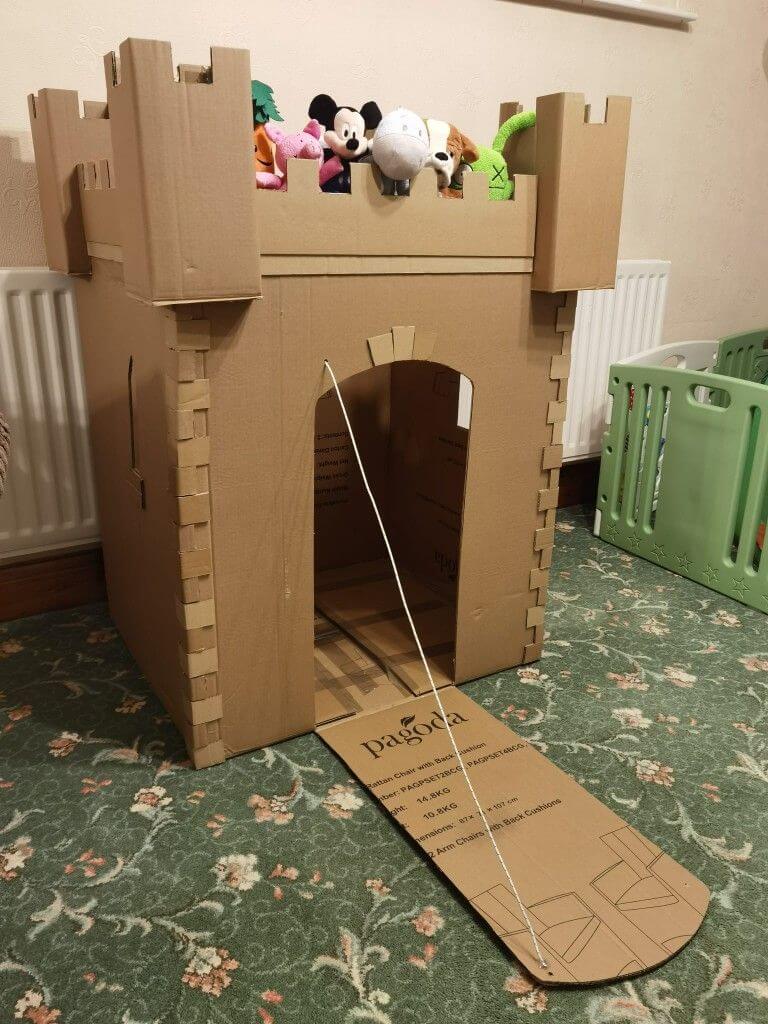
Starting with the one that gives you the most back. A single appliance box turns into a fort that survives a whole week, and the build itself is the activity.
What you need: one large box (furniture and appliance stores will usually hand you a flattened one if you ask out back), packing tape, and a marker. Everything else is optional.
Steps:
- Cut the door and windows yourself. Craft knife, on the floor, with a spare piece of cardboard underneath.
- Let them mark where they want the openings before you cut. This is the part they actually care about.
- Tape the corners inside and out. Inside only and it collapses the first time someone leans on it.
- Hand over paint or markers for the walls.
- Leave it standing. That’s the whole point.
Cut the crenellations along the top last. If you cut them first, the box loses its rigidity and the walls bow in while they’re still decorating.
Tip: Duck brand packing tape holds far better on cardboard than masking or washi tape, which peels within a day.
Adapt: Younger, skip the windows and just do a door, let them decorate inside where they’ll sit. Older, add a working drawbridge with string and two holes, which is a genuine engineering problem for an 8 year old.
2. Tray Printing
Ages 2.5 to 7 · 45 minutes · Mess: high · Supervision: hands on
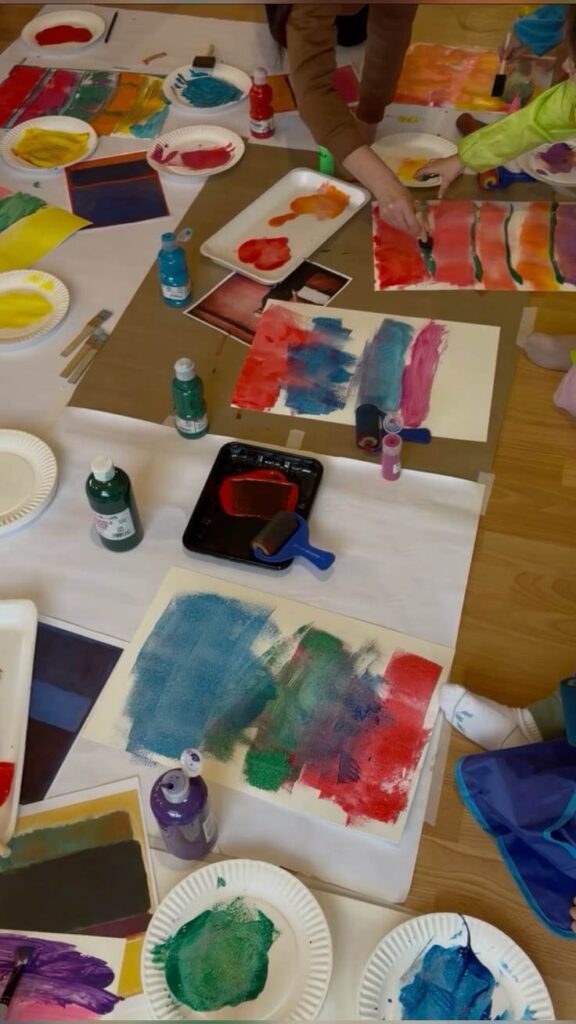
Foam trays, bottle caps, bubble wrap and corrugated cardboard edges all make different prints. Paint on, press down, lift, repeat.
The corrugated edge is the one nobody expects. Tear a strip of cardboard so the wavy inner layer shows, roll it in paint, and it prints a perfect ridged stripe. My daughter did about forty of those and nothing else.
Crayola Washable Kids’ Paint poured into a foam tray, one colour per tray, spills less than pots and doubles as the stamp pad.
Budget note: Nothing here costs anything except the paint, and washable paint is the one craft item genuinely worth buying over the cheap alternative.
Adapt: Younger, three stamps and one colour. Older, challenge them to repeat a pattern in sequence or print a border.
Safety: Bottle caps used as stamps are choking size, so under 3s need you sitting there. Keep bubble wrap sheets small and take them away afterwards.
Cover the table. Not with newspaper, which soaks through in about ten minutes, but with a cut open bin bag or an old shower curtain.
3. Cap Sorting
Ages 3 to 6 · 20 minutes · Mess: none · Supervision: constant under 4
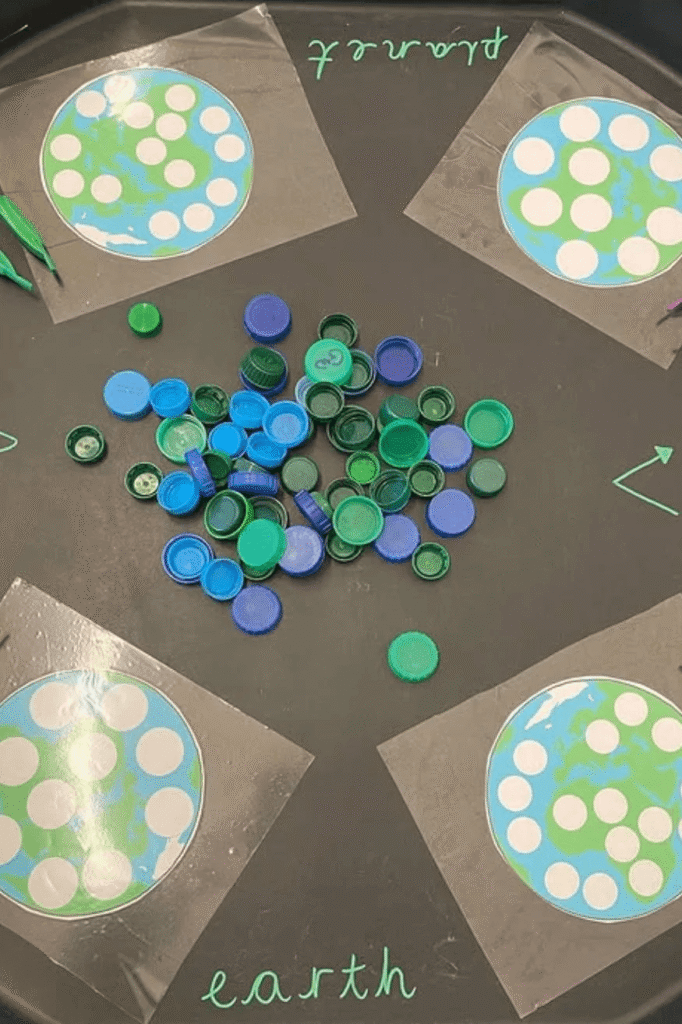
- You need: a bag of saved bottle caps, an ice cube tray or muffin tin, and child safe tweezers
- Free swap: fingers instead of tweezers, egg carton instead of muffin tin
- The rule: one colour per compartment
Blue and green caps dominate most households, which is handy for an Earth themed version but makes a colour sort dull. Save milk lids, juice lids and detergent caps (washed) for a week first and you’ll have enough variety.
Tweezers roughly double how long a 5 year old sticks with it. For a 3 year old they’re a frustration, so skip them.
Safety: This is the single highest choking risk activity on the list. Caps are exactly the wrong size. Stay in the room, count them out at the start, count them back in at the end, and skip it entirely if there’s a mouthing toddler around.
Adapt: younger, two colours and no tools. Older, sort by size and colour at once, or time them.
4. Robot Build
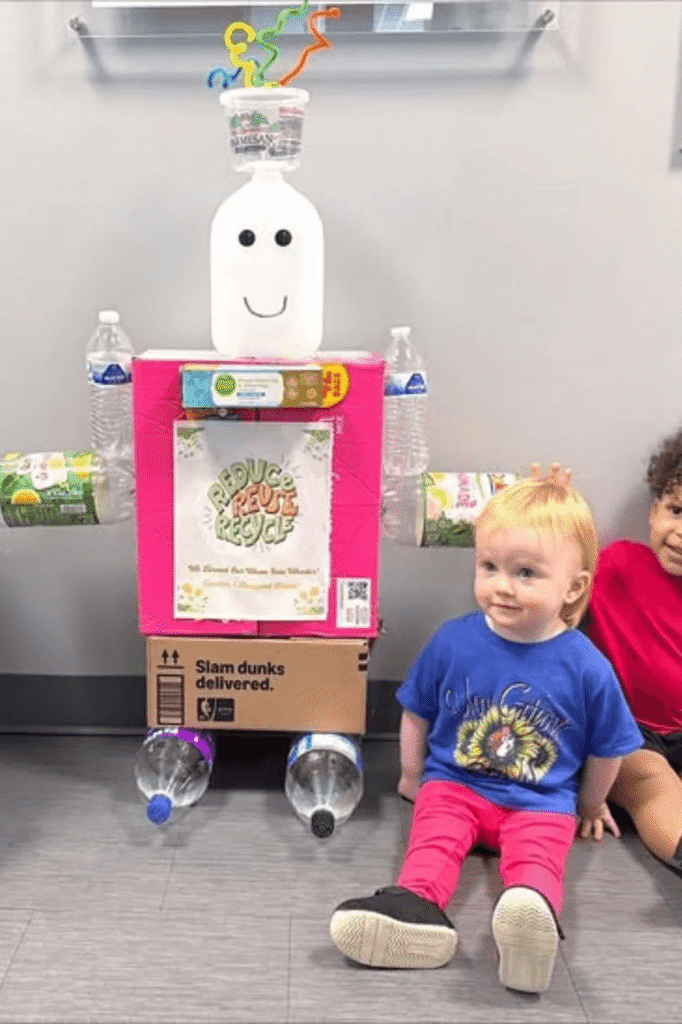
Ages 4 to 9 · 60 minutes · Mess: medium · Supervision: hands on, because of the glue
Boxes for the body, tubes for the arms and legs, caps for the eyes and buttons. That’s the whole brief, and that’s deliberately all you should say.
Here’s what actually goes wrong: white school glue will not hold cardboard to plastic. Ever. It looks fine while it’s wet, then everything falls off after twenty minutes and your kid is upset about it.
Use tape for structure and glue only for flat paper decoration. If you want a proper bond on the caps, that’s a hot glue gun and that’s your job, not theirs.
Better free fix: Punch two holes and tie the arms on with string or a pipe cleaner. It holds, and the arms actually move, which is more interesting anyway.
Paint the box before assembly, not after. Assembled robots have awkward corners you can’t reach with a brush.
Adapt: Younger, one box plus two tubes and you do the taping while they direct. Older, add a challenge, the arms must move or it must stand unsupported.
Safety: Hot glue guns are adult operated only. Cereal box card has surprisingly sharp cut edges, so you do the cutting.
5. Bin Hunt
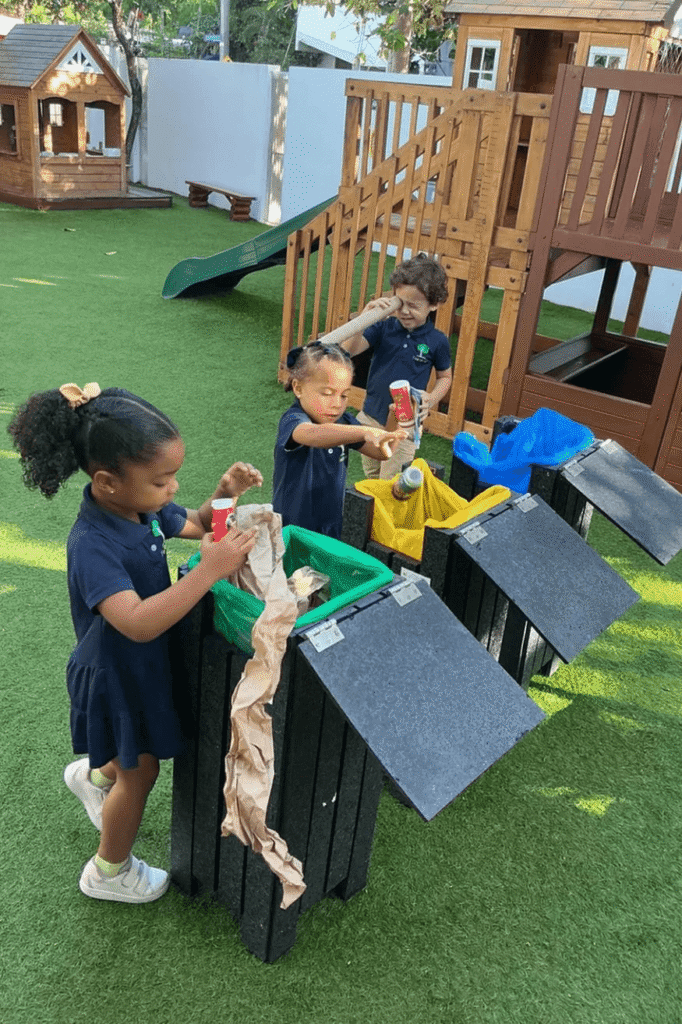
Ages 3 to 8 · 30 minutes · Mess: none · Supervision: light, outdoors
Three buckets or laundry baskets at one end of the garden, labelled paper, plastic and cans. A pile of clean recycling at the other end. They run one item at a time.
Running is the point. This is a movement activity wearing a learning costume, and it burns more energy than any craft on this list.
Label the bins with pictures, not just words. A 4 year old reading “plastic” mid sprint is a 4 year old who stops and gives up.
Free setup: Cardboard boxes with a drawn symbol on each. Takes two minutes.
Adapt: Younger, two bins only, walking not running. Older, add a timer and a scoring system, or put in three deliberately tricky items (a pizza box, a crisp packet, a yogurt pot with foil still on) and let them argue about where those go. That argument is the best learning in the whole activity.
Safety: Clean items only. Nothing with a cut metal edge, so no opened cans unless the lid is fully removed and the rim is smooth.
6. Peel Art
Peel Art
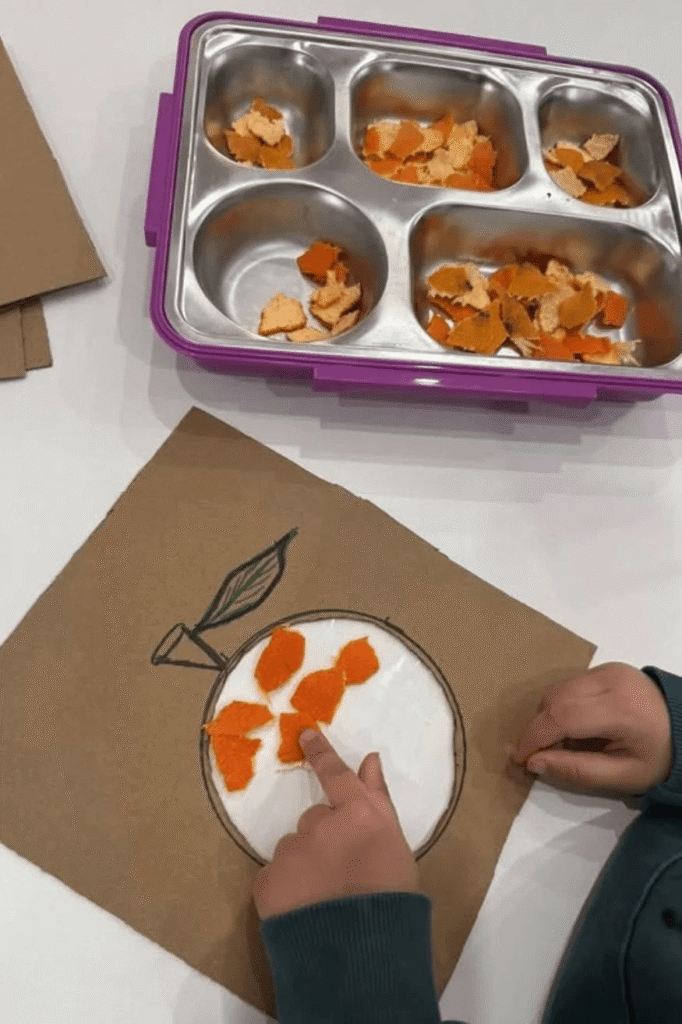
Ages 3 to 7 · 35 minutes · Mess: medium, sticky · Supervision: medium
Orange peel torn into pieces and pressed into a glue outline on cardboard. Texture, colour and a smell that fills the room.
Spread the glue yourself, then let them place the pieces. If they hold the glue bottle, you get one puddle and nothing sticks.
Peel curls as it dries, and within two days it lifts off the card at the edges. That’s just what it does. Photograph it on day one and let the artwork be temporary, or use Aleene’s Tacky Glue, which holds it flatter for longer.
Allergen and hygiene note: Citrus oil irritates broken skin and stings in eyes, so hands get washed after. Don’t use peel from fruit that’s been sitting out, and bin the whole thing after a few days before it goes mouldy. Skip citrus entirely for kids with eczema on their hands.
Adapt: Younger, one big simple shape, a circle or a sun. Older, layer peel with dried leaves and seed pods for a proper textured collage.
7. Tube Binoculars
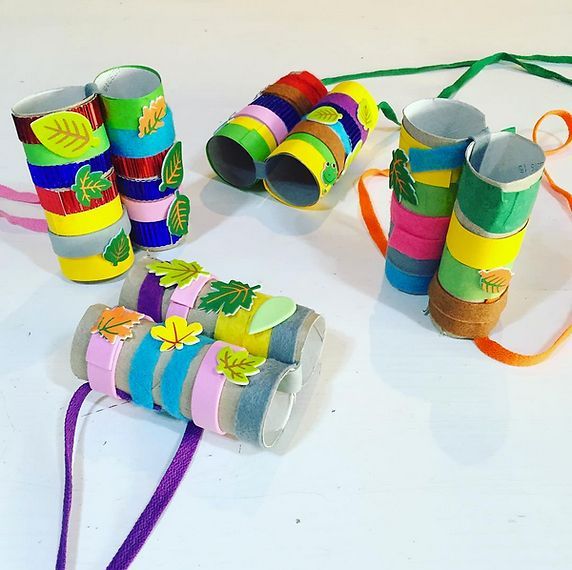
Ages 3 to 7 · 30 minutes · Mess: low · Supervision: medium
Two tubes taped side by side, string through two punched holes, and whatever decoration they want.
Then the real activity starts, because the binoculars themselves are done in ten minutes. Give them a list of five things to find in the garden and this goes from a craft to an hour.
Tape the tubes together before decorating. Decorate first and the tape covers their work, which causes genuine outrage.
Practical detail: Use paper towel tubes cut in half rather than toilet rolls, for the bathroom reason in the safety section above. They’re also slightly sturdier.
Adapt: Younger, one tube as a telescope, less fiddly and just as good. Older, add a cellophane lens from a sweet wrapper so everything looks red or green, which genuinely delights a 6 year old.
Safety: Keep the neck string short and loose, or skip it. A loop of cord around a small child’s neck is a strangulation risk, especially on climbing frames. Mine wear theirs over one shoulder.
8. Paper Pit
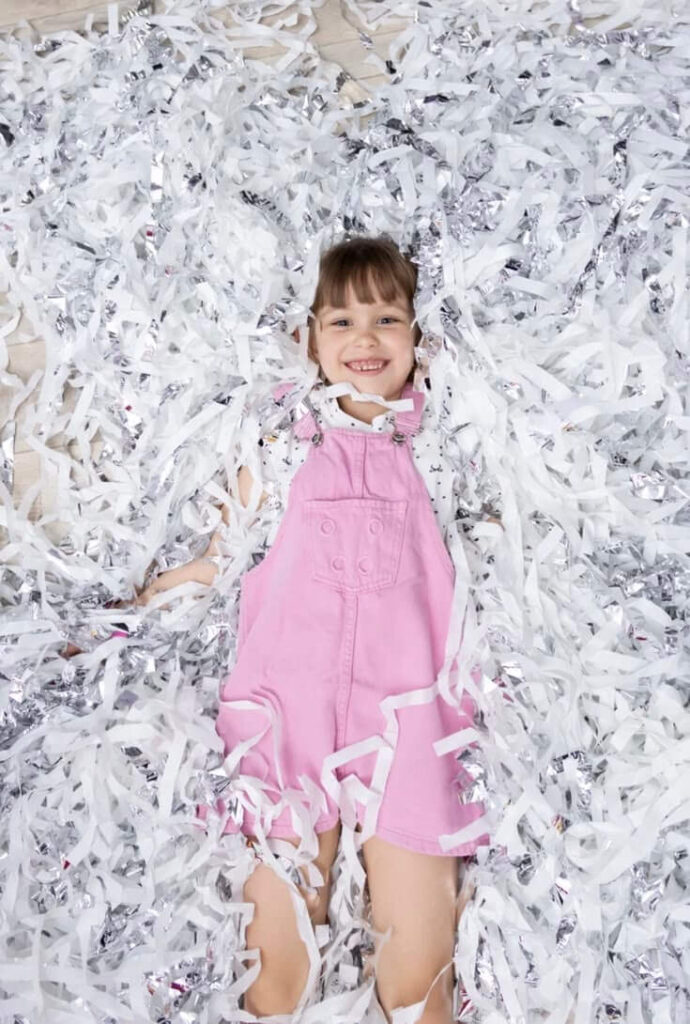
Ages 2 to 6 · 40 minutes · Mess: high · Supervision: constant under 3
A big box filled with shredded paper, with small toys or letter tiles hidden inside for them to dig out.
Go through the shredded paper first. Junk mail shredding contains staples, and window envelopes leave sharp little plastic strips that hide perfectly in a pile of paper. I found three staples in our first batch.
Put the box inside a flat bed sheet. When they’re done, lift the corners and funnel everything back in. Turns a ten minute sweep into a thirty second job.
Free source: Your own paper recycling, run through a home shredder, or ask at a school office, which usually has bags of it.
Adapt: Younger, larger hidden objects and fewer of them. Older, hide letters that spell a word, or set a countdown.
Safety: hidden small toys are choking size, so under 3s need you sitting right there. Paper cuts are real. Store the paper in a sealed bag between uses, because shredded paper in a damp garage attracts exactly what you’d expect.
Practical note: Do this one on a day you have the patience for it. Shredded paper gets everywhere, including inside socks, and being annoyed about it halfway through is worse than not starting.
9. Bin Match
Ages 3 to 6 · 25 minutes plus prep · Mess: none · Supervision: light
Cardboard bins with picture cards that get sorted into the right one. It’s the quiet, table based version of Bin Hunt.
The prep is the honest trade off here. Making the cards takes you twenty minutes, which is longer than the first play session. It pays back from the second use onward, so make it properly once.
Cut pictures from magazines and supermarket flyers instead of printing. Free, faster, and the images are more varied.
Cover the cards with clear packing tape on both sides. That’s laminating for nothing, and it’s the difference between a game that lasts a year and one that’s bent and torn after two sessions.
Adapt: Younger, six cards and two bins. Older, add a compost bin and a landfill bin, which is where the genuinely interesting conversations start.
Tip: Keep it in a labelled ziplock bag. A game you can find in thirty seconds gets played ten times more often than one in a drawer somewhere.
10. Box Painting
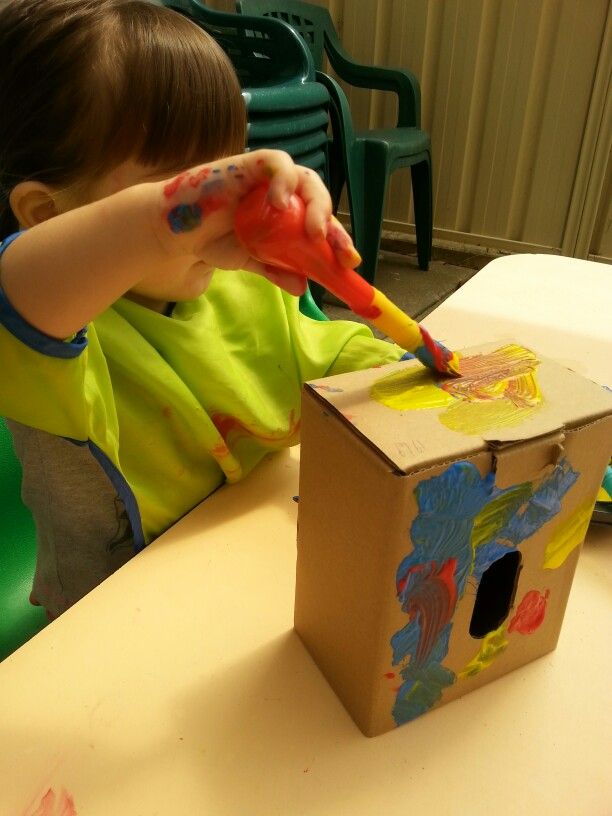
Ages 2 to 8 · 60 minutes plus drying · Mess: high · Supervision: medium
A big box and a mini roller. Covering a large surface holds a preschooler’s attention far longer than a sheet of paper does.
The thing nobody mentions: printed cardboard repels paint. Amazon logos and supermarket branding show straight through, and a 5 year old finds that infuriating. One coat of cheap white emulsion (a tester pot does several boxes) or plain white school glue thinned with water fixes it completely. Let it dry first.
Do this outdoors or on a covered floor. Rollers flick paint sideways in a way brushes don’t.
Budget: Mini foam rollers are about a dollar at any hardware store. Free swap, a sponge cut in half, or a balled up sock, which prints a nice texture.
Adapt: Younger, one colour, one roller, no plan. Older, mask off sections with tape for stripes, then peel it off when dry, which gets a genuinely good reaction.
Drying time is the hidden cost. A painted box needs a few hours before anyone can build with it, so start in the morning if the castle is the goal.
11. Nature Box
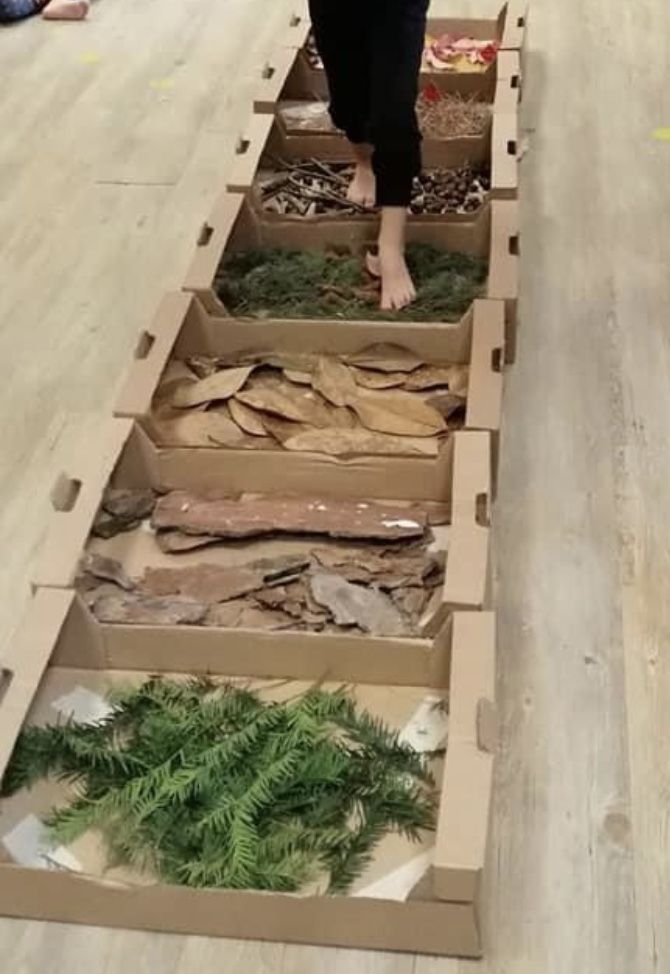
Ages 2 to 8 · 45 minutes · Mess: low · Supervision: light, outdoors
An egg carton or a divided box taken on a walk, with one compartment per find. Leaf, stone, seed pod, twig, feather.
Give each compartment a rule and the walk transforms. “Something rough, something smooth, something smaller than your thumb” turns a trudge round the block into a proper hunt.
Autumn is the peak season for this and right now is about as good as it gets. Conkers, acorns, seed heads, and leaves in five colours.
Adapt: Younger, four compartments and simple finds. Older, label each one and look it up afterwards, which drifts into a real science project.
Safety: No mushrooms or fungi, no berries, and hands washed afterwards. Avoid anything at dog height on a path. If they’re likely to taste what they collect, this one waits a year.
Tip: Leave it open on a windowsill for a few days rather than closing the lid. Damp leaves in a closed carton go mouldy fast.
12. Carton Sorting
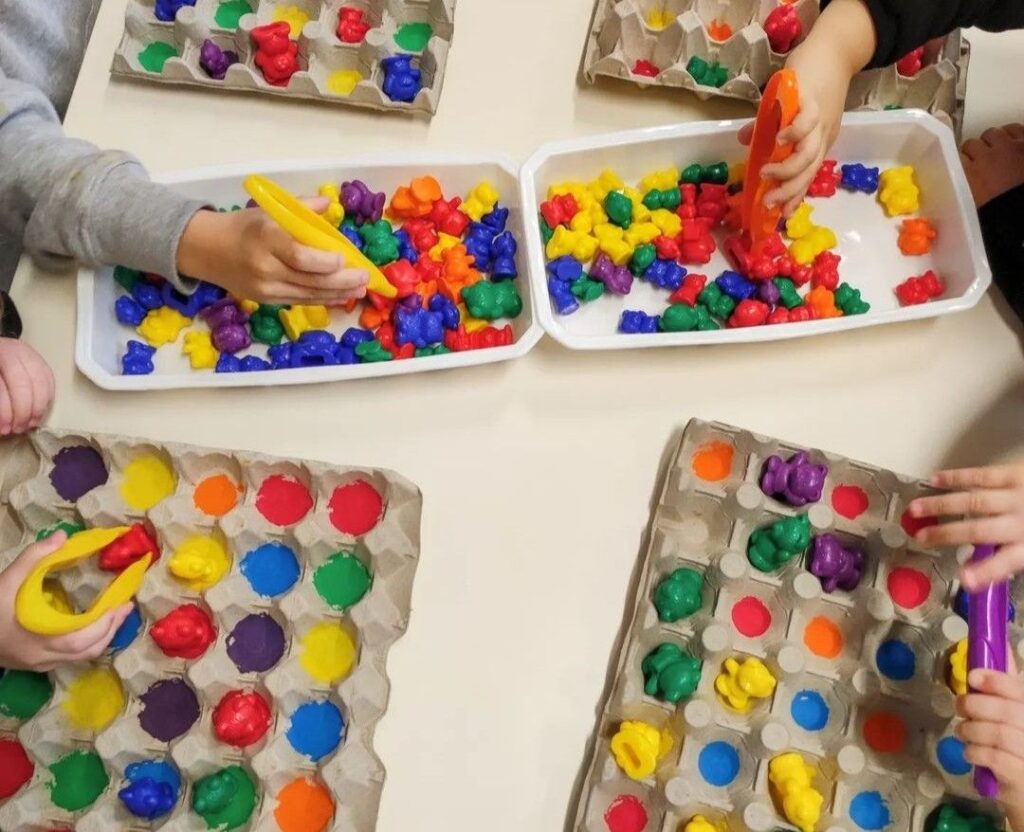
Ages 2.5 to 5 · 20 minutes · Mess: none · Supervision: constant under 4
An egg carton, a pile of small objects, and one sorting rule. Pom poms, caps, buttons, dried pasta, whatever you have.
One rule at a time. Colour, or size, or type. Two rules at once and a 3 year old stalls, gives up, and it looks like boredom when it was actually overload.
Egg carton note worth knowing: Moulded pulp cartons absorb whatever leaked in them, and raw egg is a salmonella risk. Use a clean carton from eggs that didn’t crack, and don’t use one that’s been sitting damp.
Twelve compartments is a lot for a toddler. Cut it down to four for the first few goes.
Adapt: Younger, big objects, four compartments, fingers only. Older, add tweezers, or number the cups 1 to 6 and have them put the matching quantity in each.
13. Wood Building
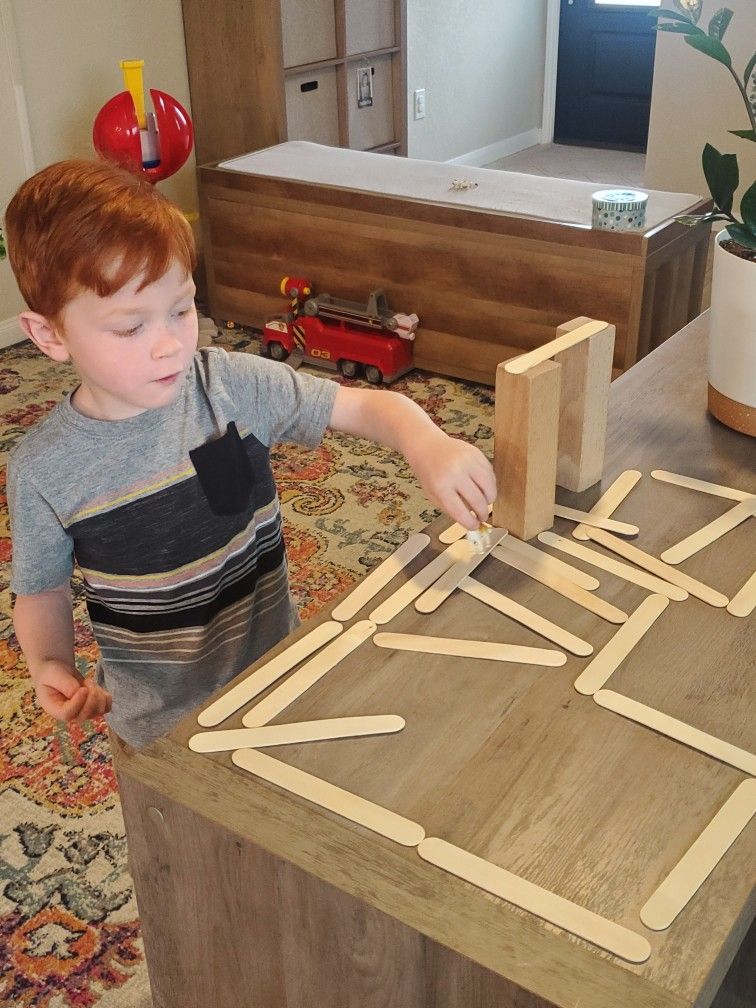
Ages 5 to 10 · 60 minutes · Mess: low · Supervision: constant, you stay the whole time
Offcuts, lolly sticks and fallen branches, built into bridges, fences and towers. The most satisfying activity here for an older kid, and the one with the most real risk.
Steps:
- Lay out the wood and let them sort by length first. Sounds dull, it isn’t, and it shapes what they build.
- Safety glasses on before anything else. Stanley Jr. and similar kids’ tool sets include them, or any small pair works.
- Start with glue and string joins before anything involving a nail.
- If nails are happening, you hold the nail for the first taps. Always.
- Let the first structure fall over. The rebuild is where the learning is.
Free wood source: Hardware store offcut bins, where scraps are usually free or close to it, and fallen branches from your own garden. Never pressure treated timber (the greenish tinted stuff), never painted wood from an unknown source, which may contain lead if it’s old.
Safety: Splinters are guaranteed, so have tweezers ready. Sanding blocks first, on every piece. No sawing by a child under about 8, and only with a proper junior hacksaw and your hands on it. Nails and screws are choking size and go in a closed tin between sessions.
Adapt: Younger, lolly sticks and tacky glue only, no real wood, no tools. Older, give them a real brief, a bridge that holds a toy car.
14. Recycling Race
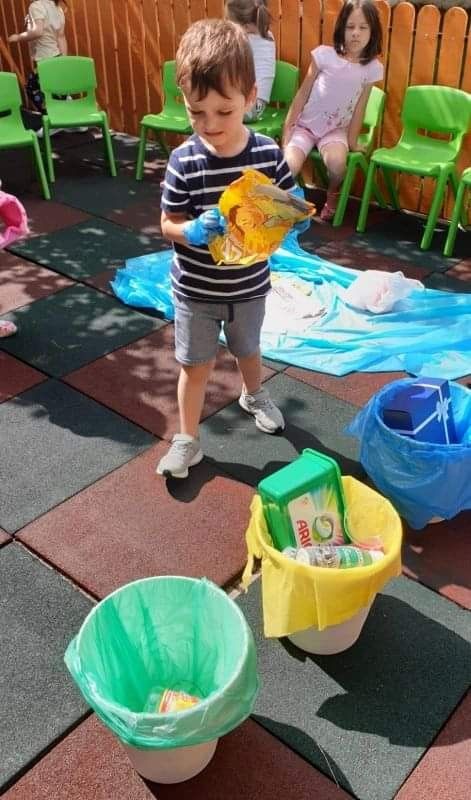
Ages 3 to 8 · 20 minutes · Mess: none · Supervision: light
Same idea as Bin Hunt, done indoors, against a timer. Pile of clean recyclables, three labelled tubs, go.
The scoring is the part that matters. Award points for correct sorting, not for speed, or you get a kid flinging everything into the nearest bin to win.
Works brilliantly as the actual chore. We run it on bin night with our real recycling and it takes a job off my list, which I feel no guilt about at all.
Adapt: younger, no timer, just sorting with cheering. Older, two kids racing each other, or beat your own previous time.
Safety: nothing with sharp edges or food residue in the race pile. Check it before they start, not during.
15. Earth Craft
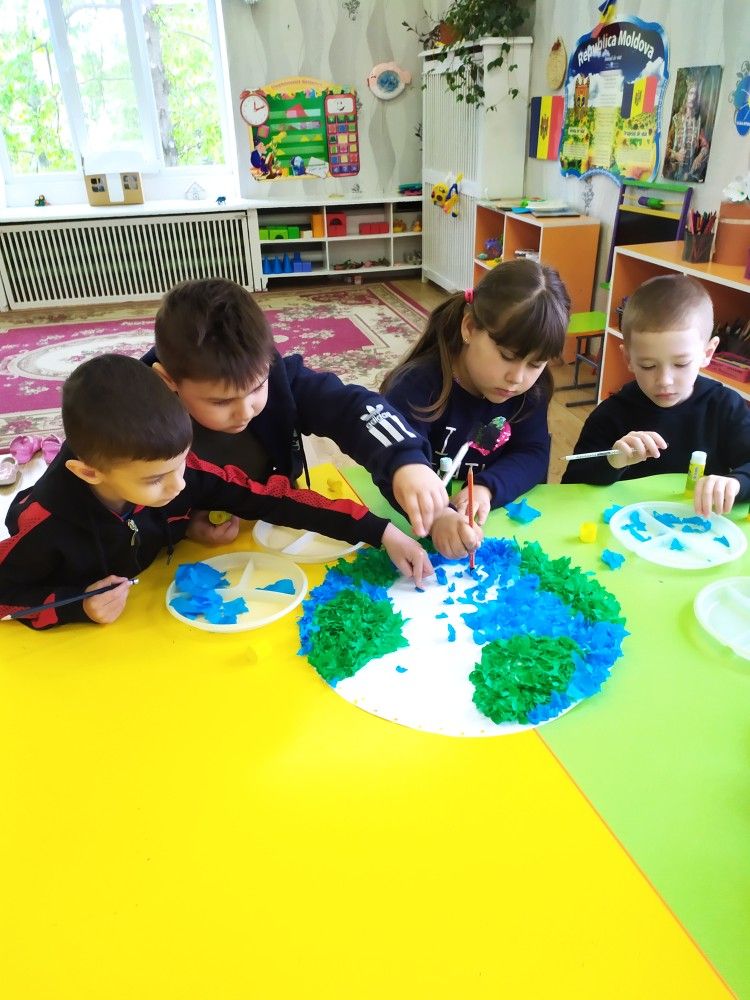
Ages 4 to 8 · 40 minutes · Mess: medium · Supervision: medium
Egg carton cups, card strips and paint turned into Earth themed crowns, necklaces and hanging decorations. The classic Earth Day school project, and it works at home in April or any time you’re talking about where rubbish goes.
Cut the carton into individual cups and paint them blue and green. Thread them on string and you have a necklace. Glue them to a card headband and you have a crown.
Paint on moulded egg carton pulp soaks in and dries dull. Two thin coats look far better than one thick one, and thick paint stays tacky inside the cups for hours.
Budget: cheap acrylic covers better than washable paint here, but it does not come out of clothes. Old shirt, or stick to washable and accept the softer colour.
Adapt: Younger, painting the carton is the whole activity, no assembly needed. Older, add a real conversation about what happens to the recycling after it leaves the kerb, which most kids have genuinely never thought about.
Safety: Clean cartons only, as above. Don’t let a headband go on until the paint is fully dry, because damp paint in hair is its own afternoon.
16. Sorting Game
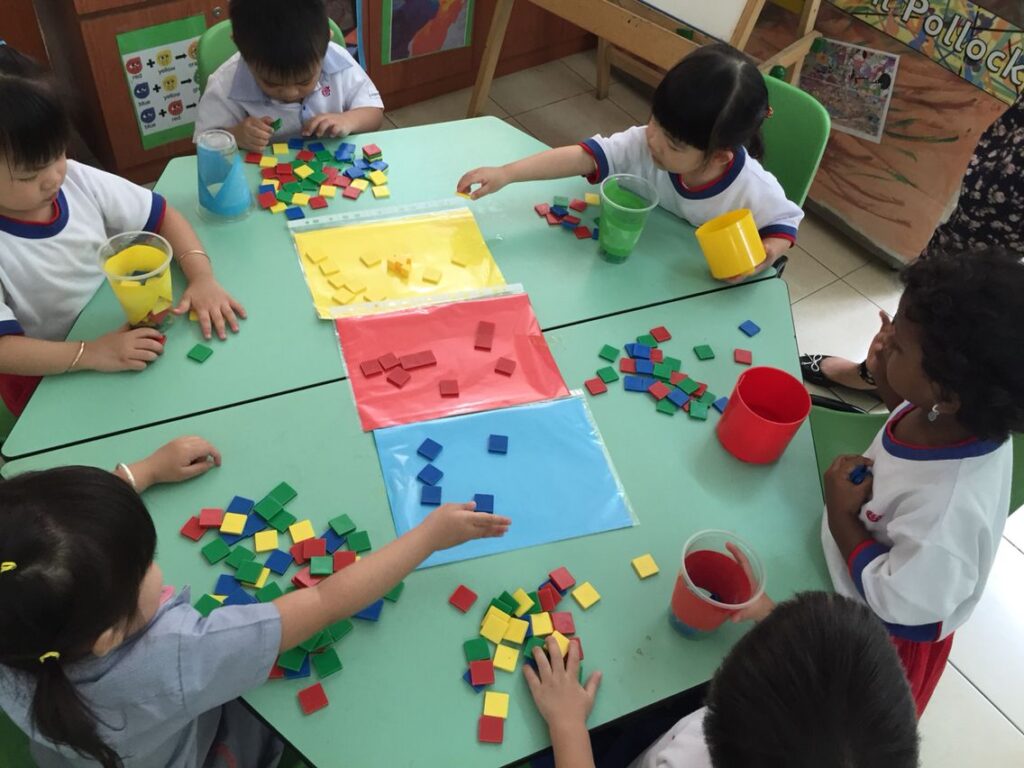
Ages 2.5 to 6 · 20 minutes · Mess: none · Supervision: constant under 4
The simplest thing on this list, and the one my kids have done most often. A tray of mixed materials, a few bowls, and one question: what goes with what?
No labels, no categories given. Let them invent the rule. Shiny things, bendy things, things that make noise. Then ask why, and listen, because their reasoning is usually better than the category you’d have handed them.
You need: Foil scraps, bits of paper, clean caps, small card pieces, bowls or a muffin tin.
Adapt: Younger, two obvious categories and large pieces. Older, sort by material type, paper, plastic, metal, which is real recycling knowledge, then check against what your local council actually accepts.
Safety: Foil scraps and caps are choking size. Stay in the room under 4. No foil with sharp folded edges, and none of the crinkled foil that held food.
Tip: Keep the pieces in a tin and it becomes the thing you reach for when you need fifteen quiet minutes and have no setup time.
17. Campfire Play
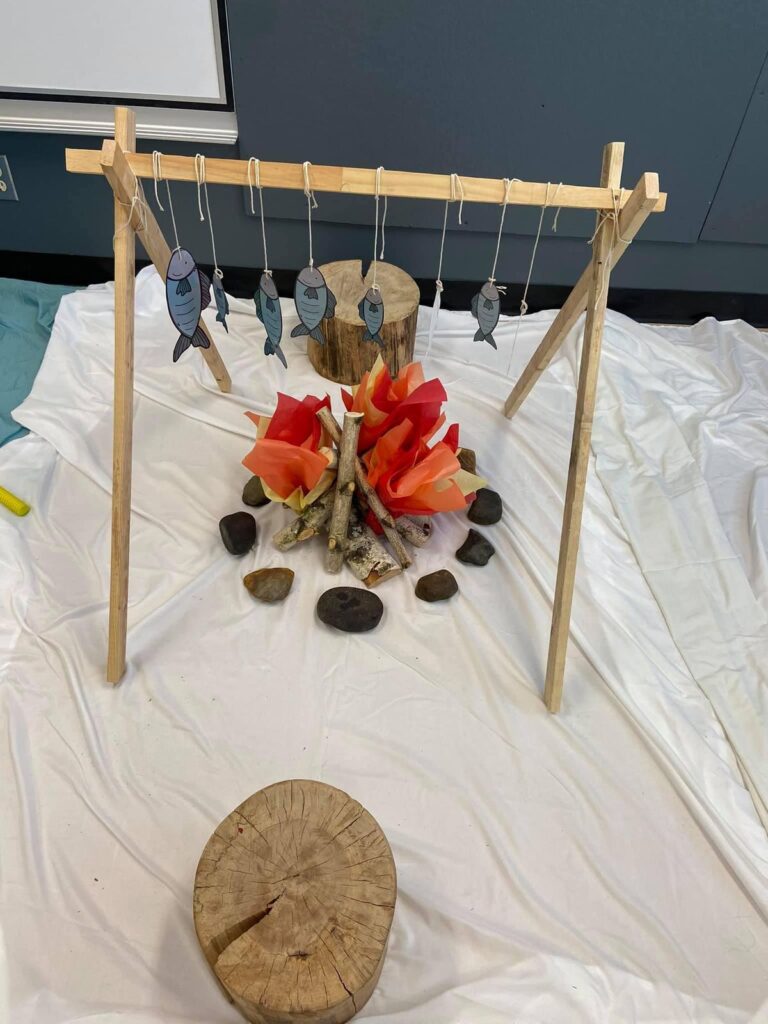
Ages 3 to 7 · 45 minutes · Mess: low · Supervision: light
A ring of cardboard “stones,” sticks from the garden stacked in the middle, tissue paper or orange card cut into flames. Then blankets, torches and made up stories.
Build it together, then leave the room. This is one of the very few activities here that gets better without an adult participating, because the pretend play needs space to go somewhere.
Tuck a small torch under the paper flames. In a dim room it genuinely glows and the whole thing goes from a craft to a place.
Free everything: Sticks from outside, cardboard from the bin, an old orange or red plastic bag for flames if you have no card.
Adapt: Younger, the stacking is the whole activity and it will get rebuilt eleven times. Older, add pretend marshmallows on sticks (cotton wool, taped) and a ghost story rota.
Safety: No real candles, no tea lights, not even the battery kind near loose paper. Check the garden sticks for splinters and snap off anything with a sharp point.
18. Tube Goal
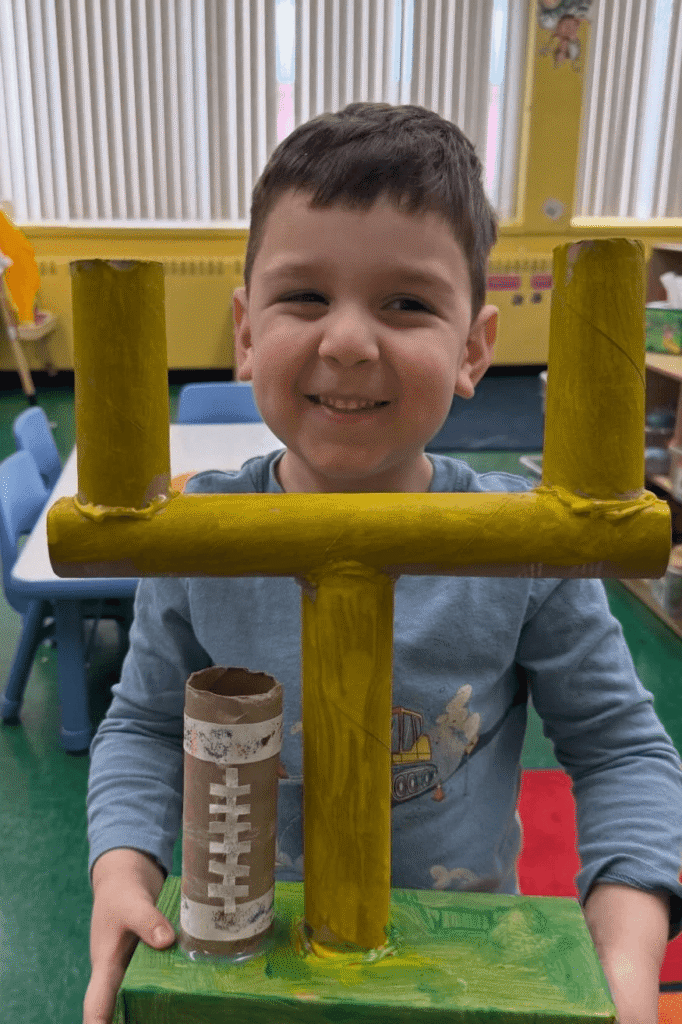
Ages 4 to 8 · 40 minutes · Mess: medium · Supervision: medium
Cardboard tubes taped into a goal frame, mounted on a box base, with paper balls or pom poms to shoot at it.
Anchor the base properly or the goal tips over on the first shot and the activity ends in frustration. Tape the frame to a shoe box with a couple of books inside it and it stays put.
Making the goal takes twenty minutes. Playing with it takes as long as you let it, and it’s the playing that they actually wanted.
Free ball: Scrunched paper wrapped in a bit of tape. Rolls badly, which is somehow better, because it’s unpredictable.
Adapt: Younger, one wide goal and a big soft ball, standing close. Older, two goals for a proper game, or a scoring system with different point values.
Safety: Pom poms are a choking hazard under 3. Keep the shooting zone away from anything breakable and away from a younger sibling’s face.
19. Waste Sorting
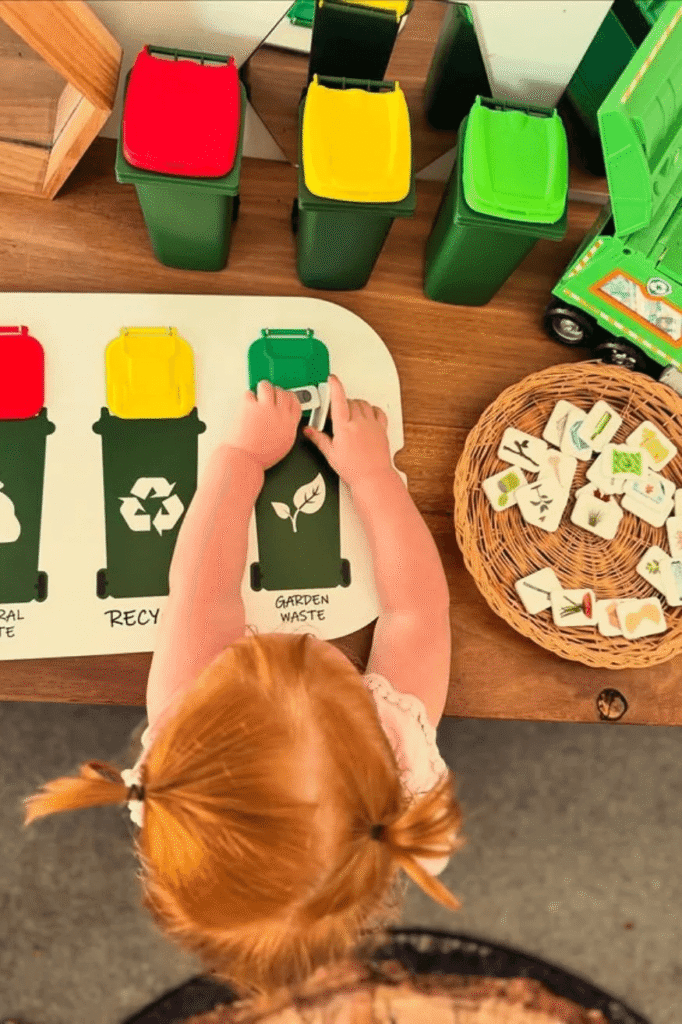
Ages 2.5 to 6 · 25 minutes · Mess: none · Supervision: light
Small labelled containers and a pile of picture cards or real clean items, sorted into paper, plastic, food waste and general.
Use real items rather than pictures wherever you can. A 4 year old handling an actual yogurt pot and deciding where it goes learns something a card never quite delivers.
Include a couple of genuinely ambiguous items on purpose. A pizza box with a greasy patch. A crisp packet. A paper cup with a plastic lining. Those are the ones adults get wrong too, and looking up the answer together is the real lesson.
Free setup: Shoe boxes with a drawn symbol on each.
Adapt: Younger, two categories, obvious items. Older, check your actual local council rules online and correct the game to match, which makes it genuinely useful.
Safety: Clean packaging only, nothing with food residue, nothing with a sharp edge.
20. Recycling Tray
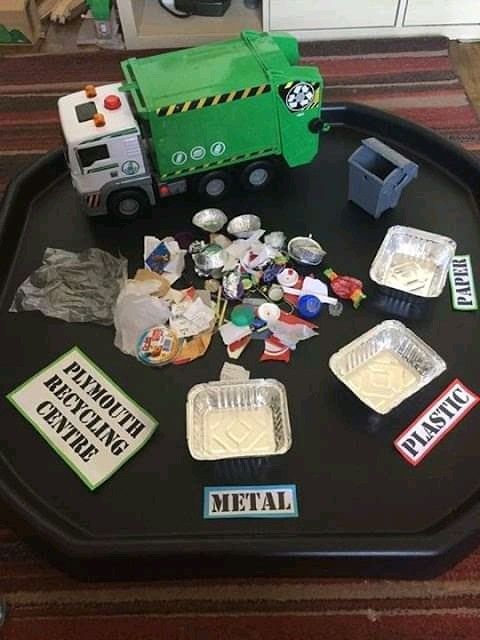
Ages 3 to 6 · 30 minutes · Mess: low · Supervision: light
A shallow tray set up like a tiny recycling centre. Shredded paper as the base, small clean recyclables to find and sort, tweezers or a small scoop, and a couple of toy bins.
The whole thing lives on a tray, which is the entire reason it works. Everything stays contained, cleanup is lifting the tray, and it goes on a shelf between uses.
Swap two or three items each week rather than rebuilding it. Novelty for no effort, and they notice immediately.
Tweezers turn a five minute sort into a twenty minute one for a 5 year old. Genuinely the best value addition to any tray activity.
Free version: Any baking tray, any small pots, your own shredded paper.
Adapt: Younger, bigger pieces, scoop instead of tweezers, no hidden items. Older, add a tally sheet to count what they found.
Safety: Small parts, so the under 3 rule applies. Check the shredded paper for staples first, same as Paper Pit.
What to Save and What to Recycle Straight Away
You do not need to hoard your whole bin. This is the short list actually worth keeping.
| Worth saving | Use it for | How many |
|---|---|---|
| Large delivery boxes | Cardboard Castle, Box Painting | One or two at a time |
| Cereal and cracker boxes | Robot Build, Bin Match, card pieces | Flatten, keep about five |
| Paper towel tubes | Tube Binoculars, Tube Goal | Six is plenty |
| Egg cartons | Carton Sorting, Earth Craft, Nature Box | Three or four |
| Bottle and milk caps | Cap Sorting, Tray Printing, robot details | One jar, washed |
| Clean foam trays | Tray Printing | Two or three |
| Bubble wrap and packing paper | Tray Printing, Paper Pit | One bag |
Practical note: Give the craft stash a hard limit, one box or one drawer. When it’s full, the next thing that comes in means something goes out to the recycling. Without that rule you end up with a garage problem instead of a craft supply.
Common Mistakes Parents Make With Recycling Crafts
Saving everything. Four months of tubes in a bag is not a resource, it’s clutter you feel guilty about. Keep a handful of each type.
Using white glue on plastic. It never holds. Tape, string, split pins or a hot glue gun operated by you. This is the single most common reason a recycling craft ends in tears.
Painting printed cardboard without priming it. The logo shows through and your kid thinks they did it wrong. One coat of white first.
Doing the building yourself because theirs looks wrong. A leaning cardboard tower they built beats a straight one you built, every single time. Sit on your hands.
Skipping the wash. Yogurt residue smells within a day and mould follows. Two minutes at the sink saves the project.
Treating the craft as the whole activity. The binoculars take ten minutes. The expedition takes an hour. Plan the second part or you’ll think the activity flopped when it just finished early.
Forgetting they’ll want to keep it. Every one of these produces an object, and cardboard castles don’t fit in a memory box. Take a photo together, then agree out loud when it goes in the bin. Doing that at the start avoids an argument later.
Read Next
If the sorting games landed well, the same instinct works across a whole afternoon of screen free setups. 25 Preschool Activities for Kids in 2026 covers the age ranges, mess levels and time estimates for every one.
Paper Pit and Recycling Tray are both just sensory bins wearing a recycling costume, so if those two went down well, 15+ Sensory Bin Fillers Ideas is the next stop. It’s sorted by how easy each filler is to sweep up, which is the detail that actually matters at 5pm.
For the days you want a craft with a theme attached rather than an open box, 20 Under the Sea Crafts for Preschoolers runs on the same materials, paper plates, cardboard and whatever’s in the bin.
Autumn is peak season for one of these, and it’s worth doing properly. Half of 20+ Free Halloween Game Ideas are built from exactly the recycling you’ve been saving, milk jugs for ring toss, soup cans for a knock down wall, so the pile you’ve collected for these activities doubles as a party in October.
And if you want the bigger builds without waiting for a delivery box, the cardboard castle in 25 Creative Summer Crafts for Kids has a fuller walkthrough than the version above.
FAQs
What recycling activities are safe for a 3 year old?
Bin Hunt, Box Painting, Nature Box, Campfire Play and Paper Pit all work well at 3 with you in the room. Skip anything with bottle caps, buttons or small parts unless you’re sitting right there, and skip Wood Building entirely until at least 5.
Which recyclable materials are safe for kids to use in activities?
Clean cardboard, paper tubes, egg cartons from uncracked eggs, washed plastic tubs, foam trays and rinsed bottle caps. Never containers that held cleaning products or chemicals, never broken glass, never cut metal edges or can lids, and nothing with food residue or mould on it.
How do I get washable paint or glue out of carpet?
Blot, don’t rub, with a cloth and cold water while it’s still wet. Dried washable paint usually lifts with one part white vinegar to four parts water, left two minutes then blotted. Test a hidden patch first. Dried school glue comes up with cold water and patience.
Do I need to wash recycling before letting kids craft with it?
Yes, anything that held food or drink. A rinse and a dry is enough for most things. Anything that held raw meat, raw fish or cracked egg goes in the recycling rather than the craft pile, no exceptions.
How can I make recycling activities more fun for kids?
Make it a game rather than a lesson. Timers, points, races and pretend play hold attention far longer than explaining why recycling matters, and the understanding arrives on its own through the sorting.
Are toilet paper rolls hygienic for crafts?
They’ve been sitting in a bathroom, so use fresh ones, don’t use them with children who still mouth things, and wash hands afterwards. Paper towel tubes cut into thirds are a cleaner swap and slightly sturdier.
What is the cheapest recycling activity to set up?
Sorting Game and Cap Sorting cost nothing and take under two minutes. Everything in this article is free apart from paint, tape and glue, and most households already have those.