Screen-Free Toddler Activities Indoors used to feel like an overly ambitious goal, especially on long afternoons when keeping a young child entertained seemed to require turning on a television or a tablet just to secure a few quiet minutes. Over time, however, the reliance on digital entertainment can create more restlessness than relaxation. Transitioning to hands-on, screen-free play significantly shifts the atmosphere of a home. When parents slow down and join their children in simple, unstructured play, the entire household begins to feel calmer and more deeply connected.
These intentional moments do not require flawless planning, expensive developmental toys, or a background in early childhood education. They require only a willingness to embrace a little creativity and practice patience. Embracing screen-free time is about recognizing small, daily opportunities to foster a child’s imagination, encourage their growing independence, and build genuine family bonds.
Toddlers do not require elaborate or complicated setups to remain fully engaged. Some of the most joyous and memorable afternoons stem from the simplest ideas, such as constructing makeshift forts in the living room, engaging in cooperative pretend play, or transforming mundane, everyday household routines into exciting games. Prioritizing screen-free engagement helps young children play for longer durations, exhibit more positive moods, and navigate daily transitions with much less resistance. Many of these screen-free solutions overlap seamlessly with standard household activities, requiring zero special supplies. This makes them highly realistic and sustainable for busy parents who need practical, immediate solutions that genuinely work.
Creating a gentle, predictable rhythm throughout the day using these activities allows parents to balance highly active physical play with calming, quiet moments, ensuring neither the parent nor the child becomes overstimulated or overwhelmed. Play becomes an avenue for connection rather than a standard of perfection. You do not need an immaculate house or boundless energy reserves to succeed; you only need to be present and willing to enjoy the small, meaningful milestones that toddlers will ultimately remember.
Why You Need to Choose Screen-Free Toddler Activities Indoors
Choosing to prioritize screen-free activities indoors can completely revitalize the daily rhythm of your home and support your child’s cognitive development. Many parents observe a stark contrast in their toddlers’ behavior when transitioning away from digital media; children often become noticeably calmer, vastly more creative, and more deeply engaged in their physical environment.
Simple, tactile, and hands-on experiences stimulate imagination, accelerate language acquisition, and promote independent problem-solving in ways that passive digital consumption simply cannot replicate. Furthermore, prioritizing physical and interactive play builds much stronger parent-child connections. Play shifts from a passive viewing experience to an active, shared interaction. This ongoing engagement transforms ordinary, rainy days at home into meaningful learning opportunities that are rich with laughter, exploration, and discovery. Screen-free play also supports better sleep routines, reduces behavioral meltdowns associated with overstimulation, and encourages a child to develop their own internal mechanisms for overcoming boredom.
Helpful Tips to Consider Before Starting
Before you begin introducing a new routine of indoor activities, it is crucial to prepare a flexible, forgiving environment rather than striving for a perfectly curated playroom. Toddlers thrive when they have easy, safe access to a few select materials, plenty of open floor space, and activities that accommodate their natural need for movement.
Consider implementing a toy rotation system rather than offering every available toy at once; limiting choices actually increases a child’s focus and depth of play. Keep your expectations grounded and simple, focusing entirely on the process of participation rather than the final result or product of the activity. When structuring your day, attempt to match the activities to your toddler’s natural energy fluctuations schedule high energy obstacle courses for mid-morning peaks, and reserve calm reading corners for the period right before a nap. Remember that repetition is deeply comforting and educational for young children. They may want to do the exact same activity three days in a row, and that is perfectly normal. The ultimate goal is joyful engagement, consistent routines, and shared connection.
Best Screen-Free Toddler Activities Indoors That Are Easy
1. Indoor Obstacle Course Adventure
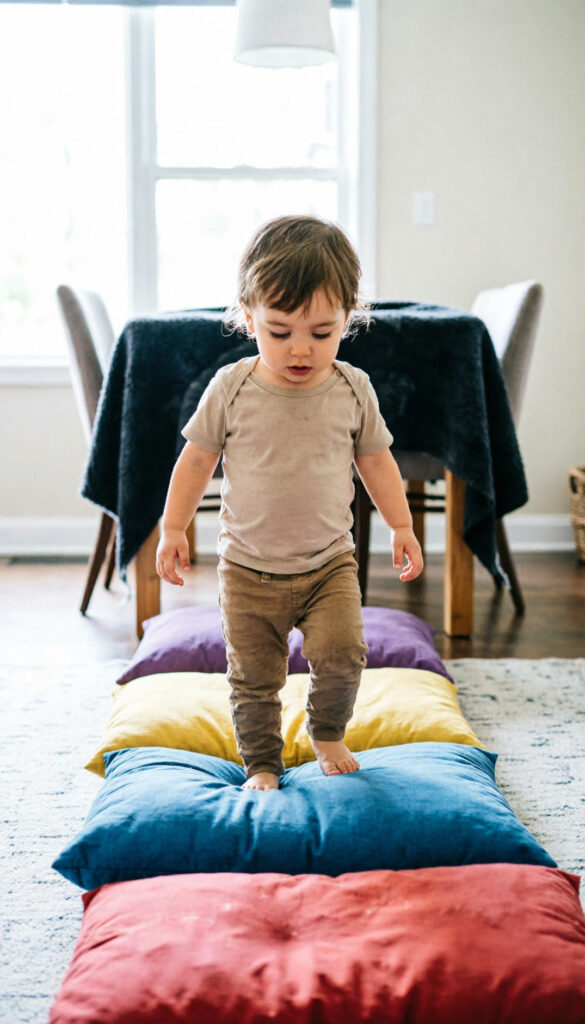
Creating an obstacle course is one of the most dynamic and exciting ways to engage a toddler inside the house. It completely transforms standard, everyday furniture into a thrilling adventure playground, capturing their imagination and burning off excess energy.
Setup Guide
Use couch cushions or large pillows as stepping stones across the floor. Line up dining room chairs and drape a blanket over them to create a dark, exciting tunnel. Lay out a long piece of masking tape on the carpet to serve as a tightrope or balance beam.
Developmental Benefits
Toddlers possess a natural drive to climb, balance, and explore physical movement. An indoor obstacle course safely channels this drive, heavily promoting gross motor skill development, bilateral coordination, and physical confidence. Changing the layout every few days keeps the challenge fresh and curiosity alive without requiring the purchase of new physical toys.
2. Sensory Bin Exploration
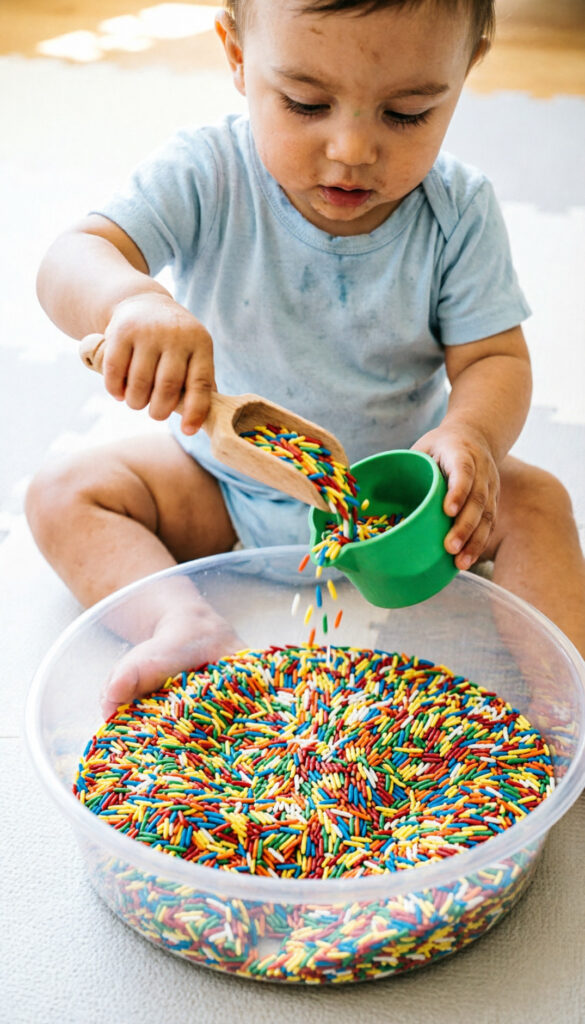
Sensory bins remain a classic, foundational staple of early childhood play. They stimulate intense curiosity and cognitive growth through direct tactile feedback and open-ended discovery.
Setup Guide
Select a wide, shallow plastic container. Fill the base with a dry sensory material such as uncooked rice, dry pasta, dried beans, or kinetic sand. Introduce a variety of tools, including wooden spoons, silicone baking cups, small funnels, and small plastic animal figurines for scooping, burying, and pouring. Always place a large towel or a wipeable mat underneath the bin to contain inevitable spills and streamline the cleanup process.
Developmental Benefits
Toddlers learn primarily through varied textures and repetitive actions. This activity heavily supports fine motor skill refinement, hand-eye coordination, and deep concentration. Sensory bins allow children to explore independently while staying deeply focused, making them the perfect solution for quiet playtime during a busy afternoon.
3. Storytime Theater Play
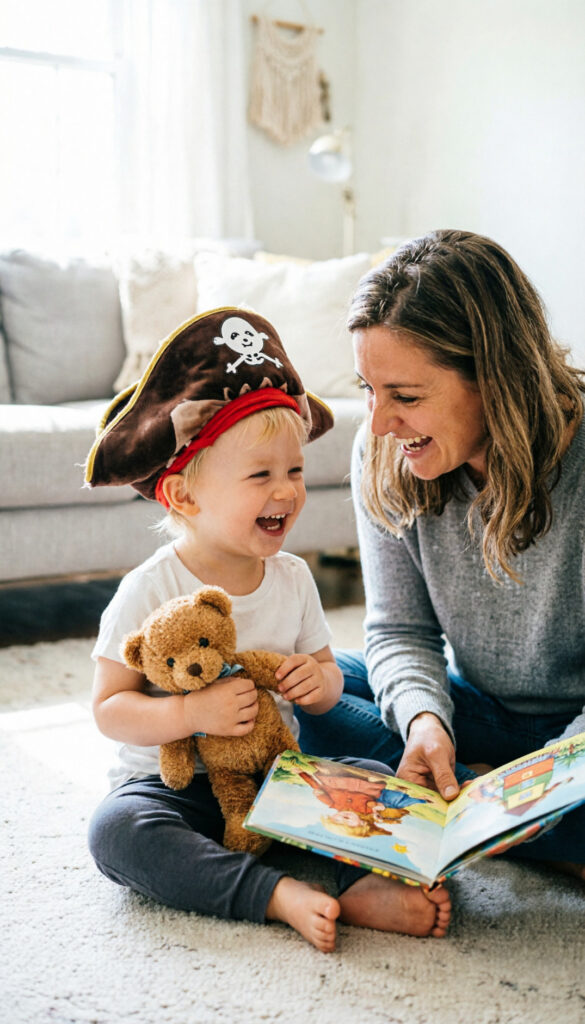
Reading is essential, but turning standard books into interactive performances elevates the experience, making storytelling highly memorable and deeply engaging for an active toddler.
Setup Guide
Select one of your toddler’s absolute favorite, well-known picture books. Gather a few basic props that relate to the story—these can be stuffed animals, simple household hats, or colorful scarves. Act out the narrative together, taking on the roles of the characters, using exaggerated, expressive voices, and encouraging your child to repeat familiar catchphrases from the text.
Developmental Benefits
This playful approach to storytelling naturally builds advanced language skills, vocabulary retention, and emotional empathy as they explore different character feelings. It helps children develop social confidence and strengthens their imaginative capacity, ensuring that reading feels like an exciting event rather than a mandatory daily routine.
4. DIY Art Station
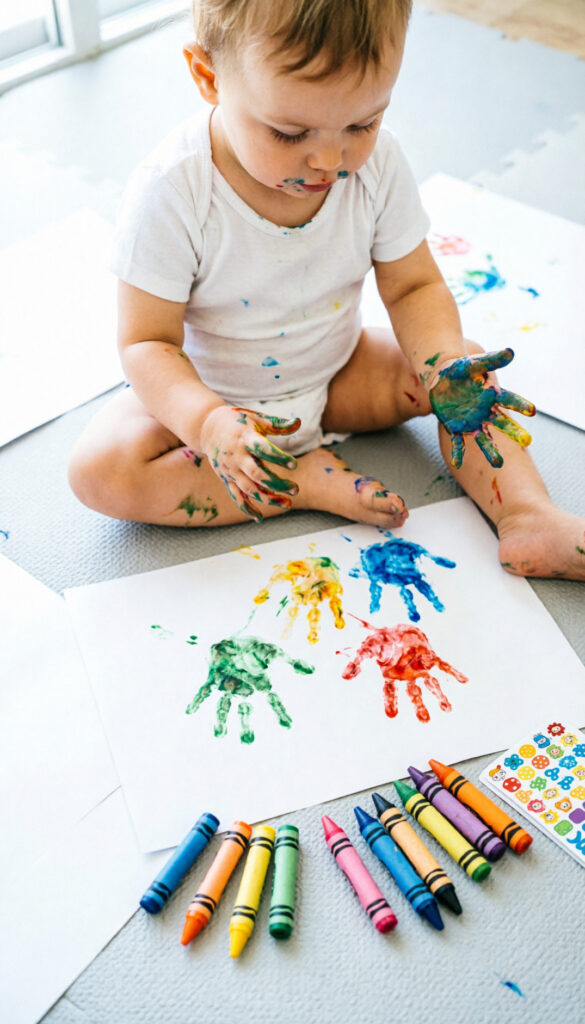
Establishing a dedicated, small art corner instantly inspires unstructured creativity and provides a healthy, quiet outlet for a toddler’s busy mind.
Setup Guide
Set up a small, washable table or clear a space on the floor with a protective mat. Provide chunky, toddler-safe crayons, washable tempera paints, large sheets of recycled paper, and a variety of stickers. The primary directive is to let them freely create without any strict instructions, templates, or expected outcomes.
Developmental Benefits
Artistic activities heavily develop fine motor control, proper hand grip, and early color recognition. More importantly, open-ended art provides toddlers with a vital outlet for self-expression, allowing them to process and communicate emotions and ideas that they do not yet have the verbal vocabulary to explain.
5. Kitchen Helper Activities
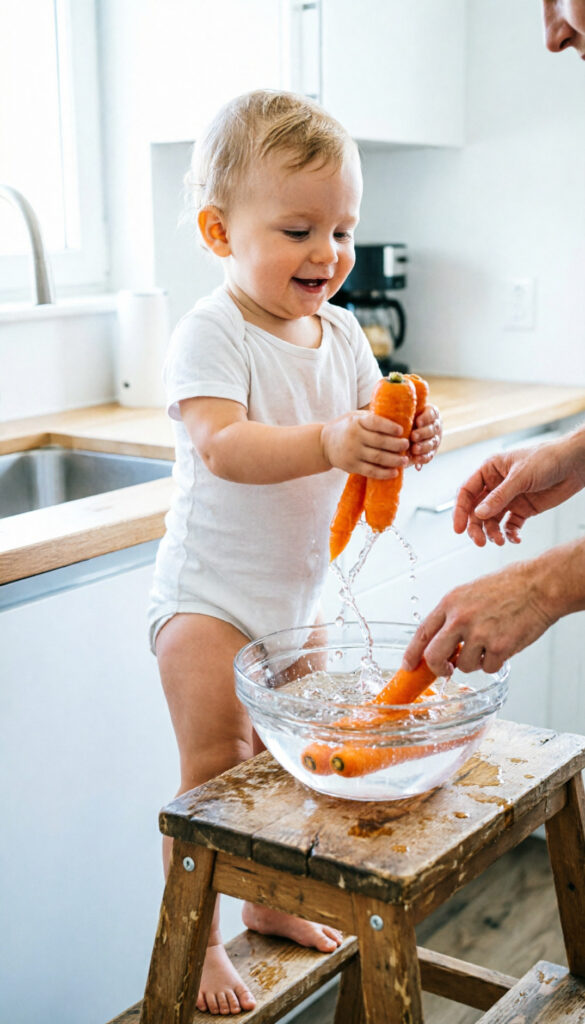
The kitchen is a place of endless fascination for young children. Inviting them into this space creates meaningful interactions that make them feel important, capable, and deeply integrated into the family’s daily life.
Setup Guide
Pull up a secure step stool to the counter. Assign your toddler simple, safe tasks that contribute to actual meal preparation. They can wash hardy vegetables like potatoes or carrots in a bowl of water, stir dry pancake batter, or sort ingredients like putting apples into a fruit bowl.
Developmental Benefits
Participating in real household work builds a strong sense of independence, self-worth, and responsibility. It provides natural opportunities to introduce early mathematical concepts like counting and volume, as well as exposing them to new sensory textures and vocabulary words.
6. Music and Dance Party

When the atmosphere in the house feels tense or energy levels are running too high, a spontaneous home dance session is one of the fastest, easiest ways to reset the mood.
Setup Guide
Clear a safe space in the center of the living room. Put on a playlist of upbeat, toddler-friendly music. Encourage your child to jump, spin, clap out the rhythm, or play games like “freeze dance” where everyone must stop moving when the music pauses. Hand out colorful scarves to wave or use wooden spoons on plastic bowls as makeshift drums.
Developmental Benefits
Vigorous movement immediately improves mood by releasing endorphins and helping toddlers safely expel pent-up physical energy. Dancing promotes gross motor coordination, rhythm recognition, and auditory processing, all while generating joyous, laughter-filled family memories.
7. Puzzle and Matching Games
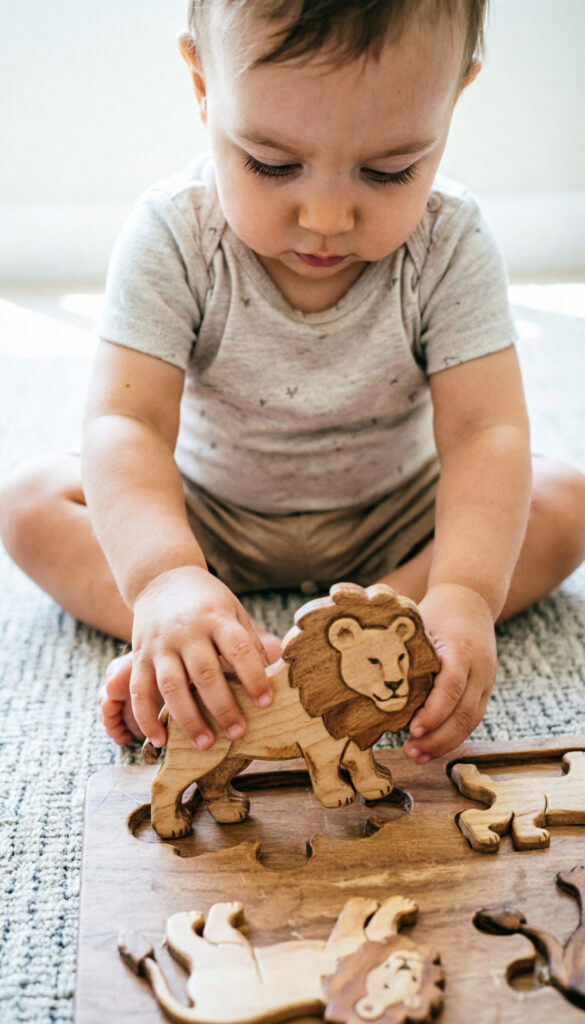
Puzzles are an excellent tool for shifting the pace of the day from active play to calm, focused, and quiet learning.
Setup Guide
Provide high-quality, age-appropriate wooden peg puzzles or large floor puzzles featuring bright, familiar images. Alternatively, create a simple matching game using household items, such as pairing up colored socks or matching plastic containers to their corresponding lids. Sit nearby to offer gentle verbal encouragement, but resist the urge to solve the puzzle for them.
Developmental Benefits
Engaging with puzzles encourages patience, spatial awareness, and critical problem-solving skills. Matching activities build early cognitive categorization skills. Completing a challenging task independently provides a massive boost to a toddler’s self-esteem and persistence.
8. Blanket Fort Building
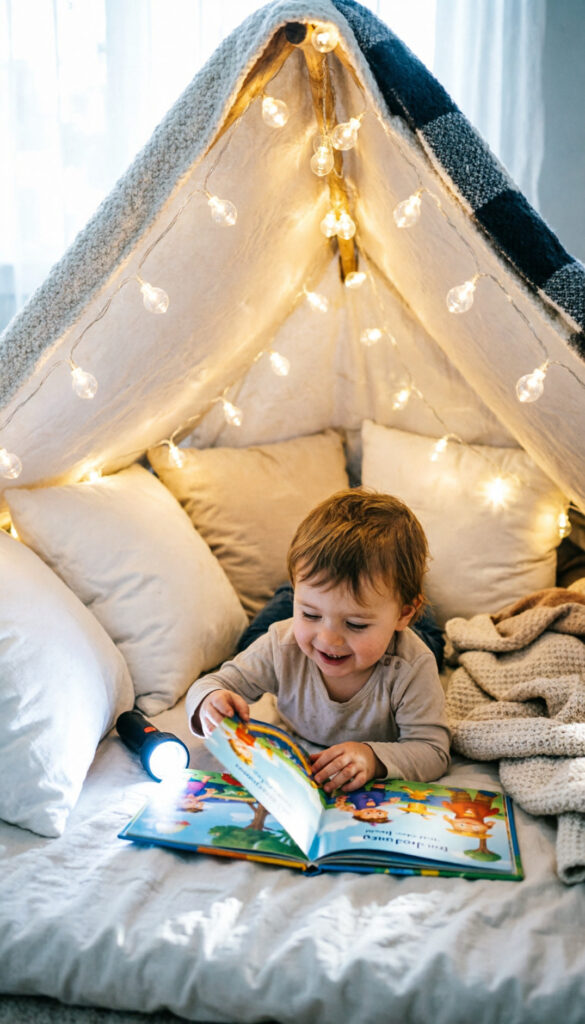
Constructing a cozy hideaway transforms an ordinary living space into a magical, private environment that sparks deep imaginative play.
Setup Guide
Gather several sturdy dining chairs, large bed sheets, heavy blankets, and plenty of soft pillows. Drape the blankets over the chairs to create an enclosed space, using heavy books or clips to secure the edges. Inside, place a comfortable rug, a small pile of their favorite books, and a child-safe flashlight or battery-operated fairy lights.
Developmental Benefits
Building a fort introduces basic concepts of structural engineering and problem-solving. Once inside, the enclosed, cozy space provides immense emotional comfort and security, creating an ideal environment for independent reading, pretend play, or simply decompressing from a highly stimulating day.
9. Sorting and Organizing Play
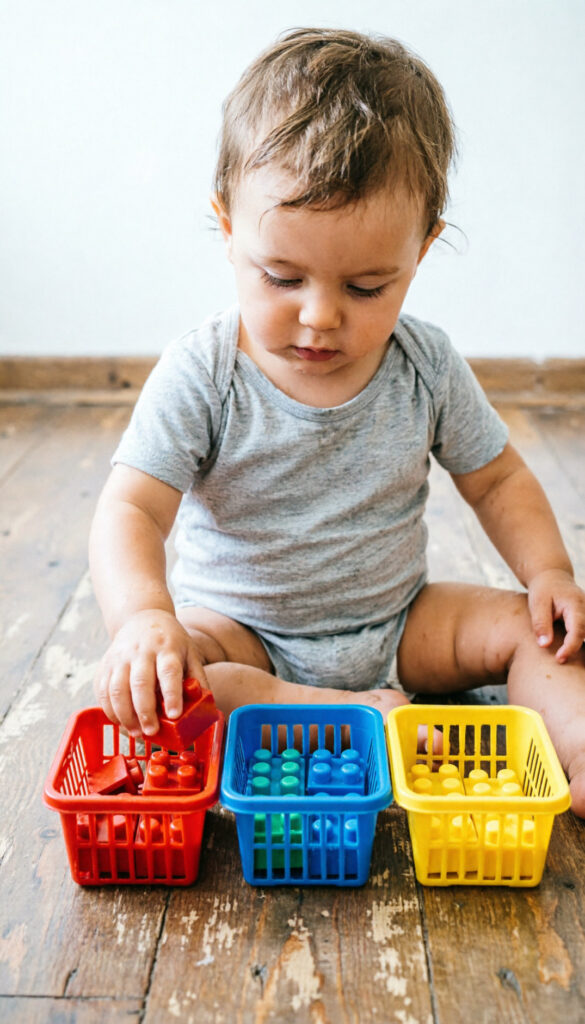
What adults view as mundane chores, toddlers often view as fascinating challenges. Sorting activities leverage this natural curiosity for educational purposes.
Setup Guide
Empty a basket of laundry and ask your toddler to help you find all the socks, or pull out a set of multi-colored building blocks and ask them to group them by color. You can also use kitchen items, having them separate the large plastic spoons from the small ones.
Developmental Benefits
Sorting objects by physical attributes (color, size, shape, or function) is a foundational pre-math skill. It strengthens logical thinking, visual discrimination, and pattern recognition. Turning clean-up routines into organizing games builds early habits of responsibility and independence.
10. Water Play Station
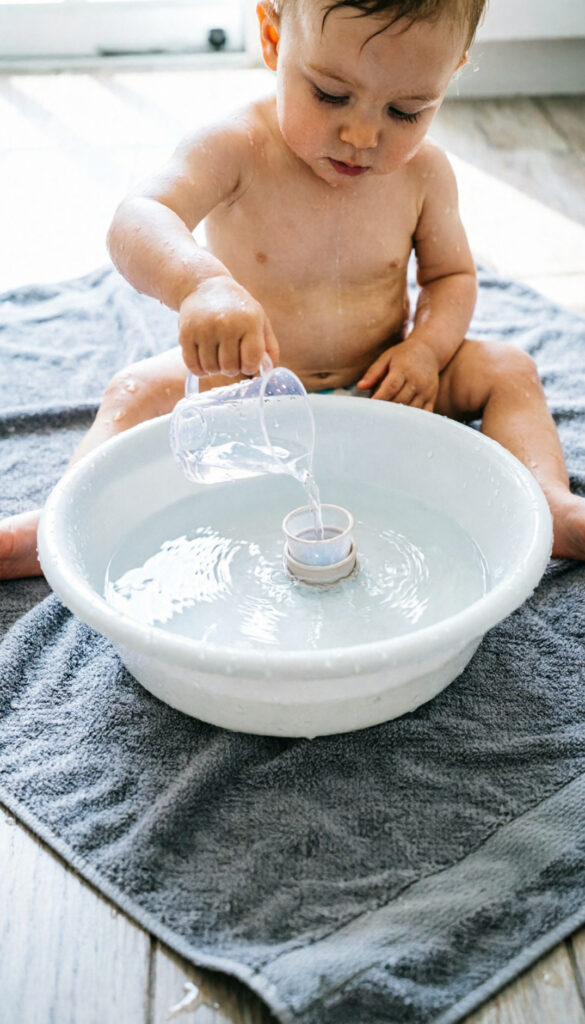
Water play is universally captivating for toddlers. It is highly engaging, deeply soothing, and incredibly easy to set up on short notice.
Setup Guide
Lay a large, thick bath towel over the kitchen floor. Place one or two shallow plastic basins or large mixing bowls on the towel. Fill them with an inch or two of lukewarm water. Provide plastic cups, small pitchers, spoons, and a few items to test for buoyancy (like a plastic block and a metal spoon).
Developmental Benefits
Water play provides intense calming sensory stimulation, which is excellent for emotional regulation. As toddlers pour water from container to container, they are learning basic principles of physics, volume, and cause-and-effect, all while honing their hand-eye coordination.
11. Pretend Grocery Store
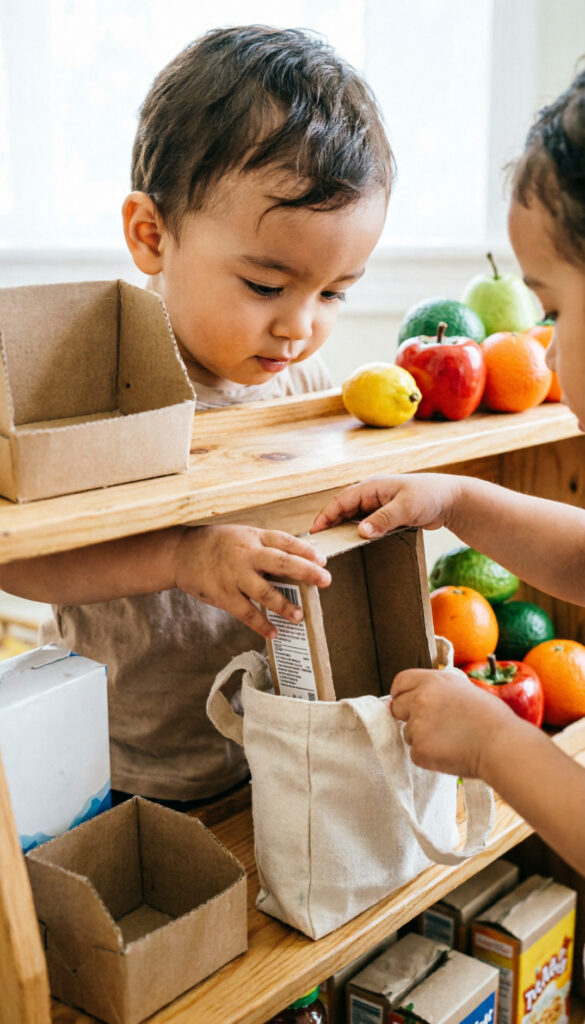
Role-playing everyday scenarios helps toddlers make sense of the adult world they observe daily, turning routine errands into thrilling games.
Setup Guide
Save a collection of clean, empty food packaging such as cereal boxes, egg cartons, and milk jugs. Set them up on a low table or sofa to act as the store shelves. Provide a reusable shopping bag or a small basket, and use scraps of paper as pretend money. Take turns playing the roles of the eager shopper and the helpful cashier.
Developmental Benefits
Pretend play is critical for advanced social development and communication skills. It allows children to practice conversational turn-taking, decision-making, and foundational counting as they “pay” for their groceries.
12. Sticker Story Creation
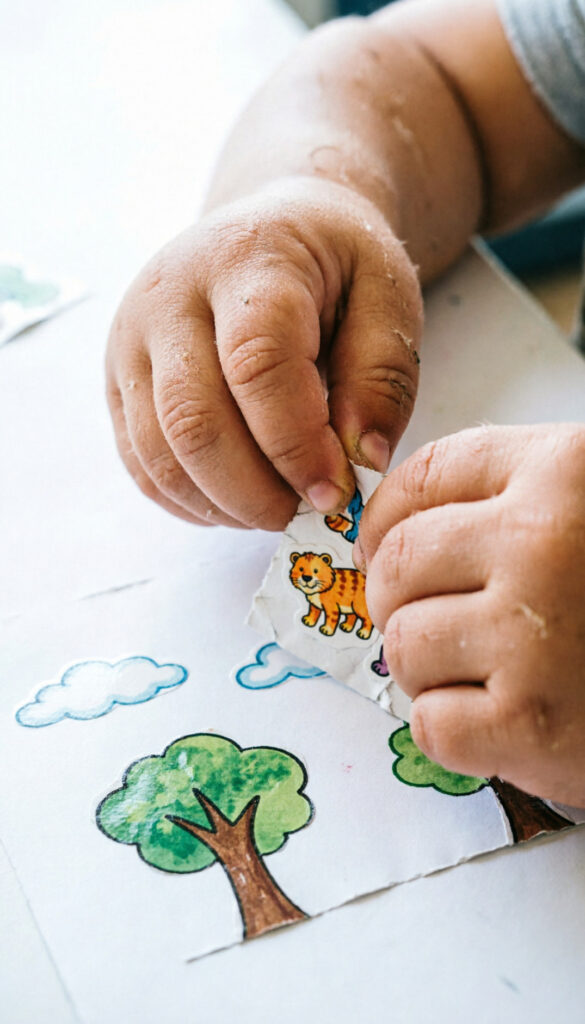
When you need an activity that requires zero physical exertion and absolute quiet, sticker stories are highly effective and creatively satisfying.
Setup Guide
Provide a few sheets of plain white paper and a variety of themed stickers (such as animals, vehicles, or stars). Encourage your toddler to peel the stickers, place them onto the paper, and create a scene. Once they are finished, ask them to describe the picture and tell you a story about what the characters are doing.
Developmental Benefits
The physical act of peeling stickers is one of the best exercises for developing the pincer grasp the coordination of the index finger and thumb which is vital for future handwriting. Verbally narrating their creation expands expressive vocabulary and narrative sequencing abilities.
13. Building Blocks Challenge
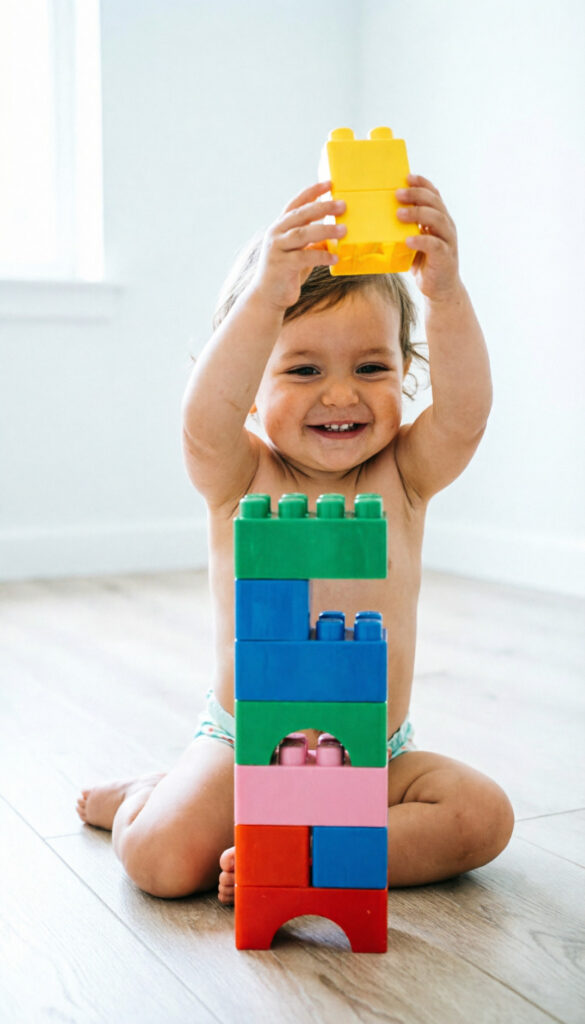
Wooden or large interlocking plastic blocks are a staple of the screen-free home. They are the ultimate open-ended toy, capable of becoming anything a child envisions.
Setup Guide
Dump a large container of blocks onto an open floor space. Start by building alongside your toddler, encouraging them to construct tall towers, long roads, or enclosed houses for their toy animals. Introduce gentle challenges, such as asking them to build a tower using only blue blocks, or seeing how high they can stack them before the structure topples.
Developmental Benefits
Construction play deeply enhances spatial awareness, structural balance, and fine motor precision. The inevitable collapse of a tower teaches cause-and-effect and resilience, showing them that it is okay to start over and try again.
14. Nature Treasure Basket

Bringing elements of the outdoors inside provides a rich, varied sensory experience that synthetic plastic toys cannot replicate.
Setup Guide
Take a brief walk outside and collect safe, natural items such as large dry leaves, smooth river stones, sturdy twigs, and pinecones. Wipe them down and place them into a shallow woven basket indoors. Allow your toddler to handle, inspect, and sort the items. Discuss the differences in texture, weight, and color.
Developmental Benefits
This nature-inspired activity promotes deep tactile exploration and scientific curiosity. Discussing the objects introduces rich, descriptive vocabulary (rough, smooth, heavy, brittle), expanding their understanding of the natural environment around them.
15. Simple Science Experiments
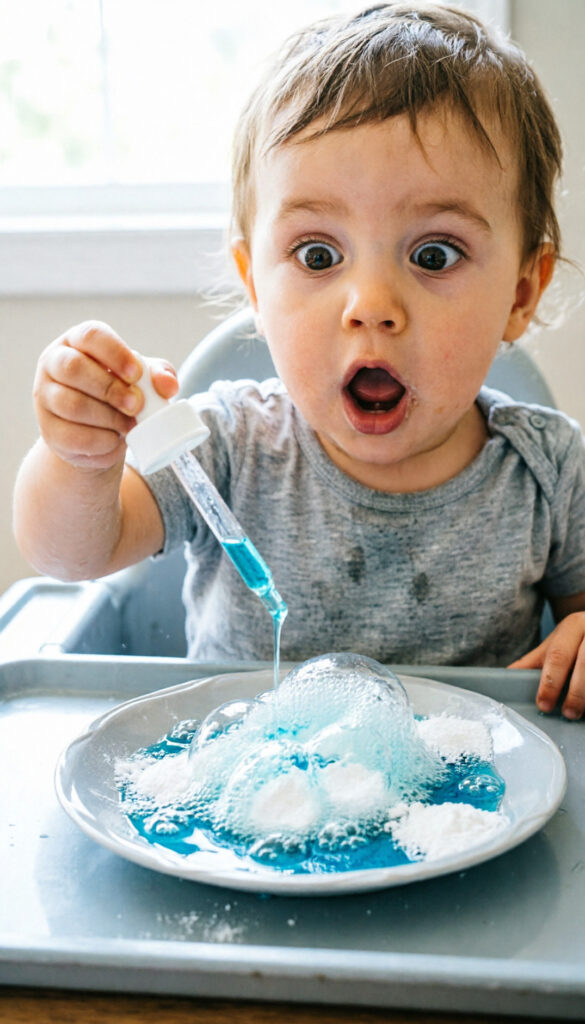
You do not need a laboratory to introduce a toddler to the wonders of scientific reaction. Simple household ingredients can spark immense wonder.
Setup Guide
Place a few scoops of ordinary baking soda into a shallow dish. Give your toddler a small cup of white vinegar and a plastic dropper or a small spoon. Let them drip the vinegar onto the baking soda and watch the immediate, bubbling chemical reaction. Alternatively, freeze small plastic toys in ice cubes and let your toddler use warm water and a spoon to “excavate” them.
Developmental Benefits
Early science experiments ignite natural curiosity and observational skills. While toddlers do not need complex chemical explanations, watching reactions occur introduces them to the concept of variables and the scientific method of inquiry and discovery.
16. Dress-Up and Role Play

A simple box of varied clothing allows a toddler to safely explore different identities, professions, and perspectives.
Setup Guide
Fill a dedicated box or basket with an assortment of clean, safe items: oversized t-shirts, old hats, soft scarves, aprons, and unused sunglasses. Encourage your child to put on different outfits and invent scenarios. They might become a doctor caring for stuffed animals, a chef cooking in a pretend kitchen, or an explorer navigating the living room.
Developmental Benefits
Role-playing is profoundly beneficial for emotional intelligence and empathy. By stepping into someone else’s shoes, toddlers learn to view the world from different perspectives. It also encourages independent, narrative-driven play.
17. Calm Reading Corner Time
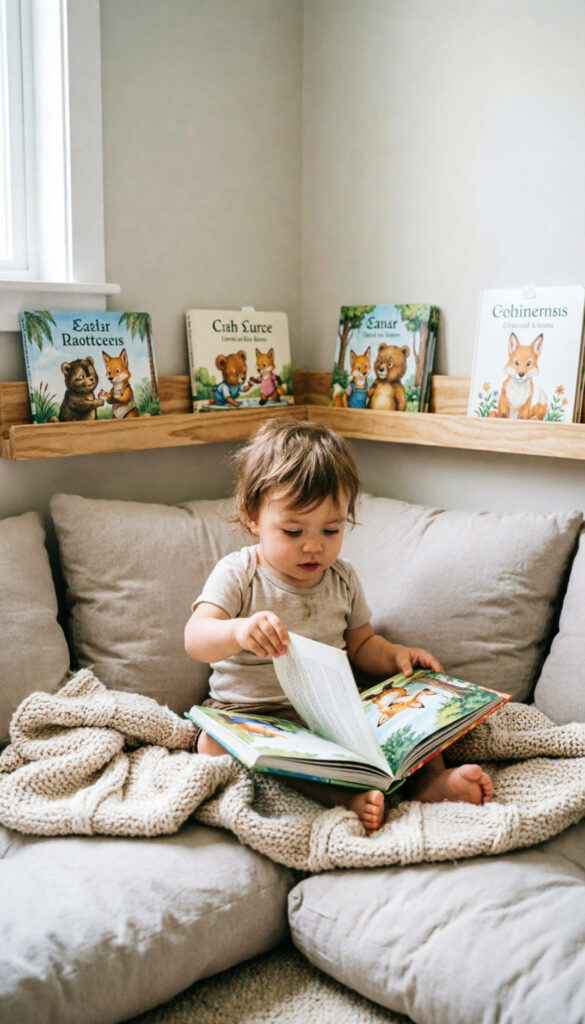
Ending the day or transitioning into a nap with a dedicated, quiet reading time ensures a peaceful home environment and fosters a lifelong appreciation for literature.
Setup Guide
Designate a specific corner of a room as the reading nook. Make it incredibly inviting by adding a soft floor cushion, a plush blanket, and forward-facing book ledges so the covers are easily visible. Keep the lighting warm and gentle. Allow your child to independently flip through board books, or sit with them to read stories aloud.
Developmental Benefits
Consistent access to books drastically improves vocabulary, auditory processing, and attention span. A dedicated reading routine signals to the brain that it is time to relax and wind down, making daily transitions significantly smoother.
Frequently Asked Questions (FAQs)
How long should an indoor screen-free activity last?
Attention spans vary greatly by age and temperament. For a typical toddler (ages 1 to 3), an independent activity may only hold their attention for 10 to 15 minutes. Interactive activities where a parent is fully involved may last 20 to 30 minutes. Do not force an activity if they lose interest; simply allow them to move on and leave the materials out in case they wish to return to them later.
How can I encourage my toddler to play independently without a screen?
Independent play is a learned skill that requires practice. Start by playing actively alongside them for five minutes to get them deeply engaged in the activity. Once they are focused, slowly physically distance yourself—perhaps moving to the couch or the kitchen counter while remaining in their line of sight. Offer verbal praise for their focus, and gradually increase the duration of your distance over a period of weeks.
What if my toddler makes a massive mess during these activities?
Mess is a natural, unavoidable byproduct of early childhood learning. To manage your own stress, set clear physical boundaries before the activity begins (e.g., “The water stays on the towel,” or “The sand stays in the bin”). Keep cleaning supplies within arm’s reach. Most importantly, incorporate the cleanup process into the activity itself. Toddlers naturally enjoy helping if it is presented as a game rather than a punishment.
Do I need to buy expensive educational toys to do this successfully?
Absolutely not. The vast majority of the activities listed above utilize everyday household items—pillows, blankets, kitchen utensils, dry pasta, and recycled boxes. Open-ended, common items actually foster more creativity and imagination than highly specific, expensive battery-operated toys that do the playing for the child.
Conclusion
Incorporating screen-free toddler activities indoors into your daily routine is one of the most impactful choices you can make for your child’s early development and your family’s overall peace of mind. It does not demand perfection, expensive resources, or hours of complex planning; it simply requires a shift in intention. By offering simple, hands-on experiences, you provide your child with the tools they need to develop a robust imagination, refine crucial motor skills, build emotional resilience, and foster a healthy sense of independence.
By rotating these seventeen activities and keenly observing your child’s unique interests, screen-free time transitions from a daunting task into a joyous daily habit. These small, shared moments of discovery will ultimately form the foundation of their most cherished childhood memories. If you found these ideas helpful and want to continue exploring practical parenting inspiration, engaging play guides, and tips for creating a calmer home, be sure to subscribe to the blog for future updates designed to make family life easier, richer, and significantly happier.