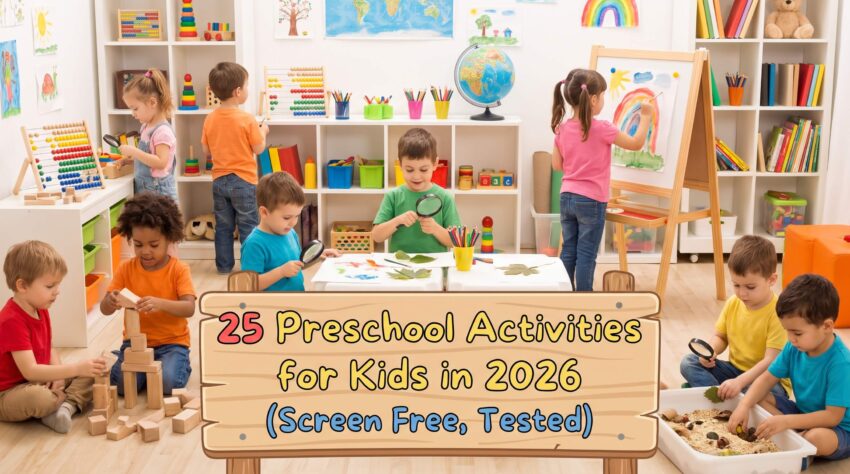
The preschool activities that actually work at home give a 3 to 5 year old something to do with their hands, a clear finish line, and a result they can see. Setups like big vertical drawing, water play with floating objects, tweezer sorting, and ice rescue hold attention for 15 to 30 minutes using materials most homes already have. Keep setup under five minutes, decide your mess limit before you start, and pick based on how much supervision you can realistically give right now.
Key takeaways
- Realistic focus span for one preschool activity is 10 to 20 minutes. Two short activities beat one long one.
- Every activity below lists true age range, total time including cleanup, mess level, and supervision load.
- Lowest prep options: Tap Turtles, Banana Cutting, Big Canvas, Animal Sorting. All under two minutes to set up.
- Highest payoff for time invested: Cardboard City and Seed Scooping.
- The American Academy of Pediatrics recommends limiting screen media to about one hour per day of high quality programming for children aged 2 to 5, which is exactly the gap these activities are built to fill.
My preschooler asked for the tablet before breakfast yesterday. Again. I hadn’t had coffee yet and I could already feel that low hum of guilt starting up.
I didn’t want another screen day. I also needed forty minutes to unload the dishwasher, answer two emails, and remember what a full thought feels like.
If that’s your morning, you’re in good company. The problem isn’t a shortage of preschool activities. It’s that most lists take twenty minutes to set up and last four.
So this one is sorted differently. Every activity tells you the real age range, the real time cost including cleanup, how messy it genuinely gets, and whether you can walk away or need to stand there the whole time.
It’s autumn 2026 as I write this, so the apple and leaf versions are what’s on my table this month. The rest work year round.
How Can You Keep Preschool Kids Busy at Home Without Screens?
You give them something for their hands and their mind at the same time. One without the other falls apart fast.
Preschoolers don’t need fancy toys. They need pouring, sorting, building, stamping, pretending. Tasks where they make a small decision every few seconds.
Three things decide whether an activity lasts:
- A visible end point. “Fill all six cups” holds longer than “play with the water.”
- A job they can do without you correcting it. The second you fix their work, they’re finished.
- Setup under five minutes. Longer than that and you’ll resent it, and they’ll be bored before you’re done.
Practical note: A preschooler’s focus on one self chosen task usually runs 10 to 20 minutes. If you get 25, that’s a win, not the baseline. Plan two short activities instead of one long one and you’ll stop feeling like these things “don’t work.”
All 25 Preschool Activities by Age, Mess, and Time
Listed in the order they appear below, so you can scan, pick one, and jump straight to it. Total time includes prep and cleanup.
| Activity | Best ages | Mess | Total time | Supervision | Main skill |
|---|---|---|---|---|---|
| Cardboard City | 3 to 5 | Low | 60 min | Light | Imaginative play |
| Sprinkle Art | 3 to 5 | High | 30 min | Hands on | Pincer grip |
| Tap Turtles | 2.5 to 4 | None | 20 min | Light | Hand eye coordination |
| Ice Rescue | 3 to 5 | Medium | 35 min plus freeze | Constant | Problem solving |
| Sand Writing | 3.5 to 5 | Low | 20 min | Light | Letter formation |
| Wrap Painting | 3 to 5 | High | 50 min | Hands on | Shoulder strength |
| Animal Sorting | 2.5 to 5 | None | 30 min | Light | Classifying |
| Banana Cutting | 2.5 to 5 | Low | 15 min | Hands on | Hand strength |
| Big Canvas | 2 to 5 | Low | 30 min | Check in | Gross motor, pre writing |
| Seed Scooping | 2.5 to 5 | Medium | 45 min | Constant under 3.5 | Volume, pouring |
| Snack Faces | 2 to 5 | Low | 30 min | Hands on | Food confidence |
| Mud Construction | 2.5 to 5 | High | 60 min plus bath | Light, outdoors | Sensory, experimenting |
| Letter Craft | 3.5 to 5 | Medium | 30 min | Medium | Letter recognition |
| Circle Ball | 2.5 to 5, 3 plus kids | None | 20 min | Medium | Turn taking |
| Apple Painting | 3 to 5 | Medium | 40 min | Medium | Brush control |
| Pom Sorting | 2.5 to 5 | Low | 25 min | Constant under 4 | Colour sorting |
| Water Boats | 2.5 to 5 | Medium | 40 min | Constant | Cause and effect |
| Chalk Art | 2 to 5 | Medium dust | 35 min | Light | Mark making |
| Farm Pretend | 2.5 to 5 | Low | 45 min | Light, outdoors | Language, empathy |
| Number Painting | 3 to 5 | Medium | 35 min | Hands on | One to one counting |
| Sand Stamps | 3 to 5 | Medium | 40 min | Light, outdoors | Hand strength |
| Shape Collage | 3 to 5 | Low | 35 min | Light | Shape recognition |
| Snow Garden | 3 to 5 | Low | 30 min | Medium, outdoors | Seasons, vocabulary |
| Tooth Brushing | 3 to 5 | Medium | 30 min | Hands on | Self care habit |
| Bunny Toss | 3 to 5 | Low | 35 min | Light | Aim, counting |
Pick by Situation: Ten Minutes, No Mess, or All Afternoon
Sometimes the age isn’t the deciding factor. Your Tuesday is.
You have ten minutes and no prep time: Tap Turtles, Banana Cutting, Big Canvas, Animal Sorting.
You cannot face any mess today: Animal Sorting, Cardboard City, Tap Turtles, Sand Writing, Shape Collage, Circle Ball.
You need a genuinely long stretch: Cardboard City, Seed Scooping, Mud Construction, Farm Pretend.
It’s raining and they have too much energy: Big Canvas, Bunny Toss, Wrap Painting.
Your kid is sensory sensitive: Shape Collage, Cardboard City, Animal Sorting, Sand Writing, Tap Turtles, Big Canvas.
You’re outnumbered and need to cook: Seed Scooping on a sheet, Animal Sorting, Cardboard City. All three tolerate you checking in rather than sitting there.
Safety Rules That Apply to Every Preschool Activity Here
Read this once, then skim the rest.
Choking. Pom poms, beads, plastic gems, dried beans, cotton balls, small animal figures and googly eyes are all choking or inhalation hazards for under 3s, and plenty of 3 and 4 year olds still mouth things. US federal regulations ban small parts that fit entirely inside a small parts cylinder in toys intended for children under three, and that cylinder is roughly the size of a young child’s throat. Beans and beads up the nose are a genuinely common ER visit. If your kid still mouths materials, swap to large items or skip that activity for now.
Food and allergens. Any food based craft is an allergen risk for your child and any child who visits later. Sprinkles commonly contain wheat and soy. Shaving cream is not food. Check every label and never assume a playdate kid is clear.
Water. A toddler can drown in very shallow water. Any bin of water means you in the room, eyes on, the entire time. Empty it the moment you finish.
Sharp and hot tools. Cutting cardboard, cutting toothpicks and slicing anything firmer than a banana are adult jobs. Not adult supervised. Adult done.
Round foods. Whole grapes, blueberries, olives, cherry tomatoes and pretzel sticks are classic choking shapes. Quarter them lengthwise for under 4s.
1. Cardboard City
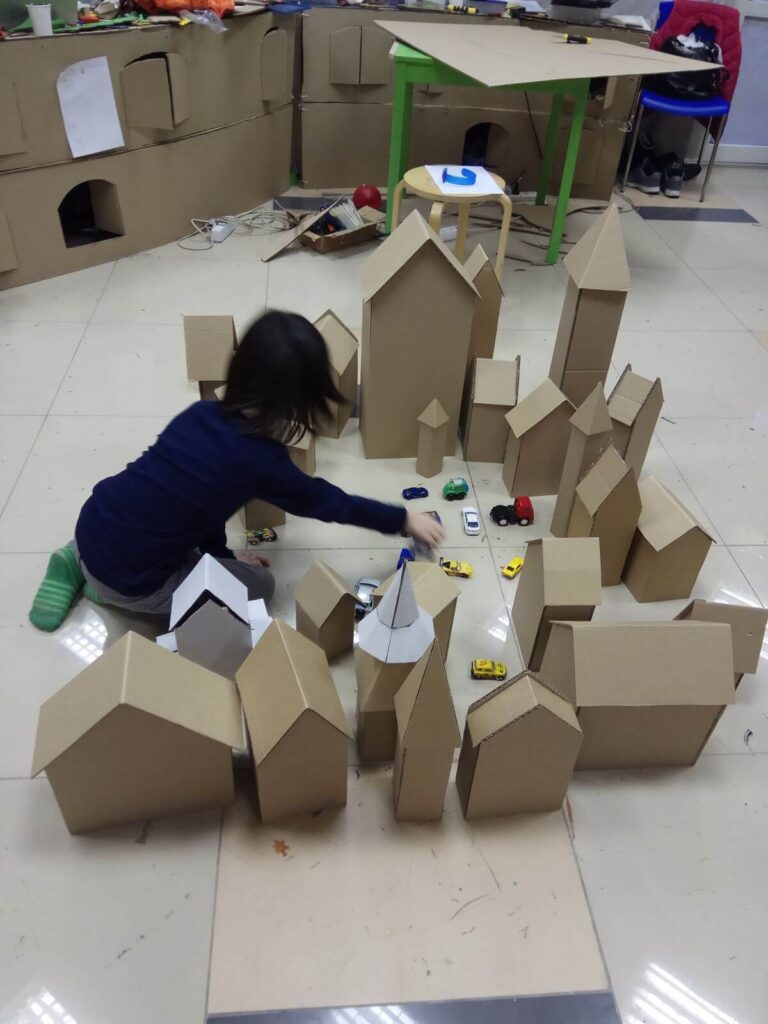
Ages 3 to 5 · 60 minutes total · Mess: low · Supervision: light
Starting with the one that buys you the most time. A big flattened box, a marker, and twenty minutes of your attention up front gives you a week of play.
Draw roads, a park, a school, a car wash. Let them say where things go. Then toy cars, wooden blocks as buildings and peg dolls as residents take over.
Draw the roads at least four inches wide. Narrower and the cars keep falling off the “road,” which frustrates a 3 year old into quitting. I learned that with two inch roads and a lot of crying.
Where to get the cardboard free: Appliance and furniture stores almost always have flattened boxes out back and will hand you one if you ask. A mattress box is the jackpot.
Adapt: Younger, roads and a car park, nothing more. Older, let them draw the second half themselves and add street signs with labels.
Roll it up and slide it behind the sofa between sessions.
2. Sprinkle Art
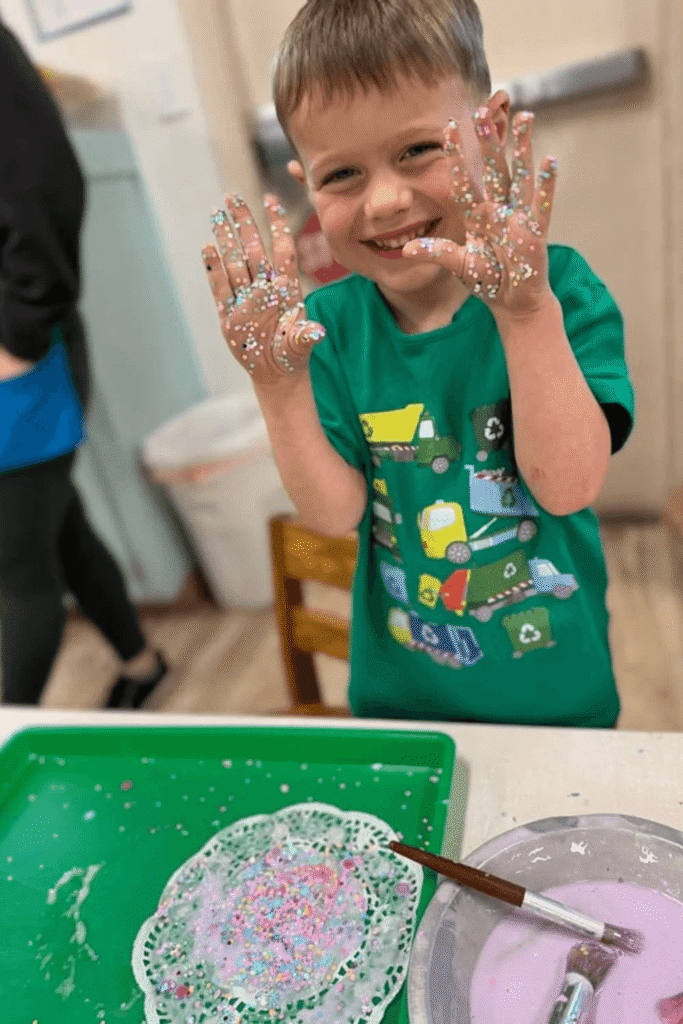
Ages 3 to 5 · 30 minutes total · Mess: high · Supervision: hands on
Thin layer of washable glue on paper, then let them pinch sprinkles from a bowl and drop them. Pinching is the skill. Same grip they’ll use to hold a pencil.
Sprinkles bleed. Within about ten minutes the wet glue pulls the colour out and everything turns greyish brown. Shake the excess onto a tray quickly and the colours hold much better.
They will eat the sprinkles. Plan around it rather than fighting it.
Allergen warning: Most supermarket sprinkles contain wheat and soy, some contain milk. Check the label before any activity involving a child who isn’t yours.
Adapt: Younger, pre spread the glue yourself and let them only sprinkle. Older, draw an outline first and challenge them to stay inside it.
Free swap: Colour table salt by shaking it in a jar with a stub of chalk. Cheaper, no allergens, and the colour stays truer on glue than sprinkles do.
3. Tap Turtles
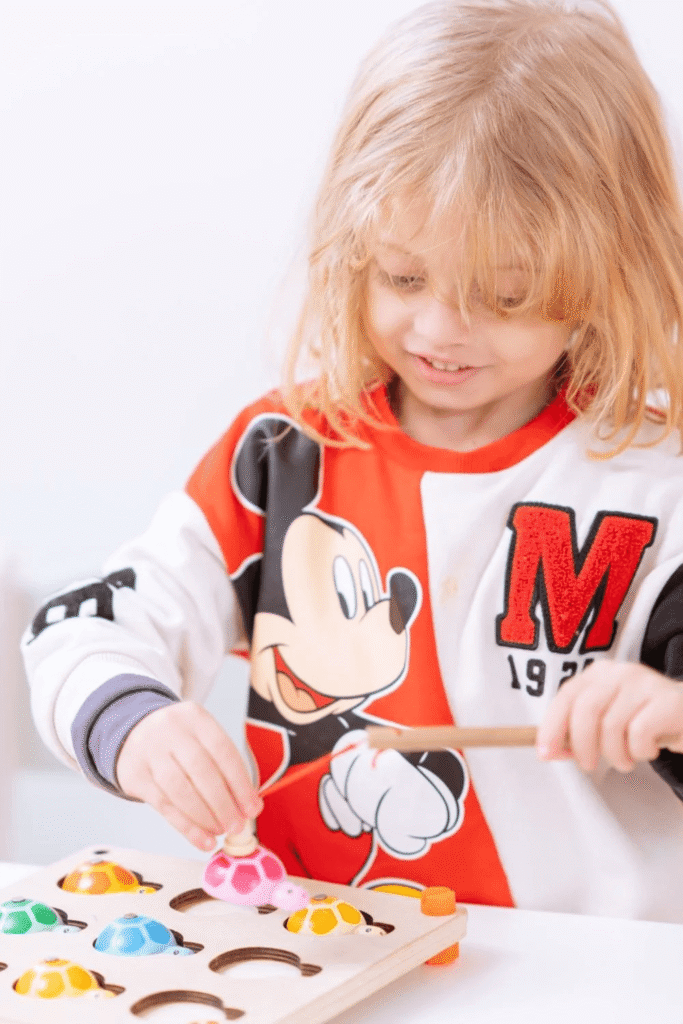
Ages 2.5 to 4 · 20 minutes total · Mess: none · Supervision: light, once hammer rules are set
A wooden pounding bench, the kind Melissa & Doug and Hape both make, where pegs get hammered through and the whole board flips to start again.
Single best “I need ten minutes” activity for a 3 year old. Zero setup, zero mess, and they feel powerful.
It is loud. Genuinely loud. Put it on a folded bath towel and it drops to a tolerable thud.
Pegs are choking size, so it’s a no for kids still mouthing toys, and the hammer needs one clear rule before you hand it over: the hammer only touches the board.
Budget version: Golf tees and a thick slab of pool noodle, tapped with a wooden spoon. A couple of dollars and almost as good.
Adapt: Younger, hand tap the pegs with a palm instead of a hammer. Older, call out a colour and have them hammer only that one.
4. Ice Rescue
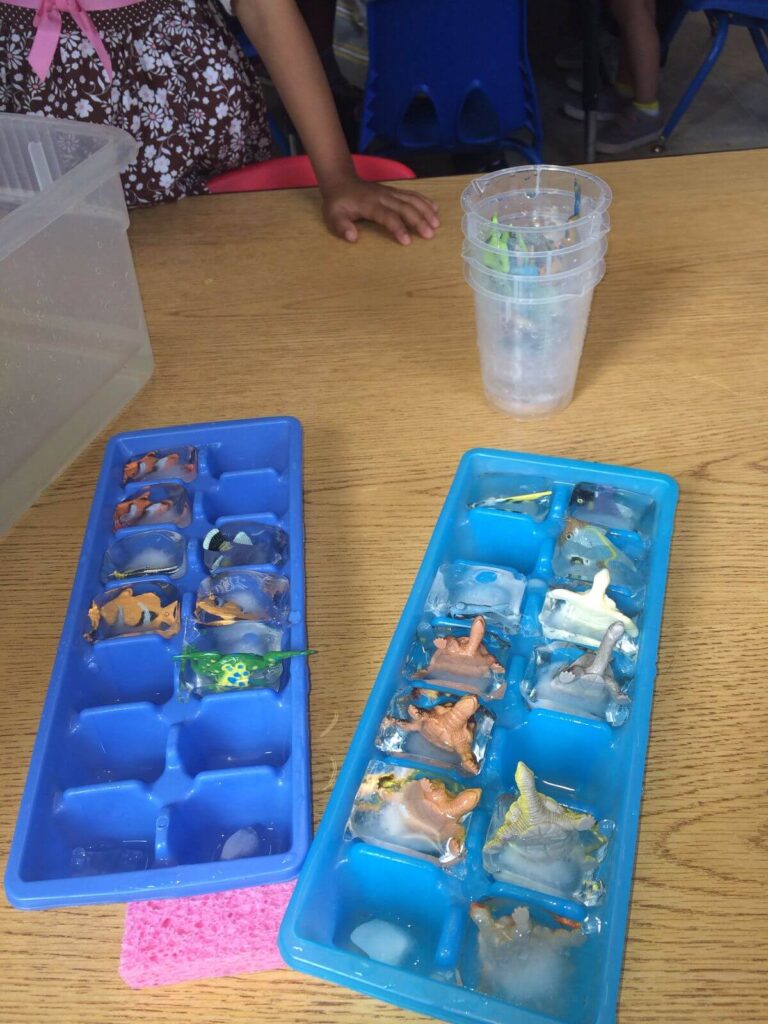
Ages 3 to 5 · 35 minutes plus overnight freezing · Mess: medium, wet · Supervision: constant
- Drop small plastic toys into a loaf pan, add half an inch of water, freeze two hours.
- Add another half inch of water and the rest of the toys, freeze overnight.
- Turn the block out into a tray.
- Hand over a pipette or a small cup of warm (not hot) tap water, plus a salt shaker.
- Let them melt their treasures free.
The two layer freeze is the whole trick. Pour everything in at once and the toys float to the top, the first three pop out in 90 seconds, and it’s over.
Salt sprinkled on the ice speeds melting noticeably. Hold it back until they start losing patience, then produce it like a plot twist.
Safety: Use plastic animals rather than beads or gems. Once freed, they’re loose choking hazards on a wet floor. Test the water on your own wrist first.
Adapt: Younger, freeze a thinner block so it gives up faster. Older, give them two blocks and let them test salt against warm water and time it.
5. Sand Writing
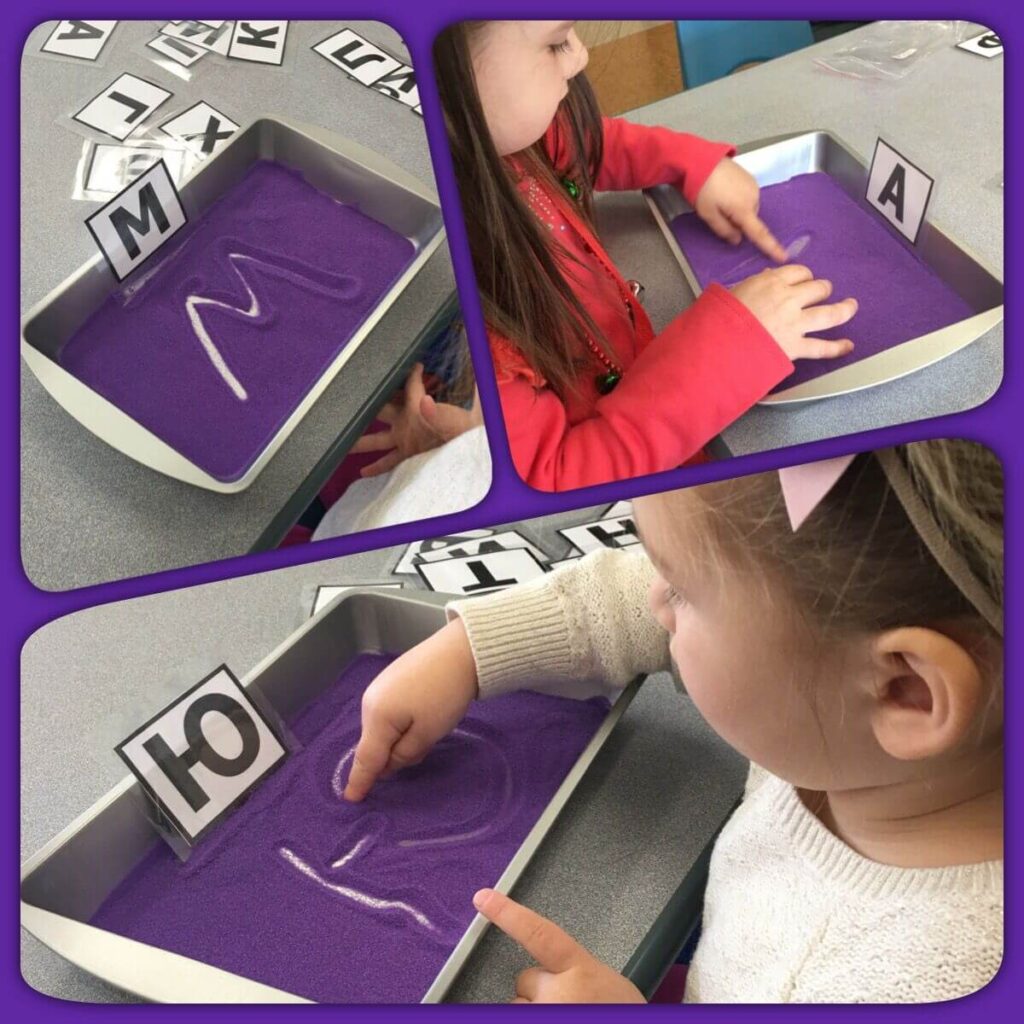
Ages 3.5 to 5 · 20 minutes total · Mess: low · Supervision: light
Thin layer of coloured craft sand in a shallow tray, smoothed flat. Say a letter, they trace with one finger, then shake to erase.
The erase is the magic. No wrong answer sticks around, which is why kids who freeze with a pencil will happily do twenty letters in sand.
Use a dark tray with light sand or a light tray with dark sand. A white tray with pale sand gives no contrast and the letters vanish, which defeats the point.
Free swap: Table salt works, so does dry semolina, so does flour in a baking tray. A pinch of chalk dust shaken through salt colours it for nothing.
Adapt: Younger, trace shapes and squiggles, not letters. Older, whole names and simple three letter words.
Put a few letter cards beside the tray for kids who want a model. Some do, some hate it
6. Wrap Painting
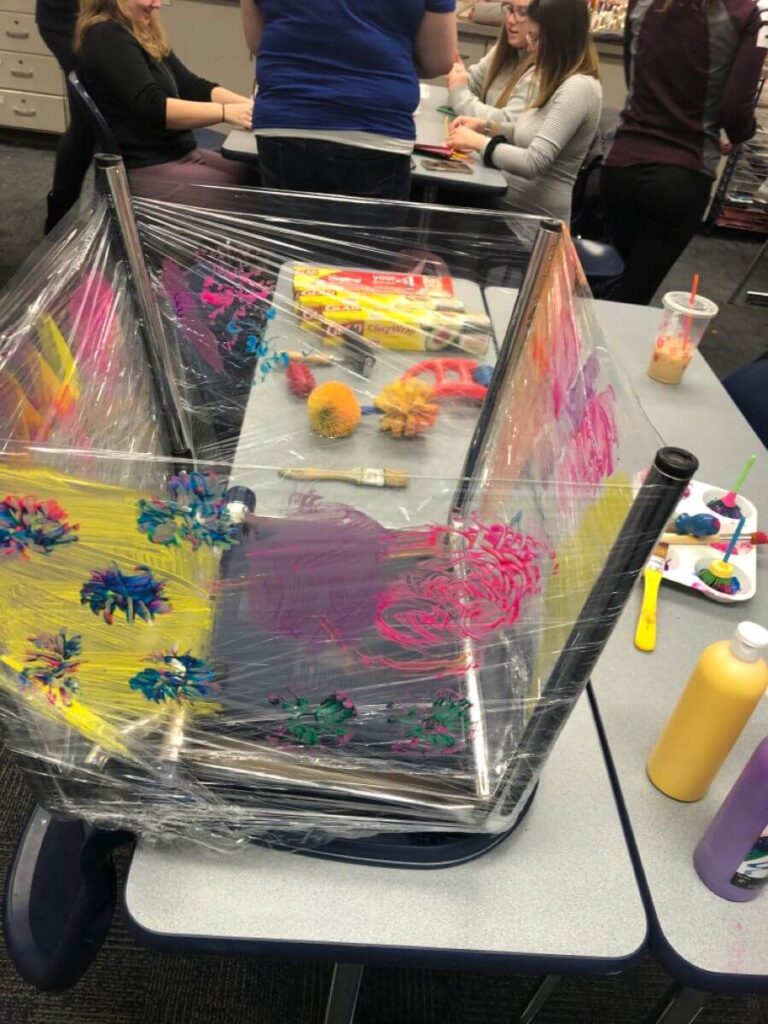
Ages 3 to 5 · 50 minutes total · Mess: high · Supervision: hands on
Stretch cling film tight, put blobs of washable paint behind it, and let them push the colours around with their palms.
Do not tape it between two chairs. It sags within ten minutes and the paint pools at the bottom. Stretch it over an old picture frame or a blank canvas and it stays taut the whole session.
Standing to paint changes how they move. More shoulder, more whole body, more energy burned.
Safety: Loose plastic film is a suffocation risk. Keep it stretched tight, keep it above chest height, and take it down and bin it the moment you finish. Never leave it up around a child under 3.
Adapt: Younger, do it flat on a tray instead of vertical. Older, add a second layer of film and let them discover colour mixing between the layers.
Free swap: Tape a black bin bag or an old shower curtain liner to a fence and paint straight onto that. Same effect, outdoors, no film risk
7. Animal Sorting
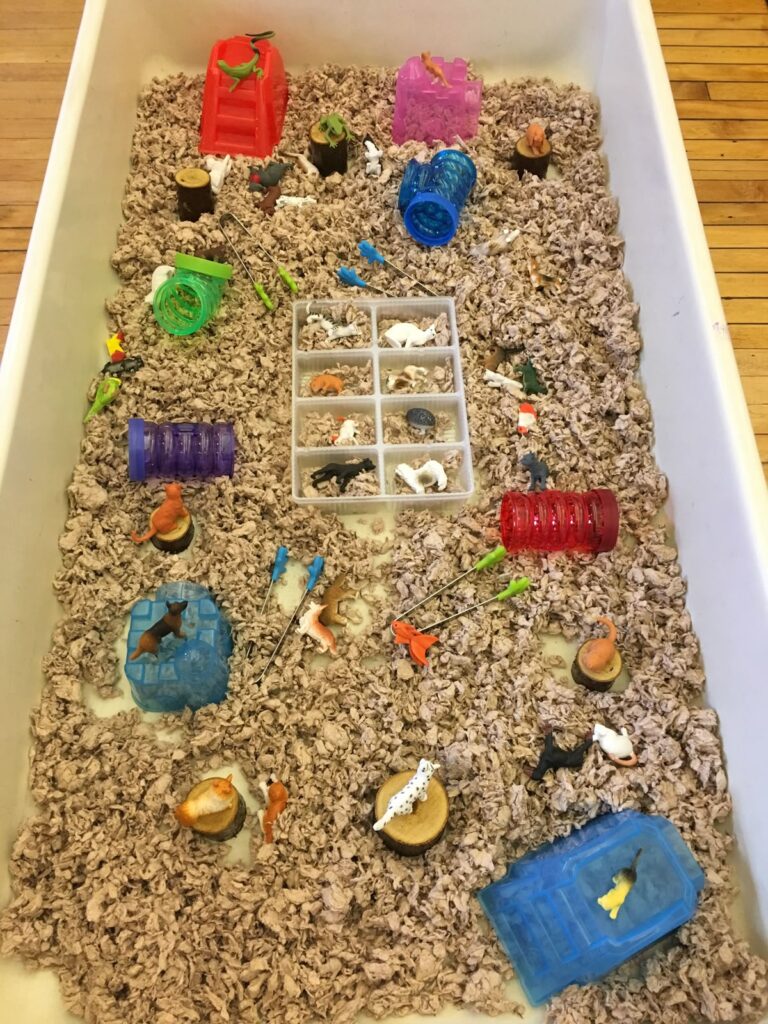
Ages 2.5 to 5 · 30 minutes total · Mess: none · Supervision: light, constant under 3
Tip out a box of small plastic animals and sort them into an ice cube tray or an egg carton. Farm in one section, ocean in another, jungle in a third.
Sort by one rule at a time. Type, or colour, or size. Give a 3 year old two rules at once and they stall and quit, and it looks like disinterest when it was actually overload.
Once sorting finishes, the compartments usually become habitats and pretend play starts on its own. That second half runs longer than the sorting did.
Budget: You almost certainly own enough animals already. If not, Safari Ltd Toobs give you a dozen figures in one tube for a few dollars, which beats buying singles.
Safety: Small figures are choking size. Not for kids still mouthing toys.
Adapt: Younger, two categories and larger figures. Older, add a graphing step, how many of each, tallied on paper
8. Banana Cutting
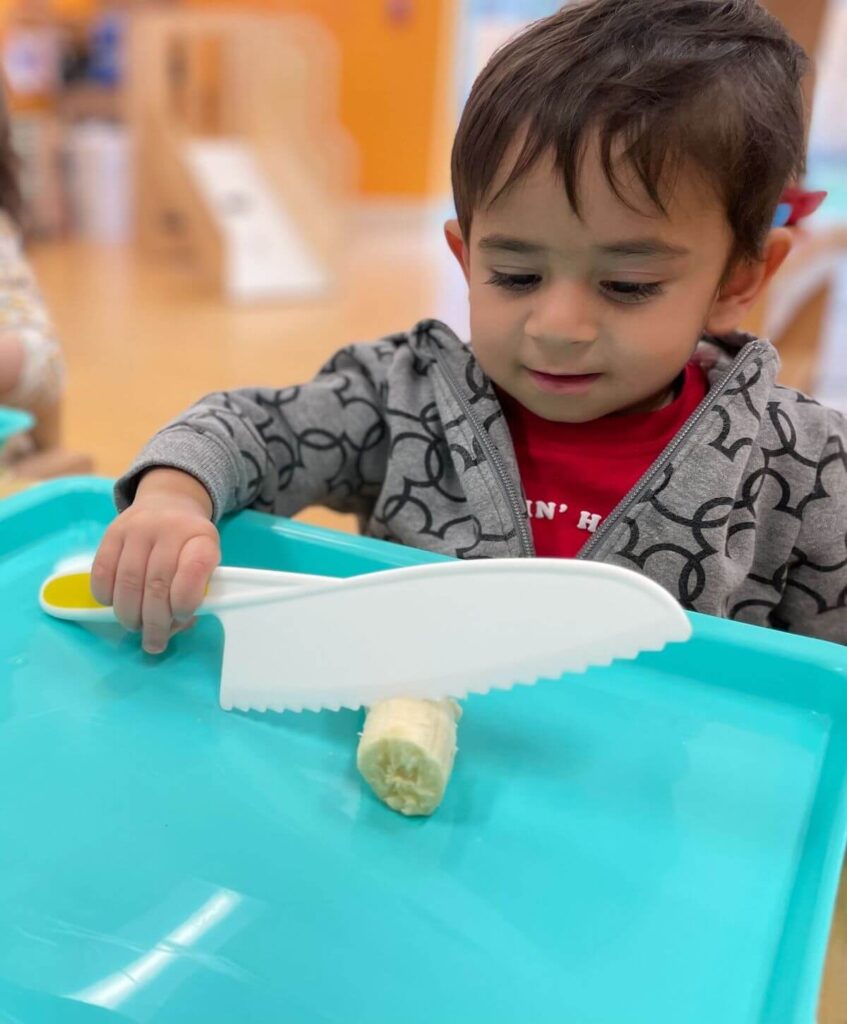
Ages 2.5 to 5 · 15 minutes total · Mess: low · Supervision: hands on
- Peel a cold banana. Straight from the fridge, not room temperature.
- Lay it on a small plate or board.
- Hand over a child safe nylon knife (Kiddikutter and Curious Chef both make them, or use a plastic picnic knife you already own).
- Show one slow slice. Then let go.
- Count the coins together at the end.
A warm banana smears and squashes and they’ll get frustrated. Cold slices cleanly and they feel competent.
Safety: Banana coins are a choking shape. Halve or quarter them before anyone eats, especially under 4. Never a real knife, not even a dull one, not “just for a second.”
Adapt: Younger, a soft strawberry and a plastic picnic knife. Older, move to a cucumber and a proper child safe knife with a guard.
Worth doing even on a chaotic day because it’s two minutes to set up and they genuinely feel like they made lunch.
9. Big Canvas
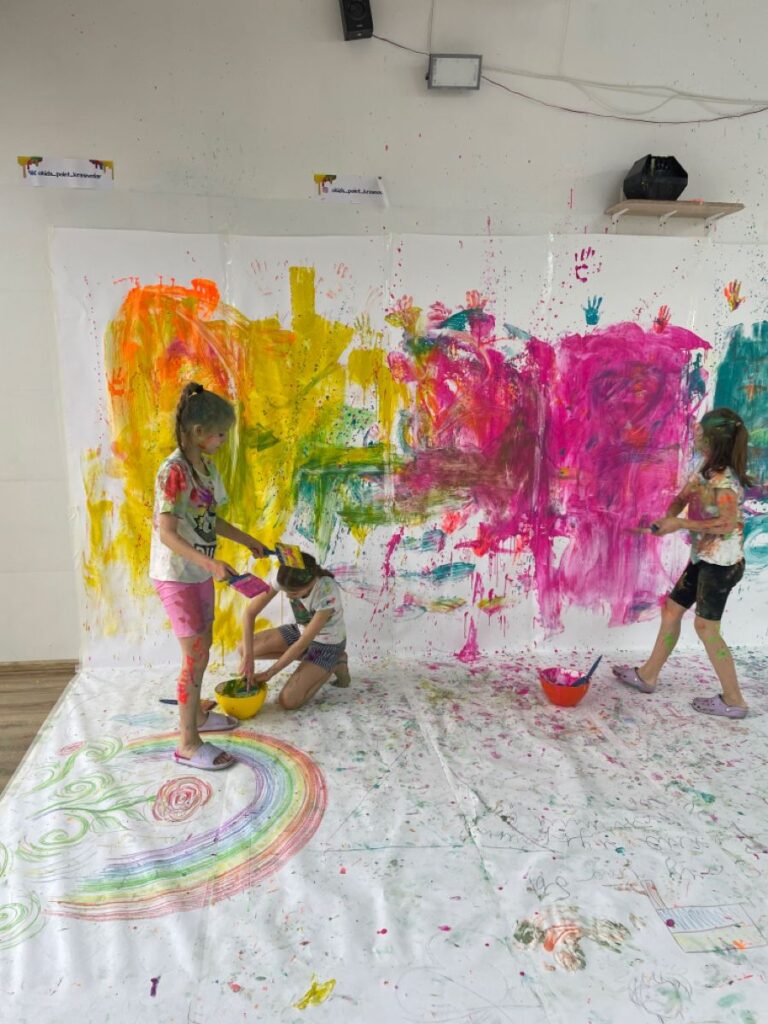
Ages 2 to 5 · 30 minutes total · Mess: low · Supervision: check in every few minutes
Tape a huge sheet of paper to the wall, hand over markers, walk away. Best ratio of quiet minutes to setup effort on the whole list.
Drawing upright is the entire point. Arms swing wide, shoulders engage, and that’s the muscle group that makes handwriting easier at 6.
You’ll need:
- A paper roll. An IKEA Mala roll or any kraft roll works. Free swap: cut open paper grocery bags and tape four together, or use the blank back of leftover wrapping paper.
- Crayola Washable Markers. Not regular markers. The washable ones matter.
- Painter’s tape, not masking tape.
Steps:
- Tape flattened cardboard to the wall first.
- Tape the paper over the cardboard.
- Hand over three or four markers, not the whole set.
- Say nothing about what to draw.
Tip: Rotate to fresh paper instead of asking them to fill the sheet. They’ll come back for round two.
Adapt: Younger, use chunky crayons and tape the paper lower. Older, add a prompt like “draw our whole street” and hand over a ruler.
What goes wrong first time: Washable marker still ghosts on flat matte wall paint, and masking tape pulls paint off when removed. The cardboard layer and painter’s tape solve both.
10. Seed Scooping
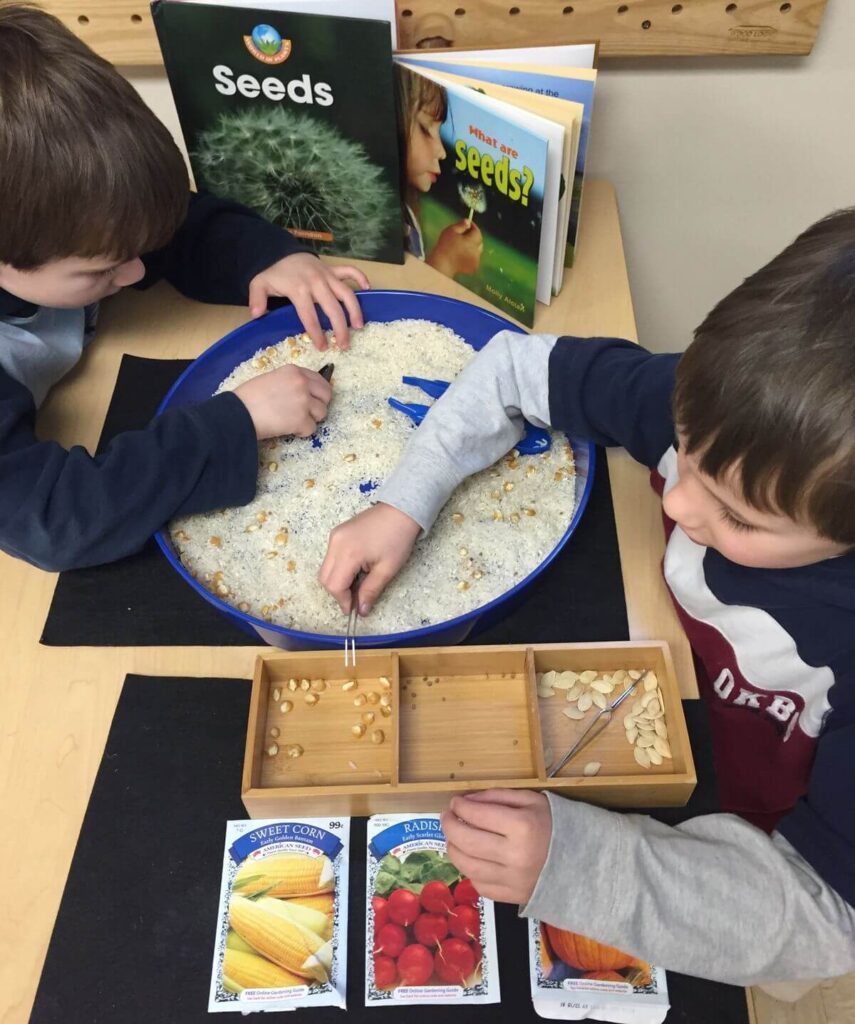
Ages 2.5 to 5 · 45 minutes total · Mess: medium · Supervision: constant under 3.5
Big bin of dried beans, pumpkin seeds or rice, plus cups, funnels, scoops and containers with lids. That’s the whole thing, and it outlasts almost everything else here.
Set the bin in the middle of a flat bed sheet or an old shower curtain. When they’re done, lift the four corners and funnel everything back. Cleanup drops from ten minutes of sweeping to thirty seconds.
Containers with screw on lids are the sleeper item. Filling something and then sealing it gives the activity an ending, and endings are what make preschoolers repeat a task.
Safety: Dried beans and seeds in a nose or ear are a common emergency room visit, and they swell. If your child still puts things in their mouth or nose, use dry oats instead, which are far less dangerous if inhaled. Skip seeds entirely if there’s a nut or seed allergy in the house.
Adapt: Younger, big scoops and wide mouth containers only. Older, add a kitchen scale and let them guess which container holds more.
11. Snack Faces
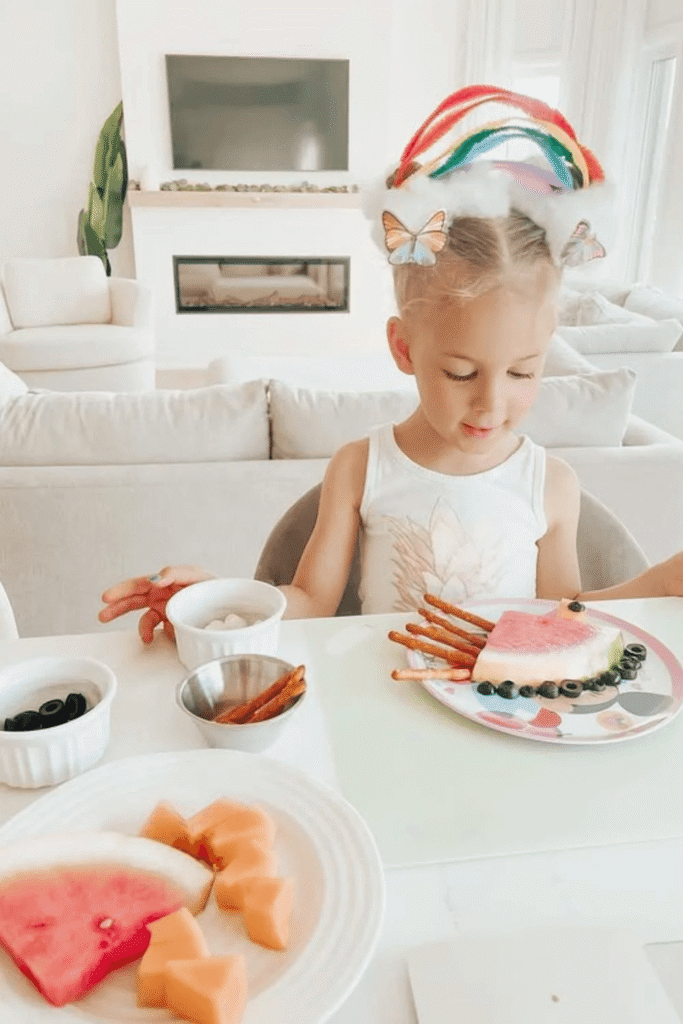
Ages 2 to 5 · 30 minutes total · Mess: low · Supervision: hands on
- Lay ingredients out in a muffin tin, not a pile on a board. Compartments make it read as a set of options, and options drive the play
- Good combinations: watermelon triangles, halved blueberries, cucumber coins, cheese strips, quartered olives
- Give them one plate and no instructions
Kids eat more of what they built. Not a sales pitch, just what happens, and it’s the main reason this earns its five extra minutes.
Safety: Whole blueberries, grapes, olives and cherry tomatoes are all choking shaped. Halve or quarter everything round, lengthwise. Skip pretzel sticks and whole nuts for under 4s. Sit with them while they eat.
Adapt: Younger, three ingredients maximum and you do the arranging together. Older, give them a theme card, a lion or a robot, and let them problem solve.
Practical note: Do this at the start of snack time when they’re actually hungry, not after. A full preschooler has zero interest in building a face out of cucumber.
12. Mud Construction
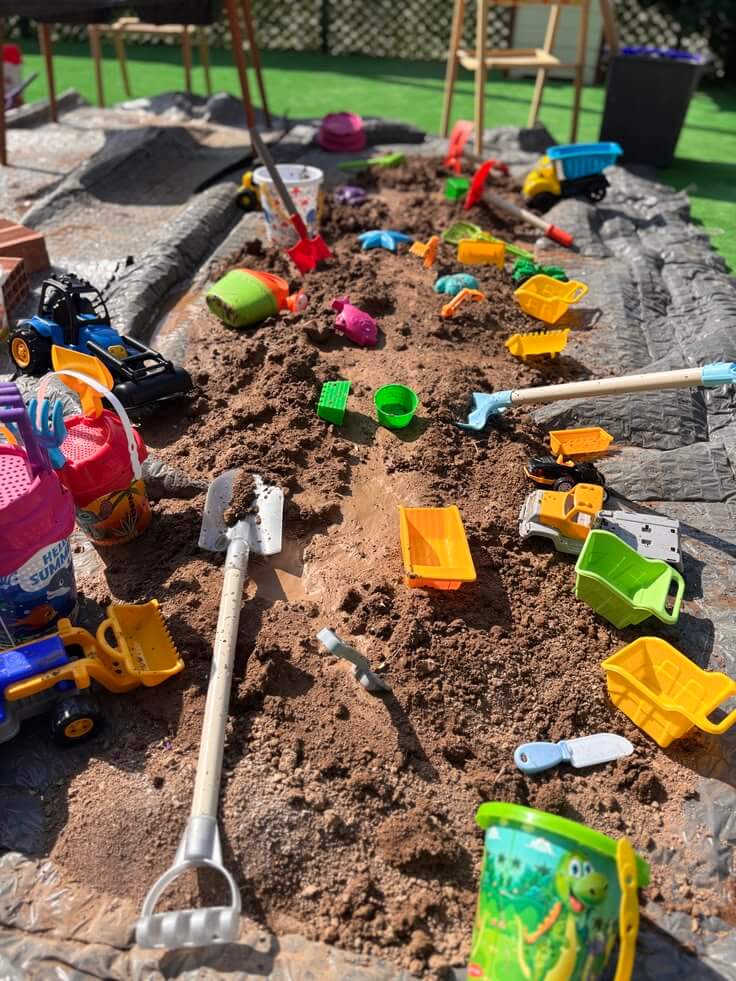
Ages 2.5 to 5 · 60 minutes plus a bath · Mess: high · Supervision: light, outdoors
Shallow bin, play sand or bagged topsoil, a few dump trucks and diggers, and a squeeze bottle of water.
The squeeze bottle is the upgrade. Hand a preschooler a bucket of water and you have soup in eleven seconds, and soup is boring. A squeeze bottle means they control the consistency, test it, adjust. That’s the thinking part.
Use bagged play sand or bagged topsoil, never soil from the garden bed, which may contain fertiliser, slug pellets or animal waste.
Budget setup: An under bed storage box instead of a sand table. Bagged play sand is a few dollars at any hardware store.
Adapt: younger, sand and water only, no trucks, and let them pour. Older, set a build challenge, a dam or a road a truck can actually drive on.
Strip them to underwear or old clothes, hose the bin where it sits, and accept the bath. An hour of deep focus for fifteen minutes of cleanup is a good trade.
13. Letter Craft
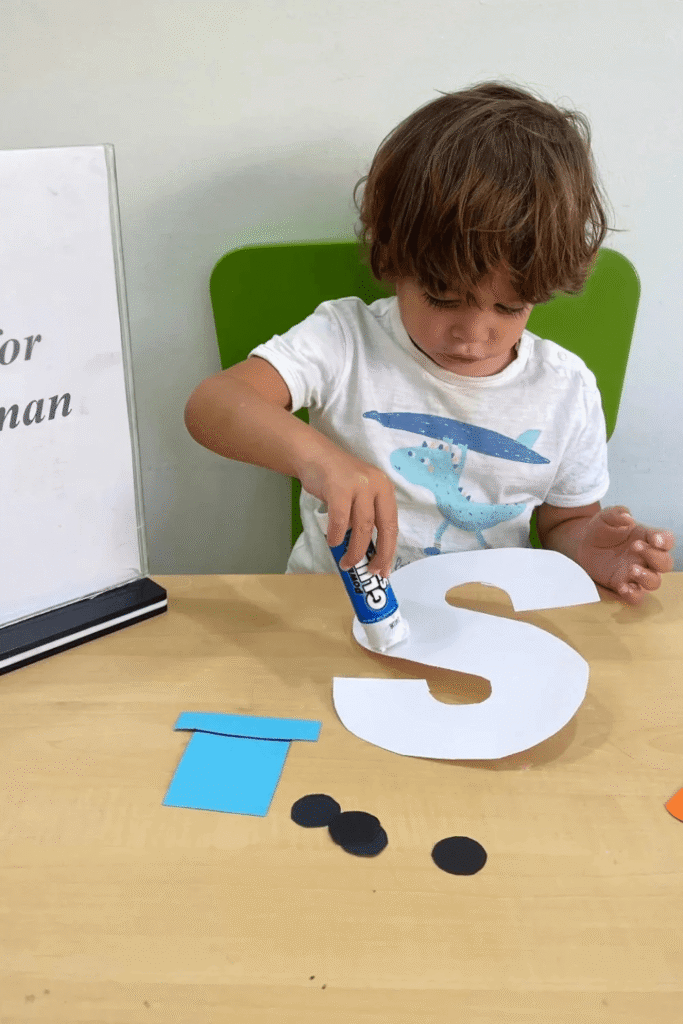
Ages 3.5 to 5 · 30 minutes total · Mess: medium, glue · Supervision: medium
- Cut a big letter from cardstock, at least 8 inches tall. “S” works well because snowman parts fit inside it.
- Put a small pool of Elmer’s Washable School Glue on a jar lid, not in a bottle they squeeze.
- Give them a cotton swab as a glue brush.
- Let them place cotton balls, paper circles or pom poms anywhere on the letter.
- Say the letter sound out loud every time they place a piece.
Glue sticks will not hold a pom pom. You need liquid glue, which means 20 minutes of drying, which no preschooler will wait through. Build it on a paper plate so you can lift the whole thing out of reach to dry.
Budget version: Cereal box cardboard for the letter, torn paper scraps instead of pom poms. Free.
Adapt: Younger, the first letter of their name only, every time, until they own it. Older, three letters that spell a short word.
Safety: Pom poms and googly eyes are choking size. Constant supervision under 3.
14. Circle Ball
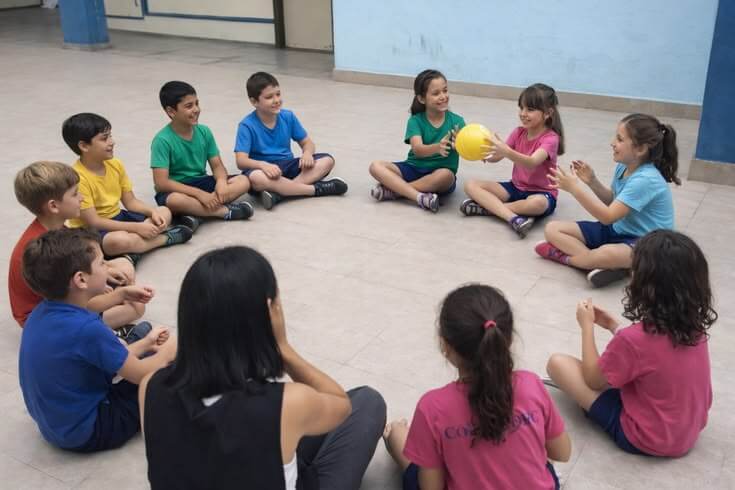
Ages 2.5 to 5, needs three or more kids · 20 minutes total · Mess: none · Supervision: medium, you’re the referee
Everyone sits in a circle on grass or a rug. Roll the ball to someone, say their name as you roll. Add a colour or a number once they’ve got it.
Rolling instead of throwing is deliberate. It keeps the energy from tipping into chaos, and a 3 year old can succeed on the first try.
Use a soft lightweight playground ball. A bouncy ball turns this into a chase within two minutes.
The real skill is waiting your turn, which is hard and worth practising somewhere low stakes. Expect wobbly moments in the first few rounds.
Adapt: Younger, roll back and forth with one partner only. Older, add a category, roll and name an animal, no repeats.
Good for playdates, siblings, and that stretch of late afternoon when everyone is too wound up to sit but too tired to be properly outside.
15. Apple Painting
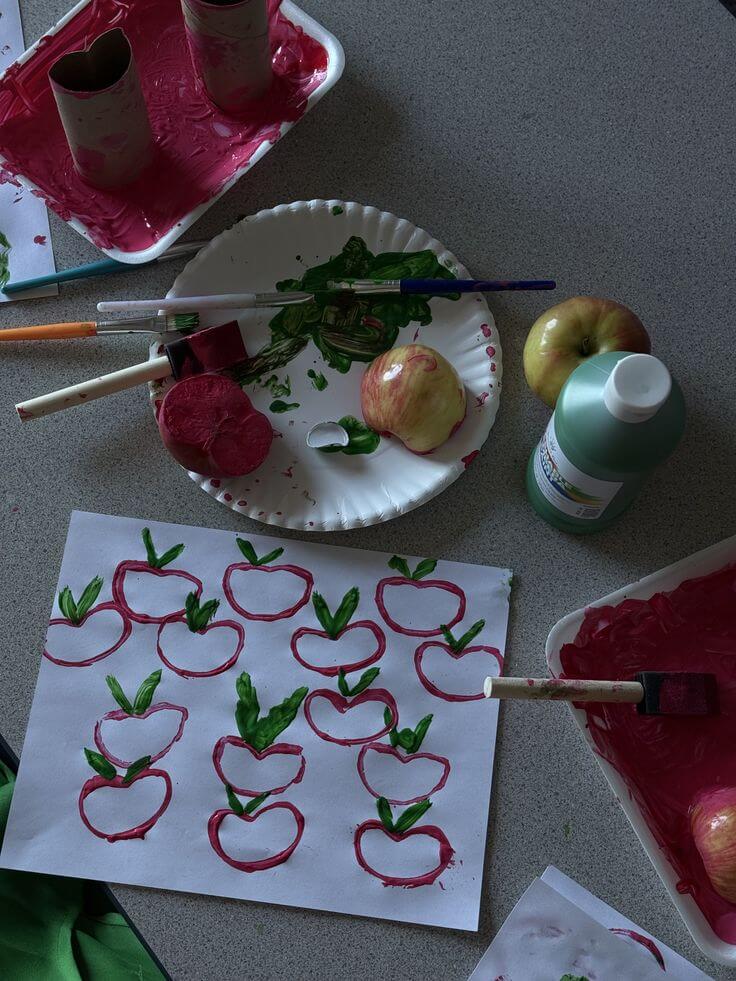
Ages 3 to 5 · 40 minutes total · Mess: medium · Supervision: medium
Draw blank apple outlines, put out red, yellow and green washable paint, and let them decide what each apple looks like. Striped, spotted, purple, whatever.
The autumn version is better: cut a real apple across the middle so the star shaped core shows, and use it as a stamp.
Blot the cut face on a paper towel for a few seconds first. A wet apple prints a blurry blob and the star vanishes. That one detail is the difference between a lovely print and a smear.
Tip: Say the colour out loud as they pick it up. Free sorting practice without a lesson attached.
Adapt: Younger, thicker paint and bigger outlines. Older, mix red and yellow to make their own orange and talk about why it worked.
Budget note: Use the bruised apple from the bottom of the bowl. No reason to waste a good one.
16. Pom Sorting
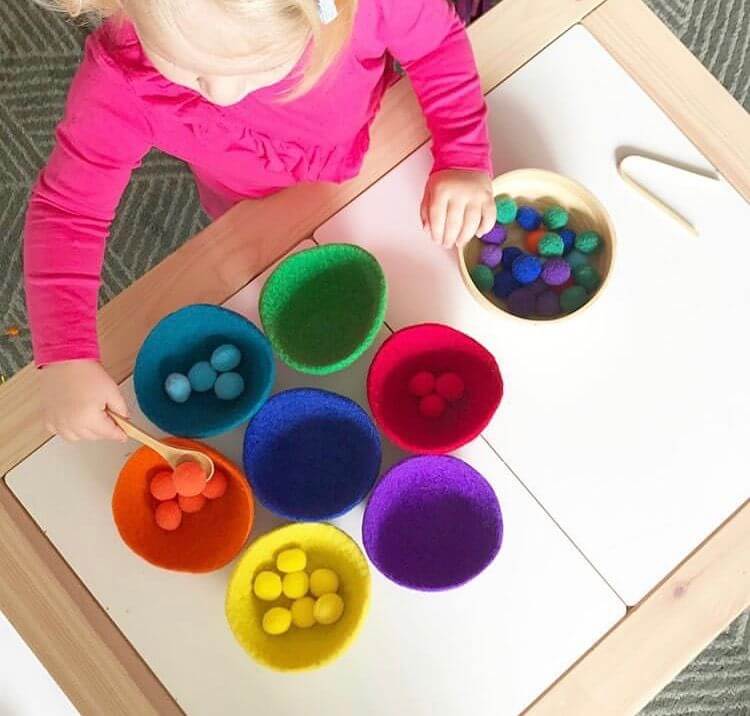
Ages 2.5 to 5 · 25 minutes total · Mess: low · Supervision: constant under 4
- You need: A bag of Dollar Tree pom poms, a muffin tin, and child safe tweezers or kitchen tongs
- Free swap: Bottle caps, milk lids, or paper balls torn and scrunched by your kid (that’s part of the activity)
- The rule: One colour per muffin cup
Use a muffin tin, not bowls. Bowls get knocked and the sort resets, which ends the game instantly.
Tweezers add difficulty and roughly double the attention span for a 4 or 5 year old. For a 2 year old, skip the tweezers and let them use fingers.
Do it on carpet. Pom poms roll forever on hard floors and you’ll be finding them under the fridge in March.
Safety: Pom poms are a classic nose and ear insertion item for 2 and 3 year olds. Stay in the room.
Adapt: Younger, two colours only. Older, sort by colour and size at once, or time them.
17. Water Boats
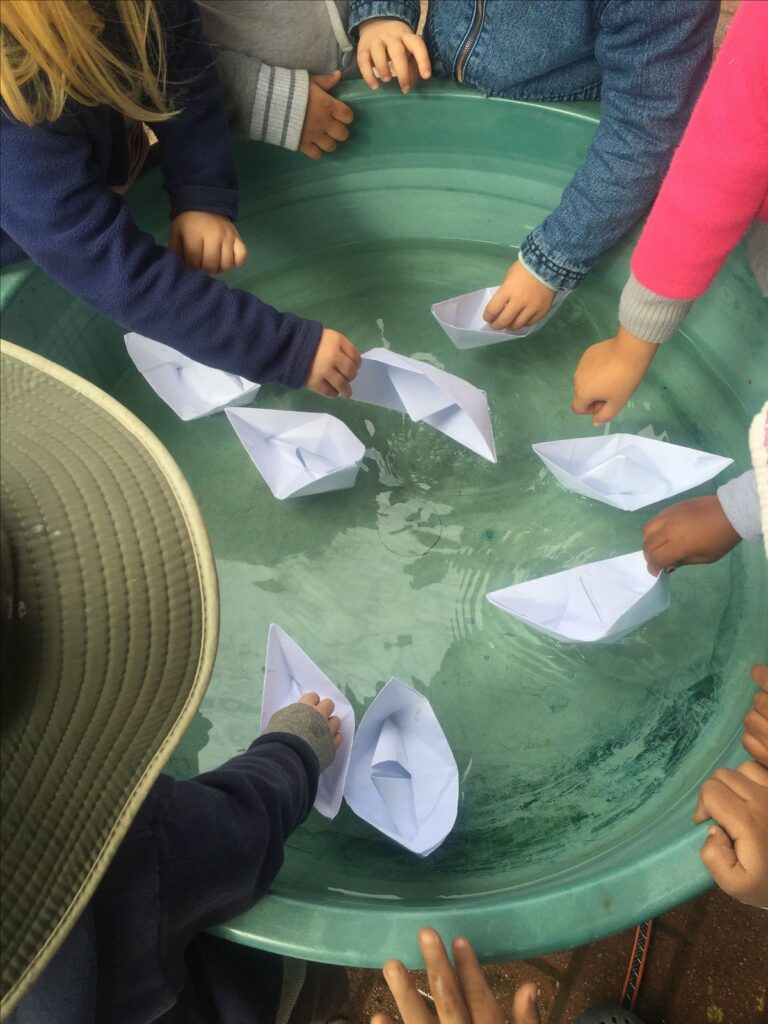
Ages 2.5 to 5 · 40 minutes total · Mess: medium, wet · Supervision: constant
Fill a shallow bin with two inches of water, add a few homemade boats, and watch a preschooler go quiet for the first time all day.
Paper boats are the standard suggestion and they’re a trap. They soften and sink in about four minutes and your kid will be upset. Cut boats from a clean foam produce tray instead. Those float all session.
Sponge “islands” and a toothpick sail with a paper triangle extend it, but an adult inserts the toothpick and an adult removes it at the end.
Put the bin on a towel on the bathroom floor. Counter height means a two year old on tiptoes and a flooded kitchen.
Budget swap: Clean foam meat trays, bottle caps, and a plastic shoebox instead of anything bought.
Adapt: Younger, drop the toothpicks and just float bath toys. Older, add a “which sinks?” prediction round and a paper tally.
Practical note: Do not leave the room, not even for the doorbell. Two inches of water is enough to drown a toddler. Empty it the second you’re done.
18. Chalk Art
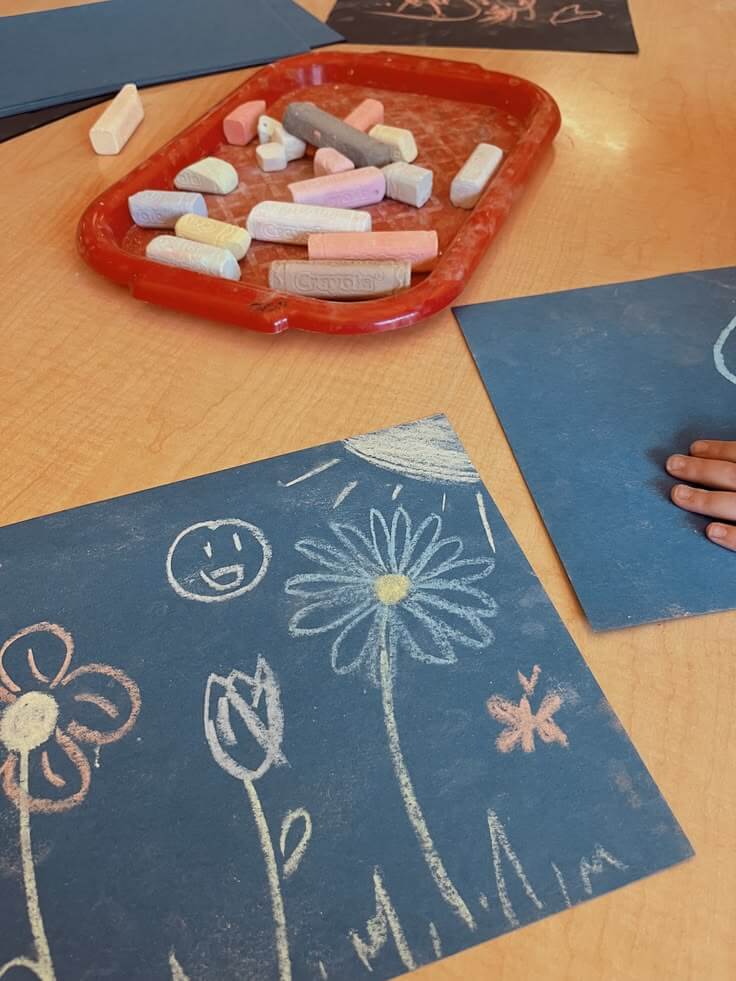
Ages 2 to 5 · 35 minutes total · Mess: medium dust · Supervision: light
Black card, a handful of coloured chalk, no instructions. The contrast makes even a scribble look striking, which is a real confidence boost for a kid who has decided they’re “bad at drawing.”
Dip the chalk tip in water for about ten seconds before drawing. Colour comes out roughly twice as bright and it stops the chalk skidding. Best chalk tip I know and it costs nothing.
Black poster board from Dollar Tree is a couple of dollars for a large sheet. Quarter it and you have four sessions.
Safety correction worth knowing: Don’t have kids blow the dust off the paper. Chalk dust is an airway irritant and a real trigger for asthmatic kids. Tap the excess off outside or over a bin instead.
Adapt: Younger, chunky sidewalk chalk only, which is harder to snap and safer if mouthed. Older, add a fixative spray step done by you, and frame the result.
19. Farm Pretend
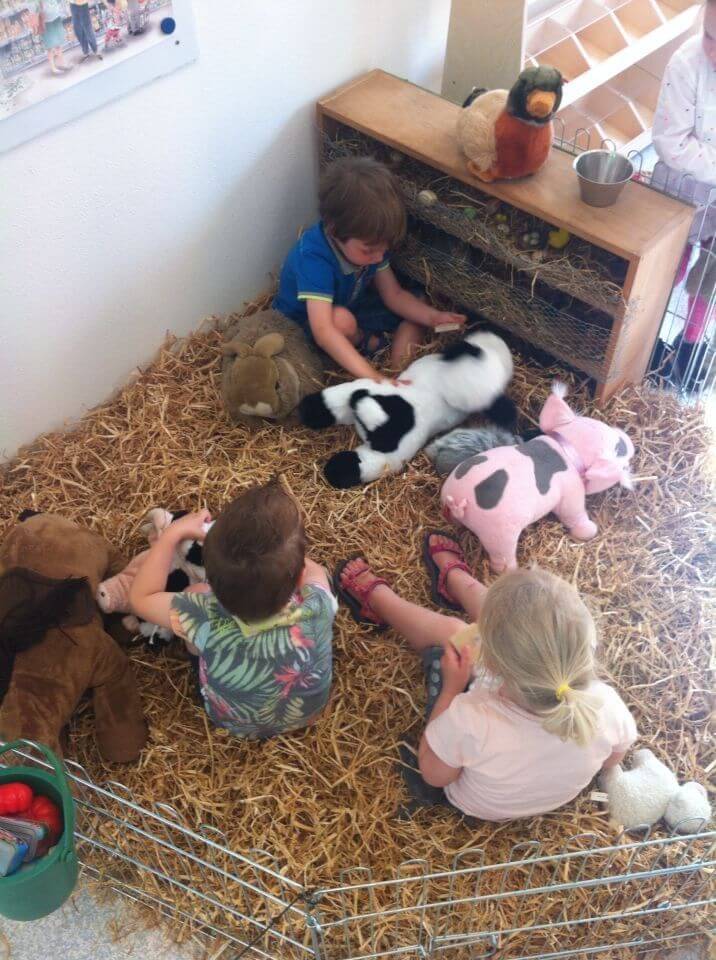
Ages 2.5 to 5 · 45 minutes total · Mess: low · Supervision: light, outdoors
Stuffed animals or printed farm cutouts in the garden, a basket of cotton balls for “wool,” a small bucket for “feed.”
Give them a job with a finish line. “Feed all six sheep, then shear them” lasts thirty minutes. “Play farm” lasts five. That’s the entire difference, and it’s true of nearly every pretend setup.
Sound effects plus a second role for you (the farmer who needs help) keeps it going longer than anything else I’ve tried.
Free version: Paper plate sheep with cotton balls glued on, made by your kid as part one. Two activities from one setup.
Safety: Cotton balls are an inhalation risk for under 3s. Count them out at the start and count them back in at the end.
Adapt: Younger, two animals and one job. Older, add a market stall and pretend money.
20. Number Painting
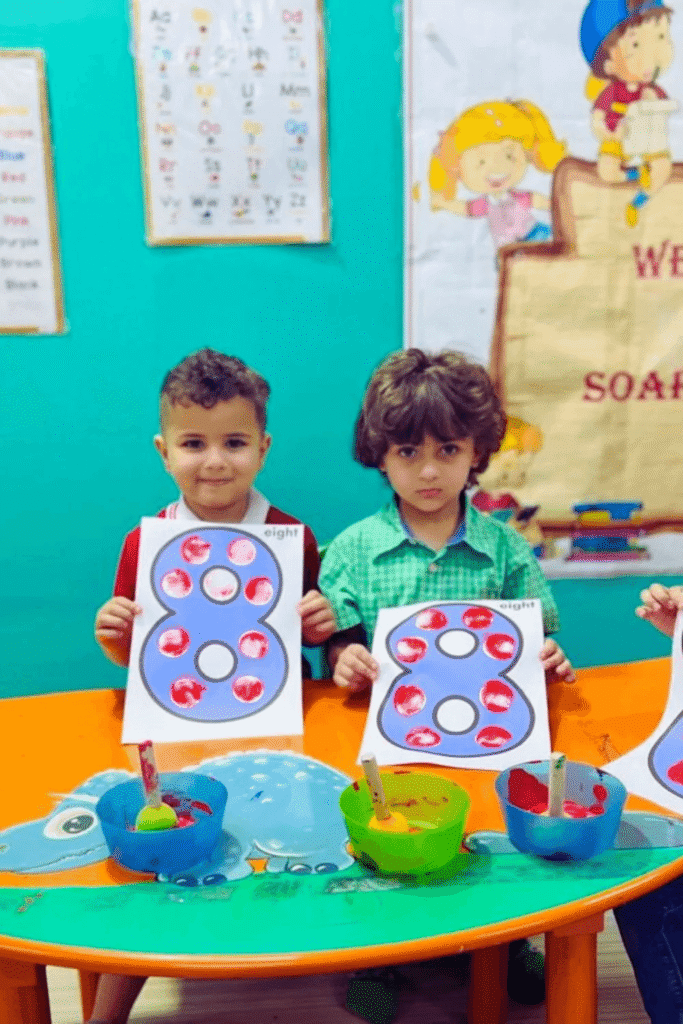
Ages 3 to 5 · 35 minutes total · Mess: medium · Supervision: hands on
Draw a fat numeral 8 on paper and mark eight small circles inside it. Your kid presses one fingerprint or one cotton ball dot into each circle, counting out loud.
Crayola Washable Kids’ Paint is the one that actually comes out of clothes. Poured into a muffin tin, one colour per well, it spills far less than little cups.
Here’s what nobody mentions: they get excited, fill the whole numeral, and lose count around five. That’s fine. Count with them one dot at a time and hover your hand over the next circle so they pause.
Tip: Cotton swabs give cleaner dots than fingers and halve the cleanup. Two swabs taped together are easier for small hands to grip.
Adapt: Younger, use numerals 1 to 3 only. Older, write the numeral and the word, and have them dot out an addition.
Free swap: Skip printed worksheets entirely. Draw the numeral yourself on any paper. Works identically.
21. Sand Stamps
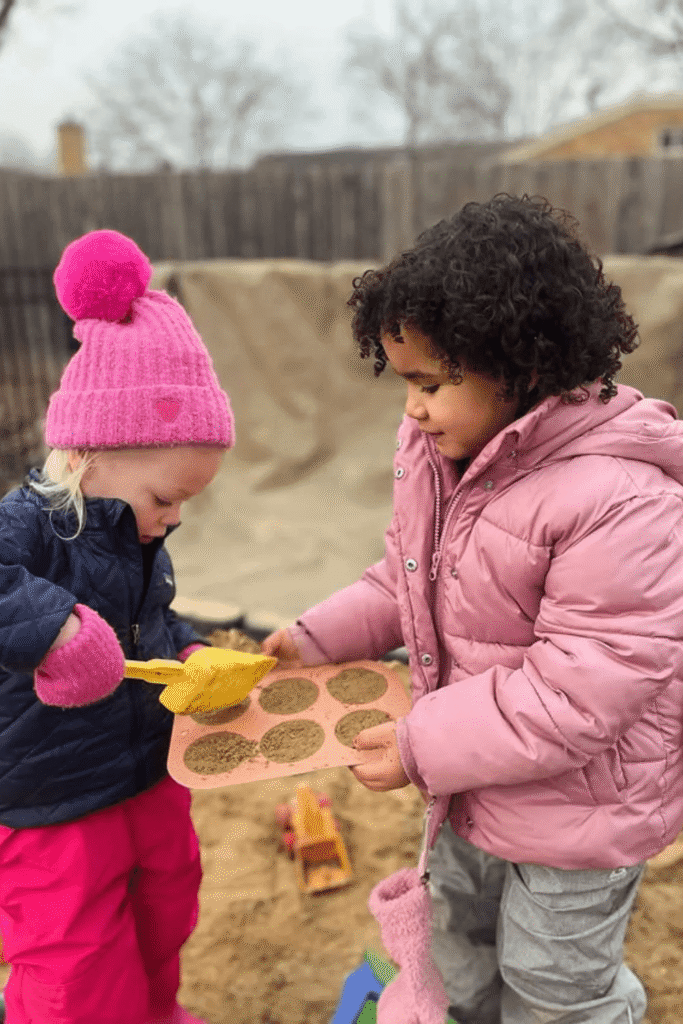
Ages 3 to 5 · 40 minutes total · Mess: medium, outdoors · Supervision: light
- Dampen the sand first. Step one for a reason.
- Hand over yogurt pots, cups and a muffin tin as moulds.
- Pack sand in tight, press hard with a flat palm.
- Flip fast and lift straight up, no wiggling.
- Count how many survive.
Dry sand collapses the moment you lift the mould, every single time. Kids assume they did it wrong and quit. Damp sand holds and suddenly they’re making thirty.
Cutting circles from cardboard, as some versions suggest, is more work than it’s worth. You already own the moulds.
Tip: Turn it into a guessing game. “Which cup makes the tallest one that doesn’t fall?” Then test it. A real experiment they don’t notice doing.
Adapt: Younger, one big mould and lots of repetition. Older, build a whole sand village and count the rooms.
22. Shape Collage
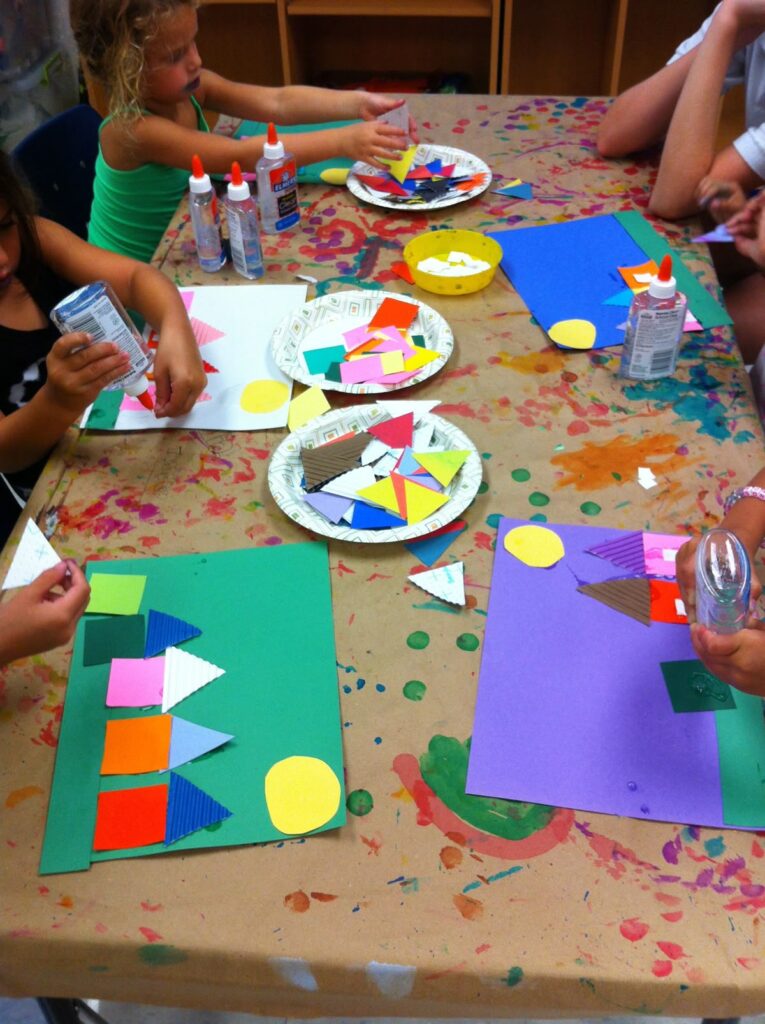
Ages 3 to 5 · 35 minutes total · Mess: low to medium · Supervision: light
Cardstock, a glue stick, and a pile of paper shapes. They arrange, they glue, they don’t need a plan.
Cut at least forty shapes before you start. Cut as you go and you’ll spend the activity cutting while they wait, get bored, and wander off. Forty sounds excessive until you watch how fast they go.
Free shape sources better than craft paper: junk mail, old magazines, last year’s greeting cards, and paint chip cards from the hardware store, which come in gorgeous colours.
Good pick for a sensory sensitive kid, because a glue stick keeps hands dry throughout.
Tip: Name the shapes as they pick them up rather than quizzing them. Less pressure, same learning.
Adapt: Younger, large shapes only and pre peeled sticker dots instead of glue. Older, ask them to build something specific, a rocket or a face, from shapes alone.
23. Snow Garden
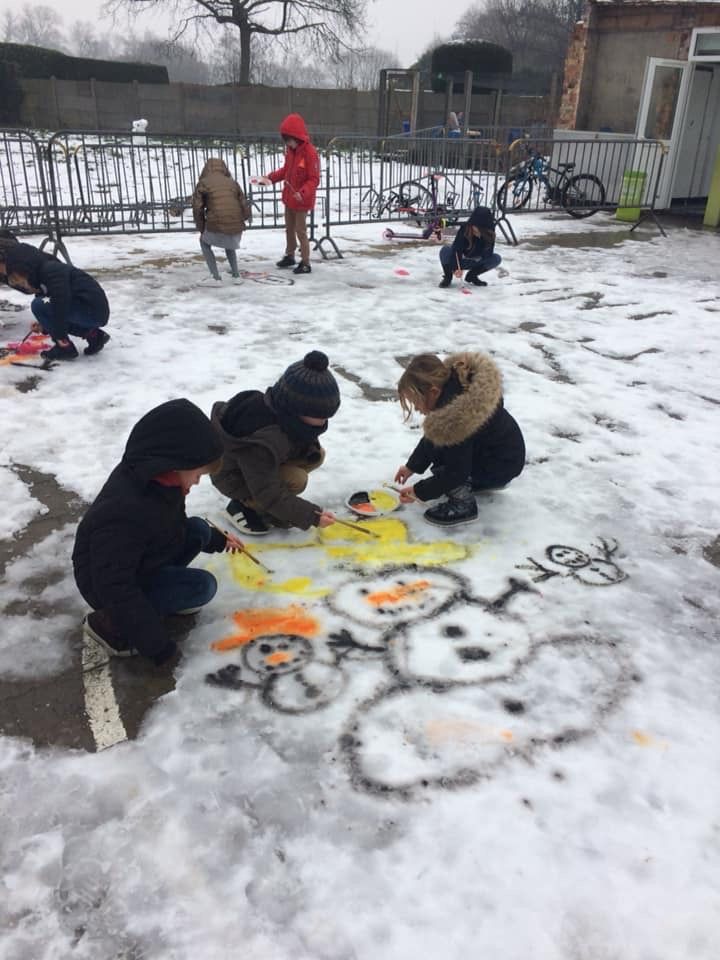
Ages 3 to 5 · 30 minutes total · Mess: low · Supervision: medium, outdoors
Seasonal, so bookmark it for January. Paper cups packed with snow, artificial flowers pushed into the top, arranged on a tree stump or garden wall.
The conversation is the best part. “Why don’t real flowers grow now?” comes up unprompted almost every time, and you get a proper back and forth out of it.
Budget: Silk flowers from a dollar store, or make them from cupcake liners and paper straws the day before as a separate indoor activity.
Safety: Cap it at 15 to 20 minutes in real cold and check their hands, not their mood, because preschoolers will not tell you they’re freezing. Wet mittens means done. No eating snow from near a road or a salted path.
Adapt: Younger, skip the cups and just decorate a snow mound. Older, plant real bulbs in a pot alongside and compare in spring.
No snow where you are? Same activity with a bin of ice cubes or shredded paper indoors. Works better than you’d expect.
24. Tooth Brushing
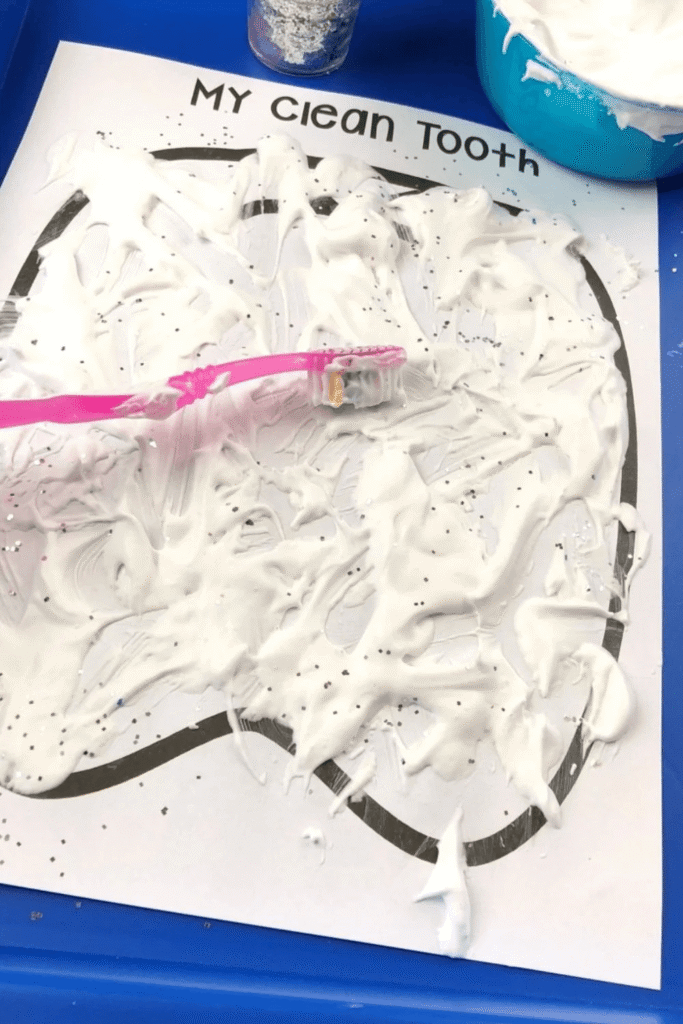
Ages 3 to 5 · 30 minutes total · Mess: medium · Supervision: hands on
- Print a large tooth or mouth outline and slide it into a page protector or a zip top bag.
- Spread a thin layer of plain white shaving cream (Barbasol Sensitive, unscented, not gel) across it.
- Sprinkle a few beads or a pinch of glitter on top as “germs.”
- Give them an old toothbrush.
- Coach small circles, not back and forth scrubbing.
The page protector is not optional. Straight onto paper, the whole thing turns to pulp in about three minutes and they think they broke it.
This genuinely transfers. Our bedtime brushing got easier the following week, mostly because “circles” had become a word she already understood.
Safety: Shaving cream is not edible and stings badly in eyes. Skip it for kids who mouth everything, and for kids with eczema or sensory sensitivity, where the smell and texture can be a hard no. Whipped cream substitutes for mouthers, assuming no dairy allergy.
Adapt: Younger, whipped cream and fingers, no brush. Older, add a two minute timer and a chart.
25. Bunny Toss
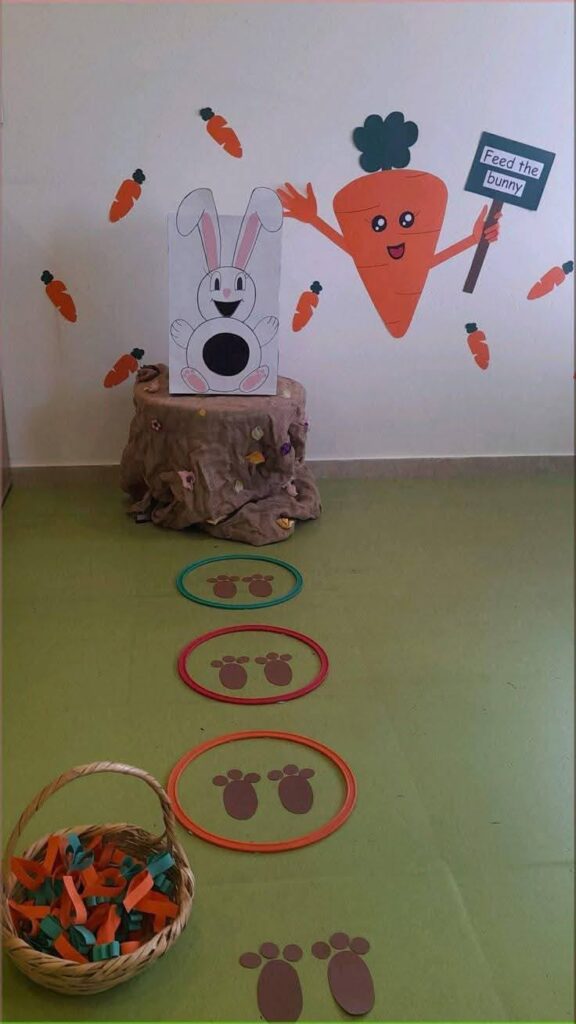
Ages 3 to 5 · 35 minutes total · Mess: low · Supervision: light
- Tape paper plates to a cardboard box or a wall to make a bunny shape.
- Cut two or three holes for the mouth and eyes. Adult does the cutting.
- Mark a throwing line with tape, about three feet back.
- Give them a basket of pom poms and count what goes in.
Three feet, not six. I set it up too far back the first time and my son missed eleven throws in a row and walked off. Move the line closer until they’re landing maybe half, then slide it back an inch at a time.
Indoor energy burner for days when going outside isn’t happening.
Safety: Pom poms are a choking hazard under 3. Sweep up strays before a younger sibling finds them.
Adapt: Younger, one huge hole and a beanbag. Older, assign different points to each hole and keep score.
How to Adapt Any Preschool Activity Up or Down by Age
Most activities fail because of difficulty, not interest. Use this before you assume your kid “isn’t into crafts.”
| If your child is | Reduce by | Increase by |
|---|---|---|
| 2 to 3 years | Fewer materials, bigger pieces, no tools, you do the fiddly step | Nothing. Let repetition be the activity |
| 3 to 4 years | One instruction at a time, one sorting rule only | Add a tool (tweezers, brush, dropper) |
| 4 to 5 years | Remove the time pressure, not the challenge | Add counting, a prediction, or a second rule |
| Any age, resisting | Start it yourself and say nothing | Give them a job with a finish line, not an open invitation |
Practical note: If they quit within two minutes, it was almost always too hard or too vague, not boring. Take one step out and hand it back.
Common Mistakes Parents Make With Preschool Activities
Setting it up while they watch. Fifteen minutes of setup with them hovering is fifteen minutes of attention spent before you start. Set up during nap, or pick a two minute activity.
Offering too many choices. “Paint or sort or build or water play?” gets you “tablet.” Put out one thing already prepared and say nothing.
Fixing their work. Straightening their collage, correcting their letter, redoing their sand stamp. Every time you touch it, the activity ends for them. Sit on your hands.
Buying the kit version. Preschool craft kits are the most reliably disappointing purchase in this category. They’re built to produce one specific result, which is exactly what preschoolers don’t care about.
Judging by the finished product. The value was twenty minutes of pinching, pouring and deciding. The result is a smudge. Fine.
Skipping mess prep, then getting angry. Two minutes of towel, mat and old t shirt means you spend the activity watching instead of policing. If you can’t face the prep, pick a low mess option from the table instead. That’s not failure, that’s picking correctly for today.
Repeating an activity the same way twice. The second run is usually shorter unless you change one variable. New colour, new tool, new container. One change resets the novelty.
Read Next
If mess is the thing holding you back, keep the low mess options on hand for weekday evenings. No mess indoor activities for toddlers and preschoolers .
If you’re mid negotiation over the tablet right now, the gradual approach matters more than the activity list. How to cut back screen time with preschoolers without a meltdown.
Seasonal ideas rotate, and autumn has the best free material supply of the year. Autumn crafts for preschoolers using things you find outside.
For kids who are past this list, the 5 to 7 versions of these same activities add a real challenge layer. Screen free activities for 5 to 7 year olds.
FAQs
How long should screen free activities keep a preschooler busy?
Ten to twenty minutes of focus on one activity is normal for a 3 to 5 year old. Anything beyond that is a bonus, not the target. Plan two short activities back to back rather than expecting one to fill an hour.
Are these preschool activities safe for a 3 year old?
Most of them, with supervision. Hold off on Pom Sorting, Seed Scooping, Animal Sorting, Bunny Toss and anything with beads if your 3 year old still puts things in their mouth. Water Boats and Ice Rescue need you in the room the entire time.
What are the best preschool activities for a 2 year old?
Big Canvas, Snack Faces, Chalk Art, Tap Turtles and Circle Ball all work at 2 with adaptations. Use bigger pieces, fewer materials and no small parts, and expect repetition rather than a finished result.
What if my child refuses and keeps asking for a screen?
Set the activity up and start doing it yourself without inviting them. Curiosity usually pulls them in within a few minutes. If they’ve had a lot of screen time lately, expect three or four days of resistance before this starts working. Normal, and it passes.
How do I get washable paint or glue out of carpet?
Blot, don’t rub, with a cloth and cold water while it’s still wet. For dried washable paint, dab with one part white vinegar to four parts water, leave two minutes, blot again. Test a hidden patch first. Dried liquid glue usually lifts with cold water and patience.
Which preschool activities work for a sensory sensitive kid?
Shape Collage, Cardboard City, Animal Sorting, Sand Writing, Tap Turtles and Big Canvas all keep hands clean and dry. Skip Sprinkle Art, Mud Construction, Wrap Painting and the shaving cream in Tooth Brushing until they’re ready, and never push a texture they’ve refused.
I have ten minutes and no prep time. What do I pick?
Tap Turtles, Banana Cutting, Big Canvas or Animal Sorting. All four go from decision to activity in under two minutes using things already in your house.
Do I need to buy supplies for any of these?
No. Every activity here has a free or dollar store swap listed. The only genuinely worth buying items are washable markers and washable paint, because the non washable versions cost you more in ruined clothes than you’d save.