
The best summer camp activities for kids 8 to 10 combine a clear goal with something to physically build or play with when it’s done, like a foil rocket, a cardboard pirate ship, or a chalk-outlined obstacle course. This age group holds attention for 45 to 90 minutes when a project has a real payoff (something to play with, wear, or launch), and loses interest fast with anything too open-ended or too babyish. Below are 20 tested setups, sorted by mess level and time, so you can pick one in under a minute.
Save this for later, because you will want to come back to the supply list before Monday morning of camp week.
Why This Age Group Is Its Own Category
It’s 9:40 on day one of backyard camp, and I have six kids standing in my kitchen asking what we’re doing next. I already burned through the “easy” 20-minute craft I planned for a full hour, and I still have five and a half hours to fill before pickup.
That gap between “this looked great on Pinterest” and “my actual kid lost interest in nine minutes” is the whole problem with planning for this age group. Third through fifth graders are too old for stickers-and-glue preschool crafts and too young to just hand a phone to and walk away. They want a real result: something they can launch, wear, race, or defend.
The 20 activities below are the ones that survived repeat use in my own backyard, not the ones that just photographed well. Every one includes the age range it actually works for, how messy it gets, how much hands-on supervision it needs, and what goes wrong the first time you try it (because something always does).
Practical note: if you only remember one thing from this article, remember that this age group needs a finished product they can do something with, not just look at. A drawing goes in a drawer. A rocket gets thrown across the yard for the rest of the week.
[INTERNAL LINK: free printable summer camp schedule template for backyard camp weeks]
Quick-Scan Activity Table
| # | Activity | Best Ages | Mess Level | Time (prep + activity + cleanup) | Supervision |
| 1 | Space Rocket Craft | 7-10 | Low | 15 + 25 + 5 min | Check in every few minutes |
| 2 | Pirate Treasure Map | 8-11 | None | 20 + 30-45 + 0 min | Hands-off once hunt starts |
| 3 | Disney Character Art | 7-11 | Medium | 10 + 45-60 + 15 min | Hands-on with paint |
| 4 | Water Cup Relay | 6-12 | High (wet) | 5 + 15 + 10 min | Hands-on, safety watch |
| 5 | Volcano Camp Lab | 5-10 | High | 10 + 20 + 15 min | Hands-on for pour step |
| 6 | Camp Flag Workshop | 8-11 | Medium | 10 + 30 + 10 min | Adult does hot glue only |
| 7 | Shadow Chalk Art | 6-10 | Low | 5 + 30 + 5 min | Check in occasionally |
| 8 | Indoor Escape Room | 8-12 | None | 30 + 30 + 10 min | Hands-off during solving |
| 9 | Nature Crowns | 5-10 | Low | 5 + 30 + 5 min | Check in occasionally |
| 10 | Pirate Ship Cardboard | 6-11 | Medium | 10 + 60-90 + 15 min | Adult does box cutter |
| 11 | Galaxy Painting | 7-11 | High | 10 + 30 + 15 min | Hands-on, flicking paint |
| 12 | Camp Relay Olympics | 6-12 | Low | 15 + 30 + 10 min | Hands-on for timing/safety |
| 13 | Water Balloon Toss | 6-11 | High (wet) | 20 + 20 + 15 min | Check in occasionally |
| 14 | Journaling Art Lab | 8-12 | Low | 5 + 45-60 + 5 min | Hands-off |
| 15 | Preschool Craft Corner | 4-7 | Low | 5 + 30 + 10 min | Check in occasionally |
| 16 | Baking Soda Boats | 7-11 | Medium | 15 + 20 + 10 min | Hands-on for reaction step |
| 17 | Parade Prop Making | 6-11 | Medium | 10 + 45 + 15 min | Check in for glitter/glue |
| 18 | Scavenger Art Hunt | 6-10 | Low | 5 + 30 + 10 min | Hands-off during search |
| 19 | Cardboard City | 6-11 | Low | 5 + 60-90 + 20 min | Hands-off |
| 20 | Pirate/Space Mashup | 7-11 | Medium | 15 + 45 + 15 min | Hands-on, high energy |
Best Summer Camp Activities for Kids
1. Space Rocket Craft Mission

Age range: Works best for 7 to 10 year olds. Younger kids (5-6) can do it if you pre-cut the fins. Kids 11+ tend to want to add real detail like painted panel lines, so give them extra foil and let them go further.
Time: About 15 minutes of setup, 20 to 25 minutes of build time, 5 minutes of cleanup (foil scraps everywhere, so a trash bag on the table helps).
Mess level and supervision: Low mess, mostly glue fingers. You don’t need to hover, but check in every few minutes because the foil tears if kids wrap too fast and get frustrated.
Supplies (with budget swap):
- Empty paper towel or toilet paper tubes (free, save your own for two weeks before camp)
- Aluminum foil (a roll from the dollar store works exactly the same as a name brand)
- Liquid school glue (Elmer’s is the classic for a reason, it dries clear and doesn’t tear the foil)
- Construction paper for fins (or cut up an old cereal box, it holds a fold better than paper anyway)
- Red and orange tissue paper for exhaust (or shredded orange grocery bags if you’re out of tissue paper)
Steps:
- Set up a table with materials in separated piles so kids aren’t fighting over the glue bottle.
- Have kids wrap their tube in foil, gluing the seam down.
- Cut triangle fins from paper and glue to the base, three or four per rocket.
- Crinkle red and orange tissue paper and glue into the bottom for “flames.”
Tip: Wrap the foil shiny-side out and press the seams flat with a fingernail. Loose foil is the number one reason these fall apart by the end of the day.
What goes wrong the first time: Kids glob on too much glue and the foil goes soggy and tears. Have them dab, not pour.
Won’t work for: Kids who get frustrated easily with fine motor tasks, since wrapping foil neatly takes some patience.
2. Pirate Treasure Map Challenge
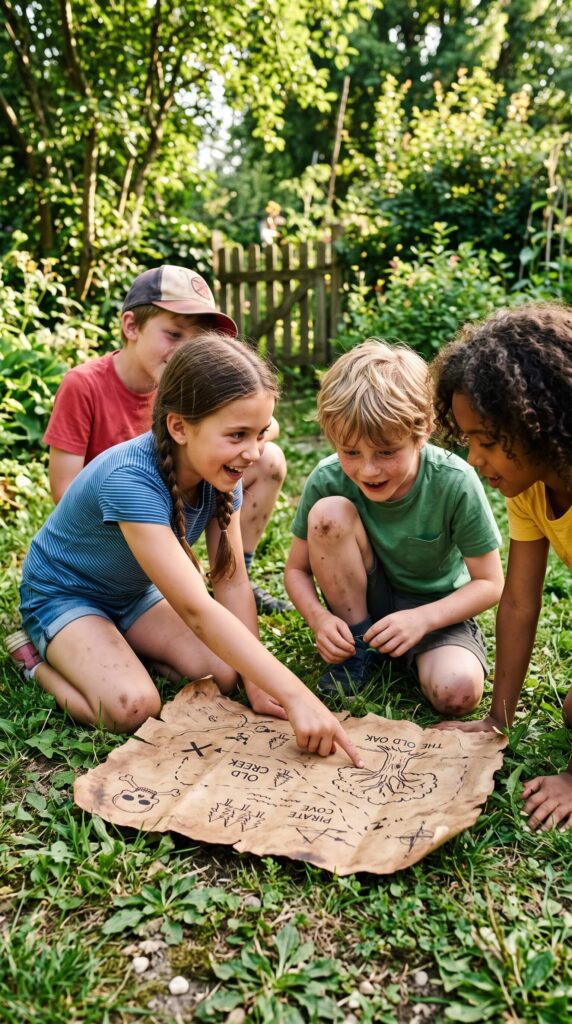
Age range: 8 to 11 is the sweet spot, since kids need to read and follow rhyming clues. For 6 to 7 year olds, use picture clues instead of rhymes.
Time: 20 minutes to draw the map and hide clues (do this before kids arrive), then 30 to 45 minutes for the hunt itself. Zero cleanup beyond picking up clue papers.
Mess level and supervision: No mess at all. Once the hunt starts, this is genuinely hands-off, you can sit on the porch with coffee and just listen for the yelling when they find the box.
Supplies (with budget swap):
- Brown craft paper (or a cut-open grocery bag, which already looks aged)
- Black permanent marker (any Sharpie works)
- Plastic gold coins (dollar store party aisle, or wrap real coins in gold foil for free)
- A small box or container (an old jewelry box or tin works fine)
- Pre-written rhyming clues (write these the night before)
Steps:
- Crumple the paper and flatten it back out for a weathered look.
- Draw a stylized map of your yard with named landmarks.
- Hide the coin box and place clues around the yard leading to it.
- Hand over the map and let them go.
Practical note: number your clues on the back before you hide them. I once mixed up the clue order and had eight kids standing in the yard arguing about which clue came first while I frantically tried to remember what I’d written an hour earlier.
What goes wrong the first time: Clues get found out of order and the whole hunt stalls. Numbering fixes this in ten seconds.
Won’t work for: Kids who can’t read yet, or groups with a big age spread where older kids solve everything before younger ones get a turn (assign each kid one clue to “own”).
3. Disney Week Character Art Day
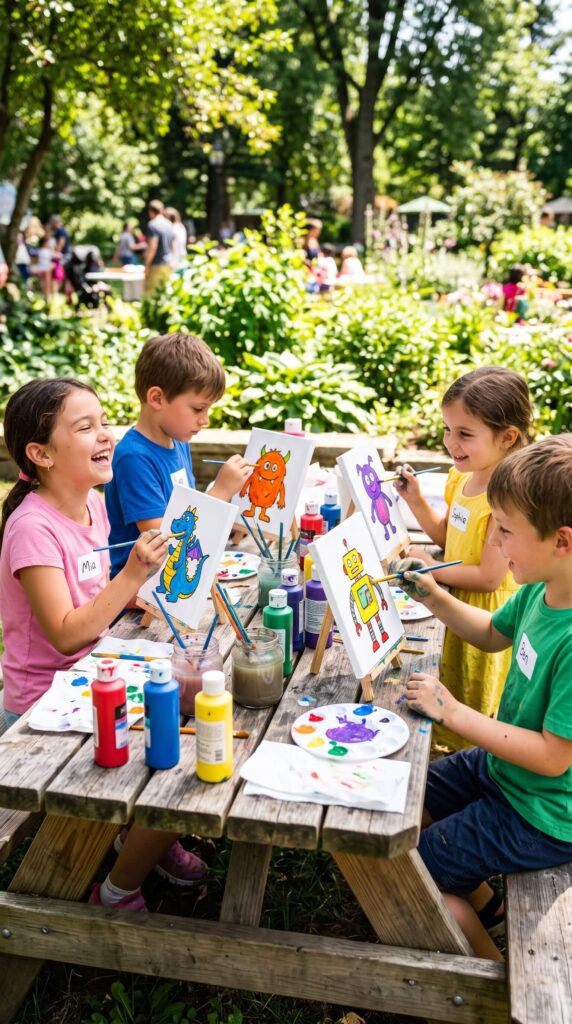
Age range: 7 to 11. Younger kids can do it with washable markers instead of paint. Older kids (11+) tend to want to invent original characters rather than copy existing ones.
Time: 10 minutes setup, 45 to 60 minutes of painting, 15 minutes cleanup (paint takes longer to clean than you think).
Mess level and supervision: Medium to high mess if you’re using real paint, low if you switch to markers. This one needs hands-on supervision, paint on canvas boards spreads to hands, hands spread to faces.
Supplies (with budget swap):
- Canvas boards (Michaels sells packs of small canvases cheap, or use the back of a cereal box for a free version)
- Washable acrylic paint (Crayola Washable Kids’ Paint is the one that actually rinses out of clothes)
- Paintbrushes (dollar store sets are fine for this age)
- Printed reference photos
- Water cups and paper towels
Steps:
- Set out reference photos where everyone can see them.
- Give each kid a canvas and a basic palette.
- Let them copy a favorite character or mix elements into something new.
- Play instrumental music to keep the room calm.
Tip: Put painting smocks on before anyone touches a brush, not after someone already has paint on their shirt.
What goes wrong the first time: Water cups get knocked over onto finished work. Use cups with a wide, heavy base, or a muffin tin as a spill-resistant water station.
Won’t work for: Kids who get discouraged easily when their painting doesn’t look “right.” Frame it as interpretation, not copying, from the start.
4. Water Cup Challenge Relay

Age range: 6 to 12, genuinely works across the whole range, which makes it a good activity for mixed-age groups.
Time: 5 minutes to poke holes and fill buckets, 15 minutes of actual relay, 10 minutes to dry off and mop up the patio.
Mess level and supervision: High mess, it’s a water game by design. Needs a grown-up watching the whole time for slipping on wet pavement, this is a real hazard, not a maybe.
Supplies (with budget swap):
- Two large buckets filled with water (any bucket you own)
- Two empty buckets 20 feet away
- Small plastic cups (dollar store bathroom cups work great)
- A tool to poke a hole in the cup bottom (adult only, this is a sharp-tool step)
- A whistle (or just yell “go”)
Steps:
- Poke a hole in the bottom of each cup ahead of time.
- Split kids into two teams.
- On “go,” the first runner dunks the cup, holds it over their head, and runs to the empty bucket before it drains.
- Repeat until time is up or a bucket fills.
Safety note: wet grass and wet concrete both get slick fast. Run this on grass if you have it, and set a hard rule that nobody runs on the patio itself.
What goes wrong the first time: Kids poke their own cups with a fork and stab a finger. Adults poke the holes, always.
Won’t work for: Kids who don’t like getting wet or have sensory sensitivity to dripping water down their back, this one is genuinely soaking.
5. Science Volcano Camp Lab
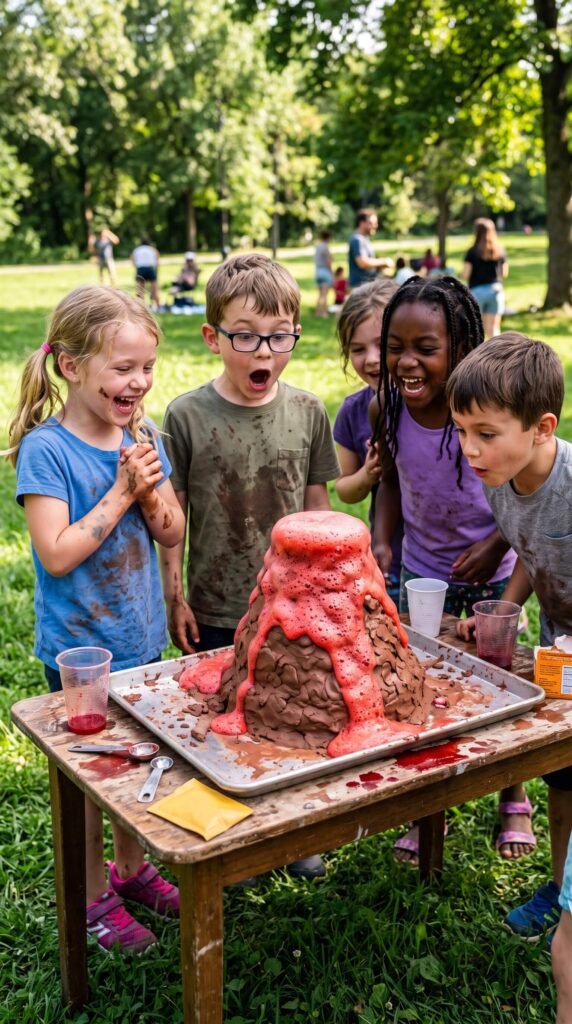
Age range: 5 to 10. Younger kids need help measuring the baking soda and vinegar. Older kids can run the whole thing themselves and enjoy tweaking the ratios to get a bigger eruption.
Time: 10 minutes to set up, 20 minutes of building and erupting, 15 minutes cleanup (the food coloring stains, more on that below).
Mess level and supervision: High mess. Do this on grass or a tarp, never on a patio you care about, because red food coloring stains concrete. Needs a hands-on adult for the actual pour.
Supplies (with budget swap):
- Baking soda (Arm & Hammer, cheap at any grocery store)
- White vinegar
- Red food coloring
- Play-dough or modeling clay (homemade salt dough works if you don’t want to buy clay)
- A metal baking sheet to catch the mess
Steps:
- Set the baking sheet on grass.
- Sculpt a volcano out of clay with a hollow crater.
- Add two tablespoons of baking soda to the crater.
- Mix vinegar with red food coloring separately, then pour it in and watch.
Tip: Add a small squirt of dish soap to the vinegar mixture before pouring. It makes a foamier, more dramatic eruption without changing the chemistry.
What goes wrong the first time: Someone pours too fast and it overflows before the camera is ready. Have the photographer ready before the pour, not after.
Won’t work for: Kids with sensitive skin who react to food coloring, wear gloves or skip the dye for a colorless version.
6. DIY Camp Flag Workshop
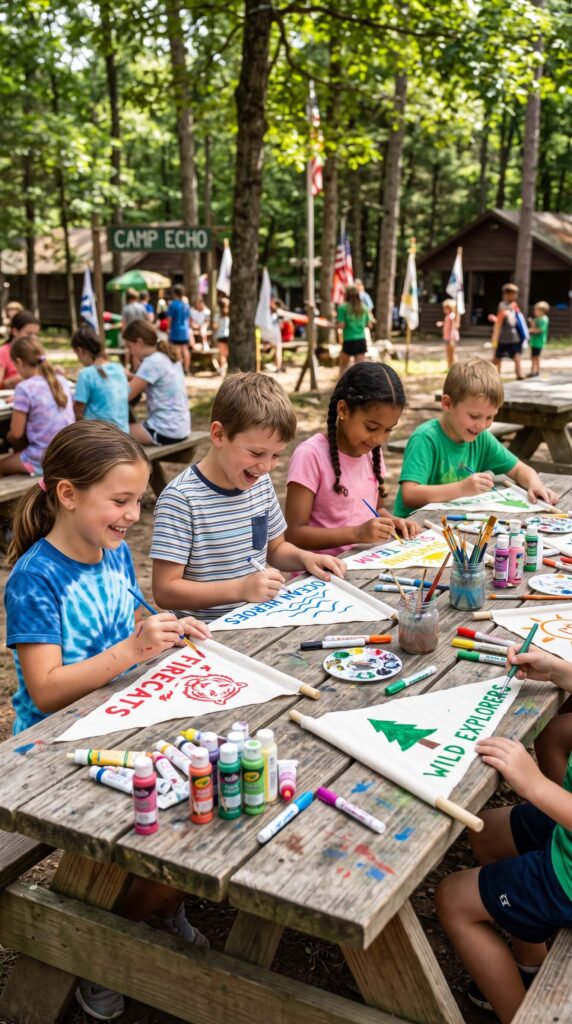
Age range: 8 to 11 for the design and painting. The hot glue step is adult-only regardless of age.
Time: 10 minutes setup, 30 minutes to design and paint, 10 minutes for the adult to assemble once dry.
Mess level and supervision: Medium mess from fabric paint. An adult must handle the hot glue gun, no exceptions, hot glue burns are one of the most common craft injuries in this age group.
Supplies (with budget swap):
- Plain cotton fabric triangles (an old white pillowcase cut into triangles works for free)
- Fabric markers and paint (Tulip brand fabric paint holds up through a whole camp week)
- Wooden dowels (paint stirrers from the hardware store are free and work just as well)
- Hot glue gun (adult use only)
Steps:
- Give each group a fabric triangle and let them pick a team name and mascot.
- Have them paint and decorate the flag.
- Once fully dry, an adult glues the fabric to the dowel.
What goes wrong the first time: Paint isn’t dry before gluing and the fabric slides off the dowel. Let it dry overnight if you can, or use fabric tape as a same-day alternative to glue.
Won’t work for: Very young kids who can’t yet plan a design on their own, pair them with an older kid for this one.
7. Outdoor Shadow Chalk Art
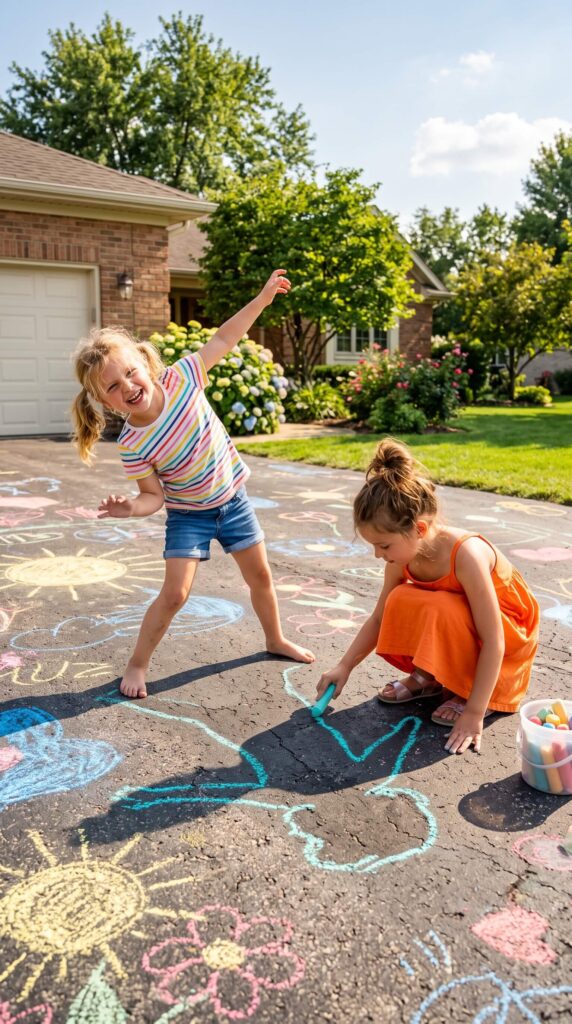
Age range: 6 to 10, and it genuinely gets funnier with sillier poses from older kids.
Time: 5 minutes to find good sun, 30 minutes of tracing and coloring, 5 minutes to hose off the driveway later.
Mess level and supervision: Low mess, chalk washes off with a hose or rain. Just check in occasionally to keep partners rotating.
Supplies (with budget swap):
- Sidewalk chalk (a bucket from the dollar store has plenty for a group)
- A sunny driveway or patio
- A timer
- A phone camera for photos before it rains
Steps:
- Wait for strong midday or late-afternoon sun for a crisp shadow.
- Pair kids up, one poses, one traces.
- Color in the outline with patterns or details.
- Switch and repeat.
Tip: Do this activity between 10am and 2pm. Shadows get too long and distorted earlier or later in the day, and the tracing gets confusing.
What goes wrong the first time: Clouds roll in mid-trace and the shadow disappears. Have a backup indoor activity on standby if the forecast is iffy.
8. Indoor Rainy Day Escape Room
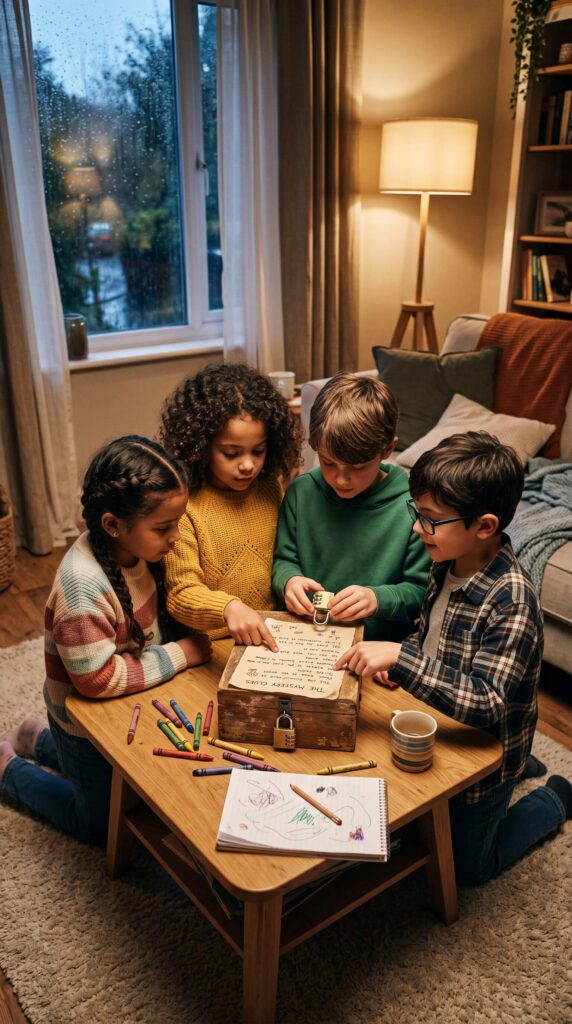
Age range: 8 to 12, since it requires reading and multi-step logic.
Time: 30 minutes to write riddles and hide clues ahead of time, 30 minutes for kids to solve it, 10 minutes to reset the room.
Mess level and supervision: No mess. Once it starts, this is hands-off, resist the urge to give hints unless they’re truly stuck for more than 10 minutes.
Supplies (with budget swap):
- A padlock with a number combination (under $10 online, or reuse a bike lock)
- A small lockbox or zippered bag
- Small prizes (dollar store toys or candy)
- Paper clues
- A countdown timer (any phone works)
Steps:
- Write 3 to 4 riddles where each answer gives a padlock digit.
- Hide clues around the room.
- Lock the prize inside, set a 30-minute timer, and give the first clue.
What goes wrong the first time: The riddles are too hard and kids get frustrated within 10 minutes instead of engaged. Test-solve your own riddles with a same-age kid before camp day if you can.
Won’t work for: Kids who get anxious under time pressure, consider a “clue reveal” option after 20 minutes instead of a hard stop.
9. Creative Crafts for Nature Crowns

Age range: 5 to 10, one of the few activities on this list that genuinely spans preschool through this age group.
Time: 5 minutes to prep strips, 30 minutes total including the walk to collect items, 5 minutes cleanup.
Mess level and supervision: Low mess, mostly dirt on hands from foraging. Check in occasionally during the walk portion for safety.
Supplies (with budget swap):
- Cardstock strips (or cut up a manila folder)
- Double-sided tape
- Foraged leaves, flowers, twigs (free)
- Safety scissors
Steps:
- Take a 20-minute walk to gather natural materials.
- Measure cardstock around each kid’s head and staple into a circle.
- Wrap double-sided tape around the outside.
- Stick foraged items onto the tape.
Tip: Check for poison ivy and bees before letting kids forage freely, especially if you don’t know the yard well.
What goes wrong the first time: Kids grab items that wilt or crumble by the time they get back to the table. Stick to sturdier leaves and flowers, dandelions wilt within minutes.
10. Pirate Ship Cardboard Build
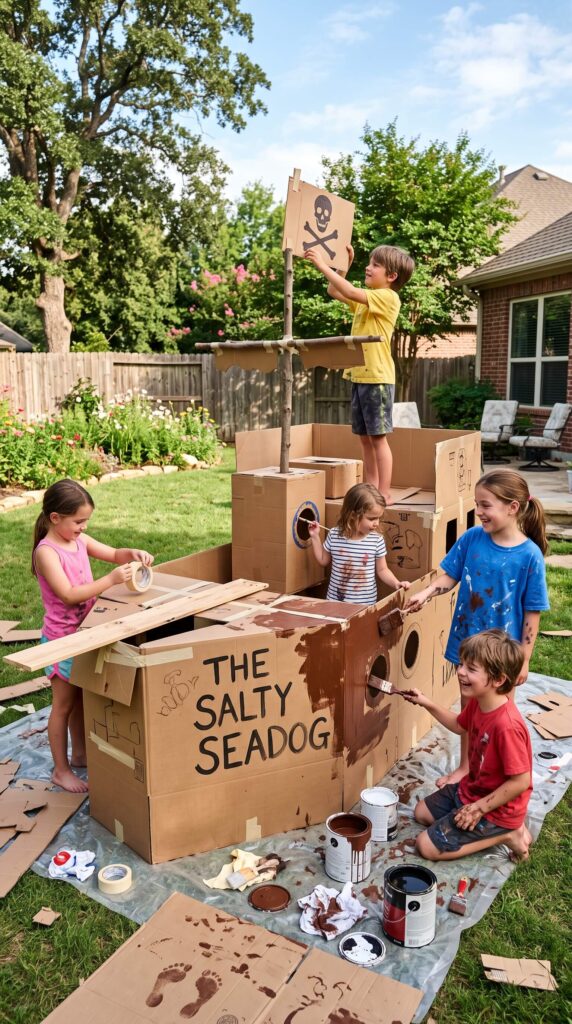
Age range: 6 to 11. Younger kids can decorate while older kids handle the layout planning.
Time: 10 minutes to gather boxes, 60 to 90 minutes to build and paint (this is a multi-hour, possibly multi-day project), 15 minutes cleanup.
Mess level and supervision: Medium mess from paint. The cutting step absolutely requires an adult, box cutters and kids under 12 are not a combination to leave unsupervised.
Supplies (with budget swap):
- Large appliance boxes (ask an appliance store or moving company for free ones)
- Heavy packing tape
- Box cutter (adult only)
- Tempera paint (washable brand)
Steps:
- Let kids plan the ship layout and decide on window placement.
- An adult cuts the windows and portholes.
- Kids paint the exterior to look like wood planks.
What goes wrong the first time: The box collapses under its own weight once it’s wet with paint. Let paint dry in thin coats and reinforce corners with extra tape before painting.
Won’t work for: A single-day schedule, this one realistically needs to span two days for paint to dry between coats.
11. Space Galaxy Painting Station

Age range: 7 to 11.
Time: 10 minutes setup, 30 minutes of painting, 15 minutes cleanup (paint flicks further than you expect).
Mess level and supervision: High mess, this is genuinely one of the messiest activities on the list. Keep it strictly at an outdoor station on a drop cloth, and stay hands-on the entire time.
Supplies (with budget swap):
- Black or dark blue construction paper
- Old toothbrushes (ask kids to donate one they no longer use, or grab a multipack from the dollar store)
- White, purple, and blue washable paint
- Plastic drop cloth (an old shower curtain works)
Steps:
- Lay the drop cloth and dark paper down outside.
- Sponge purple and blue paint on for a cloudy nebula effect.
- Dip toothbrush bristles in white paint.
- Pull a thumb back across the bristles to flick a spray of “stars.”
Tip: Have kids flick away from themselves and from each other, aimed flicks turn into a paint fight fast.
What goes wrong the first time: White paint ends up on clothes, hair, and occasionally the side of the house. Old clothes and a station at least 10 feet from anything you care about.
12. Outdoor Games: Camp Relay Olympics
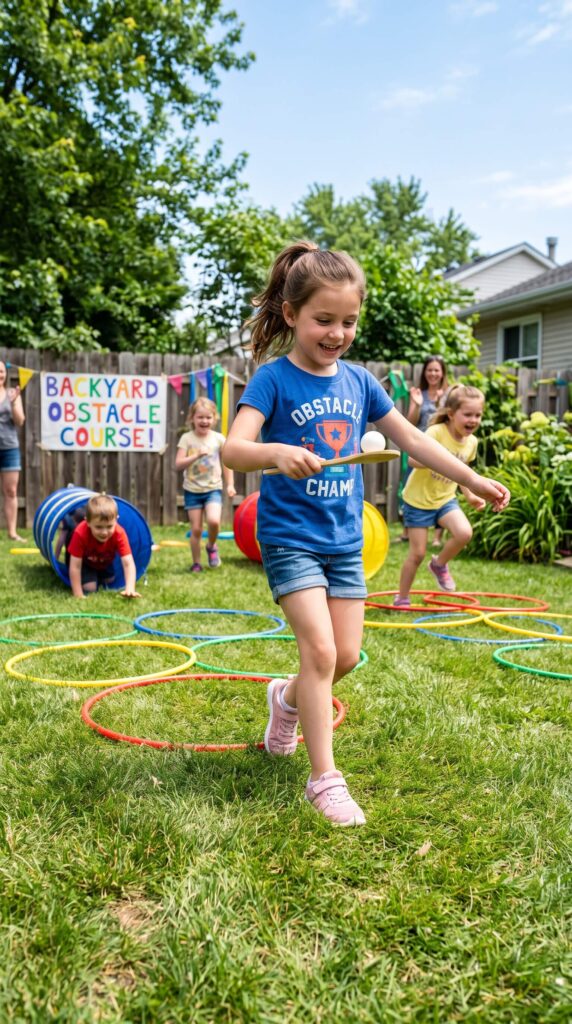
Age range: 6 to 12.
Time: 15 minutes to set up stations, 30 minutes to run heats, 10 minutes for the medal ceremony.
Mess level and supervision: Low mess, but needs a hands-on adult for timing and to watch for trips on the hula hoops.
Supplies (with budget swap):
- Hula hoops (dollar store)
- Wooden spoons and ping-pong balls
- A jump rope
- A clipboard for times
- Plastic medals (or make paper ones for free)
Steps:
- Mark a start and finish line.
- Set up three stations: hula hoop hop, spoon-and-ball balance, jump rope.
- Time each runner and tally scores.
- Award medals at the end.
What goes wrong the first time: One kid is much faster than the rest and the game stops being fun for everyone else. Mix in a silly handicap, like requiring the fastest kid to hop backward, to even things out.
13. Water Balloon Target Toss
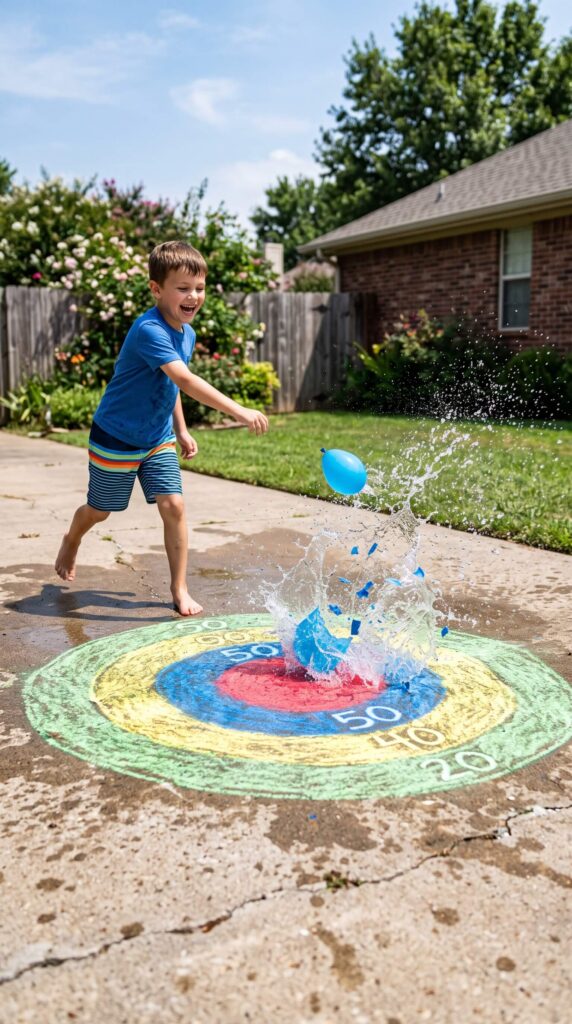
Age range: 6 to 11.
Time: 20 minutes to fill balloons (this always takes longer than planned), 20 minutes to play, 15 minutes to clean up broken balloon pieces (check the grass carefully, they’re a choking hazard for pets and toddlers).
Mess level and supervision: High mess, wet clothes guaranteed. Check in occasionally, mainly to enforce the throwing line.
Supplies (with budget swap):
- A bucket of water balloons
- Sidewalk chalk
- A marked throwing line
- Dry towels
Steps:
- Chalk a multi-ringed bullseye on the driveway.
- Assign point values per ring.
- Mark a line 10 feet back.
- Kids get 3 balloons per turn, points only count if it pops.
Safety note: collect every burst balloon fragment before kids or pets are back in the yard unsupervised. Balloon pieces are a genuine choking hazard.
What goes wrong the first time: Balloons fail to pop on soft grass and kids get frustrated. Aim the target at the driveway or another hard surface, not lawn.
14. Teens and Tweens Journaling Art Lab
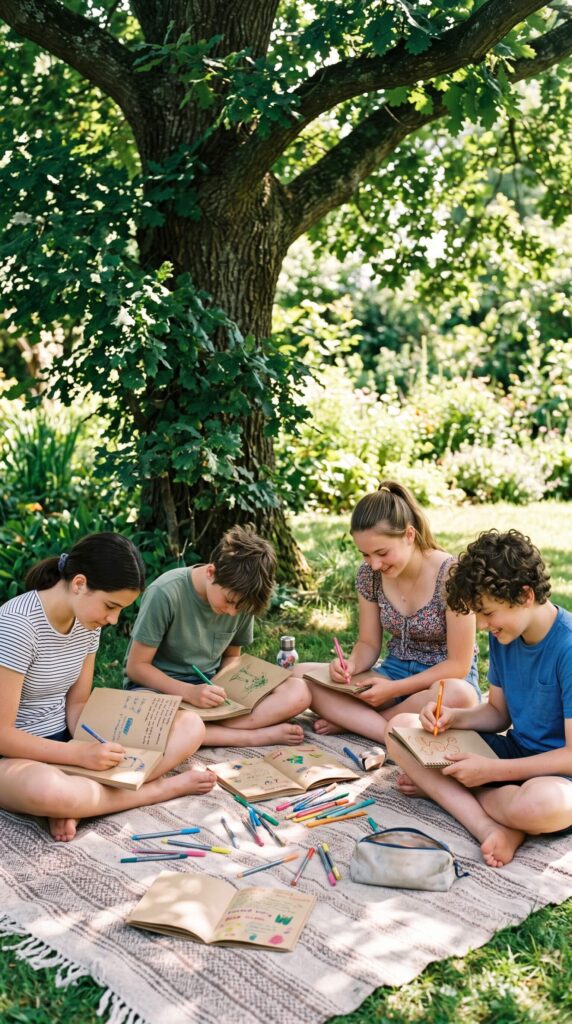
Age range: 8 to 12, and it’s genuinely a good option for kids who are aging out of loud group games.
Time: 5 minutes setup, 45 to 60 minutes (some kids will want longer), 5 minutes cleanup.
Mess level and supervision: Low mess, and this is a hands-off activity by design, that’s the whole point of it.
Supplies (with budget swap):
- Kraft paper journals (dollar store notebooks work fine)
- Fine-tip pens
- Stickers and washi tape
- A blanket
Steps:
- Spread a blanket in a shady spot.
- Lay out journals and supplies.
- Offer optional prompts but let kids self-direct.
Tip: Keep this station within eyesight but resist hovering, part of the appeal for this age is unstructured, unsupervised-feeling time.
Won’t work for: Kids who need constant activity and get bored sitting still, pair it with a nearby active option they can rotate to.
15. Preschool-Inspired Easy Craft Corner
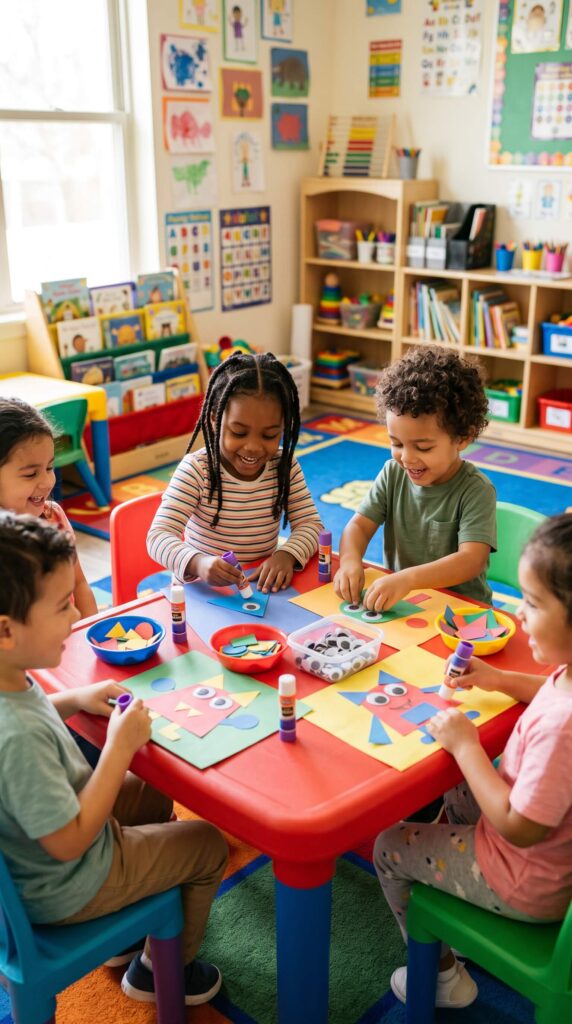
Age range: 4 to 7. This one exists specifically for younger siblings tagging along to an 8-10 camp, not for the target age group itself.
Time: 5 minutes setup, 30 minutes of play, 10 minutes cleanup.
Mess level and supervision: Low mess, check in occasionally.
Supplies (with budget swap):
- Jumbo crayons
- Glue sticks
- Googly eyes
- Pre-cut paper shapes
- A low table
Steps:
- Set the table up away from paint or water stations.
- Scatter shapes, crayons, and googly eyes.
- Let younger kids build faces or houses.
Practical note: this station only works if it’s physically separated from the older kids’ projects. Otherwise the little ones want to be wherever the “cool” activity is happening.
16. Science Crafts: Baking Soda Boats
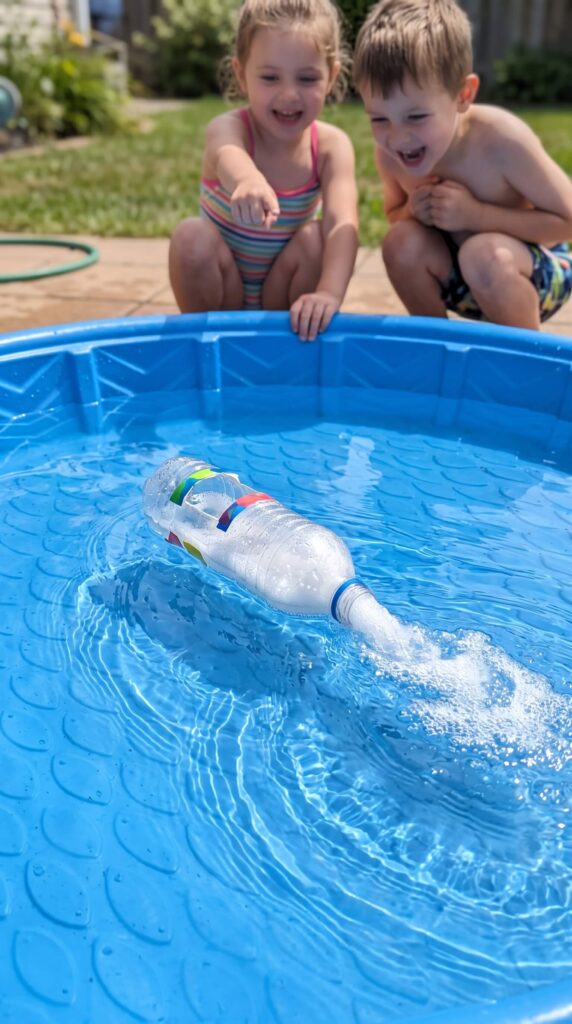
Age range: 7 to 11.
Time: 15 minutes to decorate boats, 20 minutes to test them, 10 minutes cleanup.
Mess level and supervision: Medium mess. An adult should handle or closely watch the vinegar-and-tissue step since the reaction happens fast.
Supplies (with budget swap):
- Empty plastic water bottles
- Baking soda
- Facial tissue
- White vinegar
- A wading pool (or a big plastic tub)
Steps:
- Decorate the bottle as a speedboat.
- Pour half a cup of vinegar inside.
- Wrap a tablespoon of baking soda in tissue and twist closed.
- Drop the packet in, loosely cap the bottle, and float it.
What goes wrong the first time: The cap is screwed on too tight and pressure builds up before it should. Keep the cap loose, this isn’t a sealed-pressure experiment.
17. Disney Week Parade Prop Making
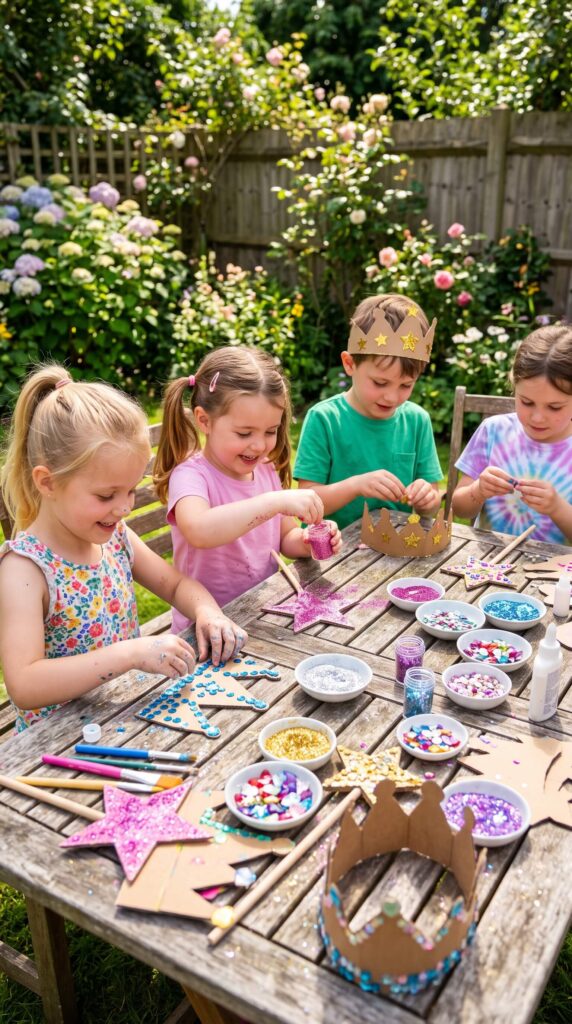
Age range: 6 to 11.
Time: 10 minutes setup, 45 minutes to build, 15 minutes cleanup (glitter gets everywhere, plan for it).
Mess level and supervision: Medium mess, glitter counts as its own mess category. Check in for the gluing and glitter steps specifically.
Supplies (with budget swap):
- Cardstock and cardboard scraps
- Non-toxic glitter glue (Elmer’s makes a washable version)
- Popsicle sticks
- Elastic string
- Safety scissors
Steps:
- Set up cutting, gluing, and glitter stations separately.
- Let kids choose a mask, crown, or prop to build.
- Measure elastic for a secure fit.
- Once dry, line up for a backyard parade with music.
Tip: Do glitter over a tray or box lid, not directly on the table. It genuinely never fully comes off a table surface once it’s ground in.
18. Outdoor Adventure Scavenger Art Hunt
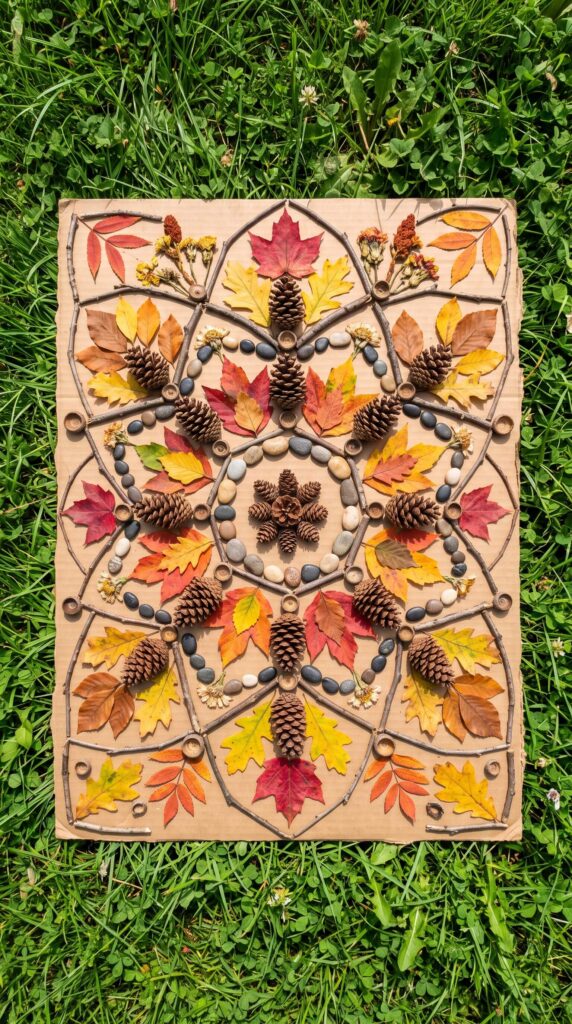
Age range: 6 to 10.
Time: 5 minutes setup, 30 minutes total (15 for the hunt, 15 to assemble), 10 minutes cleanup.
Mess level and supervision: Low mess. Hands-off during the search portion.
Supplies (with budget swap):
- Paper bags for collecting
- A printed texture list (rough, smooth, fuzzy)
- A large cardboard sheet
- Glue
Steps:
- Hand out bags and lists.
- Give 15 minutes to find matching textures in the yard.
- Glue everything onto a shared cardboard canvas as a group mosaic.
What goes wrong the first time: Kids collect things that are actually bugs or bug homes without realizing it. A quick “shake it out first” rule solves this.
19. Indoor Build-a-World Cardboard City
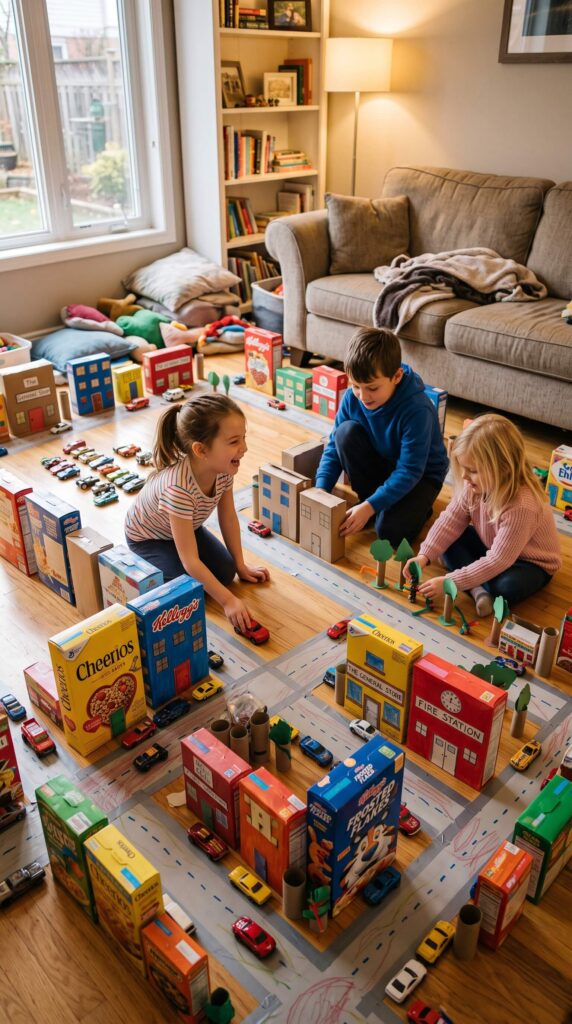
Age range: 6 to 11.
Time: 5 minutes setup, 60 to 90 minutes (this genuinely runs long once kids get into it), 20 minutes cleanup.
Mess level and supervision: Low mess, mostly tape scraps. Hands-off once they get started.
Supplies (with budget swap):
- Empty cereal and food boxes
- Masking tape
- Markers
- Toy cars and figures
- Floor or rug space
Steps:
- Pile boxes in the center of a cleared room.
- Let kids wrap or draw on boxes for windows and doors.
- Tape roads directly onto the floor.
- Bring in toy cars to populate the city.
Tip: Save boxes for two to three weeks before camp so you have enough variety in sizes.
20. Pirate and Space Mashup Camp Day
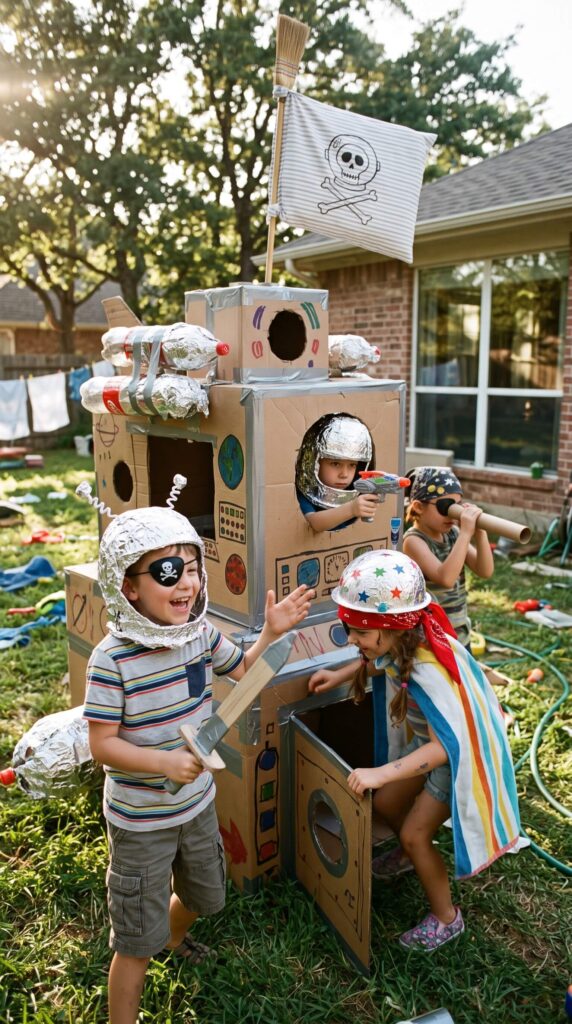
Age range: 7 to 11, and this works best as a closing-day activity that reuses props from earlier in the week.
Time: 15 minutes setup, 45 minutes of play, 15 minutes cleanup.
Mess level and supervision: Medium mess, mostly leftover craft debris. High energy means you need a hands-on adult watching for collisions during the running portions.
Supplies (with budget swap):
- Leftover cardboard from earlier builds
- Eyepatches and foil helmets
- A themed playlist
- Leftover clues and prizes
Steps:
- Announce the “Space Pirates” theme.
- Combine the cardboard ship and treasure hunt from earlier in the week.
- Play music loudly and let the chaos happen.
What goes wrong the first time: Combining two full games at once runs long and tired kids get cranky before pickup. Keep this to the last hour of camp, not the whole afternoon.
Common First-Timer Mistakes
- Buying too much before testing one activity. Run one craft with your own kids before buying supplies for a full group, since interest level varies a lot by kid.
- Skipping the “quiet zone” entirely. Fast finishers with nothing to do cause more disruption than any single messy craft.
- Underestimating drying time. Paint and glue projects (the flags, the pirate ship) need real drying time between steps, not “close enough.”
- Doing the messiest activities back to back. Alternate a high-mess activity with a low-mess one so you’re not managing two disasters in a row.
- Forgetting a rain backup. Have at least one indoor activity (the escape room, cardboard city) ready to go with zero extra prep.
Frequently Asked Questions
How long should each activity last for 8-10 year olds?
Most single activities hold this age group’s attention for 45 minutes to an hour. Bigger projects like the cardboard ship or escape room can run 90 minutes or more, so plan a flexible schedule rather than a strict timer.
What is the best way to handle kids who finish crafts too quickly?
Keep a quiet zone ready, like the journaling lab, so early finishers have somewhere to go without disrupting kids still working. This matters more than most first-time camp planners expect.
How do I manage a group if I’m on a tight budget?
Most of these activities lean on recycled materials (boxes, tubes, jars) and dollar-store basics. Ask a local grocery or appliance store to save boxes for you, and swap store-bought craft supplies for foraged or household items wherever the supply list offers it.
Is this safe for kids younger than 8?
Several activities (nature crowns, shadow chalk art, water cup relay) work fine down to age 5 or 6. Anything involving a box cutter, hot glue gun, or unattended small parts should stay adult-supervised regardless of age, and skip activities with small choking-hazard pieces for kids who still mouth objects.
How do I get paint or glitter out of clothes and carpet?
For washable paint, rinse the stain in cold water and treat with dish soap before it dries, then wash as normal. For glitter, a lint roller lifts more than you’d expect, and vacuuming after the roller catches the rest. Avoid hot water on any paint stain, it can set it permanently.
Do I need a big budget to run a full camp week?
No. The materials list across all 20 activities relies mostly on cardboard, tape, dollar-store basics, and pantry staples like baking soda and vinegar. A full week can realistically run under $40 in new purchases if you’re already saving boxes and containers.