
Disclosure: As an Amazon Associate I earn from qualifying purchases. Some links on this page may earn us a commission at no extra cost to you.
Quick Verdict
For a 1-to-4-year-old, buy the Toniebox 2. Nothing else in this category is operable by a toddler — place a figure on top and the story starts; squeeze the ears and the volume changes. That is the entire learning curve. For a 3-to-10-year-old, buy the Yoto Player. The card library is bigger and cheaper per title, podcasts and a kid-safe radio feed come free over Wi-Fi, and the nightlight, OK-to-wake clock, and room thermometer make it the better bedside device. The real cost of either system is not the box — it is the content you will buy for the next three years, and on that math Yoto usually wins by a distance.
Limitation: ages, prices, battery claims, and feature lists are based on manufacturer pages and published specifications, not hands-on testing. Prices move; check the live price before buying.

How we compared them
Three definitions shaped every verdict below.
“Simple enough for a toddler” means the child can start, stop, and change the audio with zero reading, zero menus, and zero help after the first day. A device that needs a parent to navigate on the child’s behalf fails this test no matter how good its library is.
“Grows with the child” means the content library still has somewhere to go at age 8 — chapter books, podcasts, music beyond nursery rhymes. A device whose catalog tops out at preschool has an expiry date built in.
“True cost” means the box plus a realistic first year of content. Both companies price the hardware as the entry ticket; the figures and cards are the ongoing spend. We priced a modest starter library for each — ten titles, roughly one per month plus birthdays — because that is what the first year actually looks like.
One thing neither device was graded on: sound “quality” in audiophile terms. Both are children’s speakers, both are widely described as clear and loud enough for a bedroom, and neither manufacturer publishes audio specs worth comparing. The differences that matter to a parent are elsewhere.
The head-to-head
| Toniebox 2 | Yoto Player (3rd Gen) | |
|---|---|---|
| Ages (manufacturer) | Box certified 1+; FAQ says 1–12+ | 3–12+ |
| Box price | $129.99 box-only; starter sets ~$150 | $109.99 |
| Content unit | Tonie figures, ~$15–20 each | Yoto cards, $5.99+ singles, ~$25 collections |
| Custom content | Creative-Tonie: 90 min recordable | Make-Your-Own card (blank in box) + app uploads |
| Free content | Free app content for Creative-Tonies | Podcasts, Yoto Daily, kid-safe radio — free over Wi-Fi |
| Operation | Place figure → plays. Tap, tilt, squeeze ears. No menus. | Insert card → plays. Two dials for volume/skip. Minimal menus. |
| Battery | Retailer listings say ~8–10 hrs; Tonies prints no figure | Yoto claims up to 24 hrs |
| Bedtime | Sleep timer with fading light; sunrise alarm; light ring | Nightlight (7 colors); OK-to-wake clock; room thermometer |
| Headphones | Bluetooth only (tonies headphones); wired needs a USB-C converter | 3.5mm jack + Bluetooth |
| Durability story | Soft fabric, squishy, Oeko-Tex certified; built for drops | Plastic body; reviewers call it less toss-proof |
| Setup | Wi-Fi + mytonies account + app | Wi-Fi + Yoto app |
| Privacy | No screens, no ads | No mic, no camera, no ads |
$149.99 · Ages 1+
- Certified for ages 1 and up — the Playtime Puppy set is a dedicated 1+ starter set
- Place a figure on top and the story starts; tap, tilt and squeeze the ears — no screens, no menus
- Sleep timer with fading light, sunrise alarm, and a light ring that doubles as a nightlight
- Soft, squishy Oeko-Tex certified fabric shell — the most drop-forgiving player here
- USB-C charging, cable in the box
- Simplest operation in the category — a 2-year-old masters it in an afternoon
- Tough, soft build made to be dropped, thrown and loved aggressively
- The more complete sleep system out of the box
- Content figures run $15–20 each — the collection is the real cost
- Many character figure sets are rated 3+ with a choking-hazard warning, even though the box is 1+
- No 3.5mm jack — wired headphones need tonies’ USB-C converter
$109.99 · Ages 3–12+
- 1,000+ card titles — $5.99 singles to ~$25 collections
- Free podcasts, Yoto Daily and a kid-safe radio feed over Wi-Fi
- Nightlight in 7 colors, OK-to-wake clock and room thermometer built in
- Yoto’s own battery claim: up to 24 hours per charge
- Standard 3.5mm headphone jack, plus Bluetooth
- Cheaper content per title — cards run roughly a third to half the price of Tonie figures
- The library still has somewhere to go at age 8 and beyond
- The best battery claim in the category
- Not rated for independent use under age 3
- Flat cards slide under couch cushions, get bent and get lost
- Plastic body — less toss-proof than the Toniebox
Age fit: the one difference that decides most households
This is where the comparison is nearly settled before it starts. The Toniebox 2 is certified for ages 1 and up — Tonies’ own pages say the box is “designed and tested to be safe and easy to use for kids aged 1 and up,” and the company sells dedicated 1+ starter sets with toddler-appropriate figures.
But read the second half of that sentence on every set page: the figures carry their own age ratings, and many character sets are marked 3+ with a choking-hazard warning for small parts. Tonies’ magnets are also flagged to keep away from pacemakers and medical devices — worth knowing if anyone in the house uses one. So the honest version is: the box is fine from age 1, but check each figure’s rating before handing it to a mouthing toddler. The 1+ starter sets exist precisely for that stage.
The Yoto Player is rated 3–12+, and Yoto is consistent about it. A 2-year-old can enjoy the audio with a parent operating the cards, but the company does not rate the device for independent use below 3. If the child in question is under 3, this row ends the debate: it is the Toniebox 2, with 1+ figures.
Operation: the toddler test
Place a Tonie on top of the Toniebox and the audio starts. Take it off and it stops. Tap the side to skip a track, tilt it to fast-forward or rewind, squeeze the ears for volume. There are no menus, no screens, nothing to read. A 2-year-old masters this in an afternoon, and that is not marketing language — it is the reason the Toniebox owns the under-4 market.
The Yoto Player asks slightly more. Insert a card into the slot and the audio starts; remove it and it stops. Two big orange dials handle volume and skipping. That is genuinely simple — but “slightly more” matters at age 3. Cards are flat and light, which is also their weakness: they slide under couch cushions, get bent, and get lost. Figures are chunky, collectible, and much harder to lose, which is part of why toddlers do better with them.
For a 5-year-old and up, the simplicity gap closes to nothing, and Yoto’s extra agency — choosing from a bigger library, building playlists, tuning a radio feed — becomes an advantage rather than a hurdle.
Winner, under 4: Toniebox 2, clearly. Winner, 5+: Yoto, on agency.
Content libraries and the true-cost math
Both libraries are large and still growing. Tonies offers hundreds of figures — licensed characters (Disney, CoComelon, Paw Patrol), music, stories, learning content — plus Tonieplay games, quizzes, and challenges that run only on the Toniebox 2. Yoto’s card store holds 1,000+ titles: audiobooks with name narrators, music, podcasts, phonics and curriculum-linked learning cards, meditation content.
The difference is price per title, and it is not close. Content Tonies run about $15–20 each, and each figure holds one album’s worth of audio — roughly 20–50 minutes depending on the title. Yoto cards start at $5.99 for single stories and run to about $25 for big collections. Do the first-year math on ten titles: roughly $150–200 of Tonies against roughly $60–120 of Yoto cards. And Yoto layers free content on top — podcasts, the Yoto Daily show, jokes and facts, a content-controlled radio feed — all free over Wi-Fi, no purchase needed.
Tonies’ answer to custom content is the Creative-Tonie: a blank figure with 90 minutes of recordable space. Record grandparents reading bedtime stories, upload songs, assign free app content to it. Yoto’s answer is the Make-Your-Own card — one blank card comes in the box — plus uploads through the app. Both work; neither is a reason to choose one system over the other.
The honest warning both companies hope you will not do the math on: the figures and cards are where the money goes. Budget the box and the first year of content before you buy either. If grandparents ask what to get for birthdays, point them at figures and cards — a Tonie or a Yoto card is the perfect $15–20 gift, and the collection is the product.
Winner, content value: Yoto Player, by a wide margin.
Bedtime: both thought about it, differently
The Toniebox 2 was clearly designed with bedtime in mind: a sleep timer with light that fades the sound and glow down as the child drifts off, a sunrise alarm that wakes with a soft glow and a tune, and the light ring doubling as a nightlight. It is the more complete sleep system out of the box.
The Yoto Player counters with the better bedside clock: a pixel display showing the time, a nightlight with seven adjustable colors, an OK-to-wake function that changes the display color when it is time to get up, and a room thermometer. Parents of early risers consistently name the OK-to-wake clock as the feature that changed their mornings.
Neither is wrong; they solve different bedtime problems. Toniebox 2 helps a child fall asleep. Yoto helps a child know when to stay asleep.
Winner: Toniebox 2 for falling asleep; Yoto for staying in bed until morning. Call it a draw with different strengths.
Battery, portability, and the travel question
Yoto claims up to 24 hours of playback per charge for the Player — the longest claim in this category by a wide margin, and the reason it survives long car journeys and weekends away. Tonies does not publish a battery figure on its own product pages; retailer spec tables put the Toniebox 2 somewhere around 8–10 hours, which covers a full day of heavy use but not a weekend off the charger.
For travel specifically, both companies sell a smaller unit. The Yoto Mini ($79.99) takes the same cards as the Player, drops the nightlight, clock, and thermometer, and is pocket-sized for flights and car seats. The Toniebox Lite ($79.99 story set) is the rugged travel Toniebox with a hard shell instead of fabric. Either is a fine second device; neither replaces the main unit at home. Note the Mini is still rated 3+, and the Lite keeps the 1+ friendliness of its big sibling.
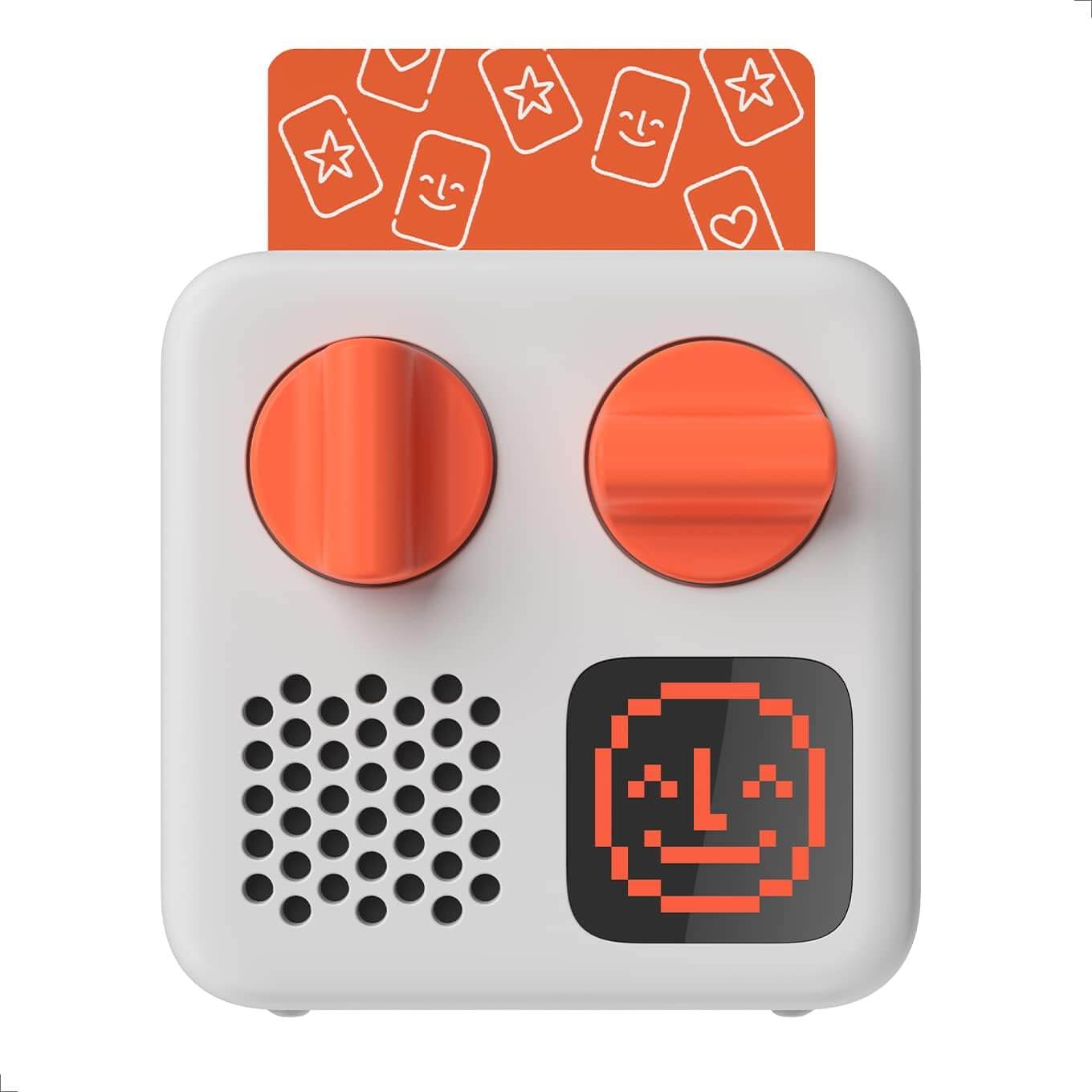
- The travel pick — the full card library in a pocket-sized unit
- Survives long car journeys and weekends away
- No nightlight, OK-to-wake clock or room thermometer
- A second device for travel — it does not replace the main unit at home
$79.99 · Ages 1–12
- The rugged travel Toniebox — a hard shell instead of fabric
- Works with all Tonies — the same figures as the main box
- Keeps the 1+ friendliness of its big sibling, the Toniebox 2
- Battery up to 6 hours (retailer spec tables)
- Hard shell shrugs off travel knocks the fabric box would feel
- Your existing Tonies collection carries straight over — no second library
- A travel second device, not a replacement for the main unit at home
- Content is still bought per figure at $15–20 each
One practical asymmetry: the Yoto Player has a standard 3.5mm headphone jack plus Bluetooth. The Toniebox 2 pairs with tonies Bluetooth headphones, and wired listening needs tonies’ USB-C converter — a standard pair of wired kids’ headphones will not plug straight in. On a plane, that detail matters.
Winner, battery and travel: Yoto.
Durability and the drop test
The Toniebox 2 is a soft, squishy cube wrapped in Oeko-Tex Standard 100 certified fabric with silicone ears — it is designed to be thrown, chewed on by toddlers in spirit if not in fact, and wiped clean. This is the most drop-forgiving audio player in the category.
The Yoto Player is a plastic box. It is well-built, but reviewers consistently describe it as less toss-proof than the Toniebox, and the pixel display is a screen-adjacent surface in a way the Toniebox simply does not have. For a 2-year-old’s bedroom floor, the Toniebox 2 is the safer physical bet. For a 6-year-old’s nightstand, the difference stops mattering.
Winner, toddler-proofing: Toniebox 2.
Setup and the fine print nobody reads
Both devices need the same thing before the first story plays: Wi-Fi, a parent account, and the companion app. The Toniebox 2 needs the mytonies app; the Yoto needs the Yoto app. Budget fifteen unglamorous minutes on the day it arrives — not on Christmas morning.
Yoto’s app is where its parental controls live: volume limits, day/night modes, alarms, and quiet-time routines. Tonies’ app is the remote control and collection manager: play, pause, skip, battery level, and settings. Both are parent-facing; neither puts an account or a store in front of the child.
On privacy, both are clean by design. The Toniebox has no screen and no ads. Yoto states plainly: no microphone, no camera, no ads. Neither device is listening to your living room.
The 4th-gen question: should you buy the new Yoto?
Yoto launched the Player 4th Gen in late 2026 at $149.99, with a faster processor, 64GB of storage (about 1,000 hours of audio), a slightly shorter claimed battery life (up to 14 hours), and a new green button that jumps straight to the child’s favorites without a card. The 3rd Gen stays on sale as the “classic” at $109.99.
Our take: the 4th Gen is the better device, but the 3rd Gen is currently the better buy. Nothing about the 3rd Gen stopped working when the new one launched, the card library is identical, and the price gap is $40 for features a 4-year-old will not notice. If the 3rd Gen disappears from shelves, the 4th Gen is the natural successor — not a reason to switch ecosystems.
$149.99
- 64GB storage — about 1,000 hours of audio
- Green button jumps straight to the child’s favorites, no card needed
- Claimed battery life of up to 14 hours
- The card library is identical to the 3rd Gen’s
- The better device — faster processor and double the storage
- Favorites without hunting for the right card
- $40 more than the 3rd Gen for features a 4-year-old will not notice
- While the 3rd Gen is still sold at $109.99, this is the worse value of the two
Who should buy which — and who should buy neither
Buy the Toniebox 2 if: the child is 1–4; you want the simplest operation in the category; bedtime fading light and a sunrise alarm appeal; the child loves specific characters and would treat figures as collectibles; the device will be dropped, thrown, or loved aggressively.
Buy the Yoto Player (3rd Gen) if: the child is 3+; you want the library to still be interesting at age 9; per-title content cost matters to you; podcasts, radio, and free daily content appeal; the OK-to-wake clock would fix your mornings; battery life for travel matters.
Buy neither if: the child is under 1 (neither is rated for it); your household cannot tolerate one more ecosystem of small purchasable things (be honest with yourself — the figures and cards are the business model); or you want zero setup (both need Wi-Fi and an app on day one). And if the child is 7+ and already reading independently, a plain audiobook app on a supervised device may serve better than either — the honest upgrade path neither company advertises.
Where each one wins, in one paragraph
The Toniebox 2 wins the toddler years on simplicity and toughness, and it wins bedtime on the strength of its fading sleep light and sunrise alarm. The Yoto Player wins everything after age 5: cheaper content, a bigger library, free podcasts and radio, the best battery claim in the category, and a bedside clock that teaches mornings. Buy the Toniebox for the child you have now; buy the Yoto for the child they are becoming. And whichever box you choose, budget the content — ten figures or ten cards in year one — because that is the actual price of the system.
Frequently asked questions
What age is the Toniebox for, really?
The Toniebox 2 box is certified 1+, and Tonies sells 1+ starter sets. But the figures carry individual ratings — many character sets are 3+ with a choking-hazard warning for small parts. Match the figure to the child, not just the box.
What age is the Yoto Player for?
3 to 12+, per Yoto. Cards include titles for babies and toddlers, but the player itself is not rated for independent use under 3.
Do Tonies or Yoto need a subscription?
No. Both sell content individually — figures and cards. Yoto adds free podcasts, daily content, and radio over Wi-Fi at no charge.
Can they play without Wi-Fi?
Mostly yes, after setup. Yoto cards download over Wi-Fi and then play offline; Tonies store their audio on the figure after the first sync. Both need Wi-Fi and the app for initial setup.
Which is cheaper in the long run?
The Yoto Player. The box costs less ($109.99 vs ~$150 for a Toniebox 2 starter set), and cards cost roughly a third to a half of Tonie figures per title. Over a year of regular new content, the gap is several hundred dollars.
Can kids use headphones with them?
Yes, both. The Yoto Player has a standard 3.5mm jack plus Bluetooth. The Toniebox 2 pairs with tonies Bluetooth headphones; wired headphones need tonies’ USB-C converter.
Is there a smaller travel version?
Yes — the Yoto Mini ($79.99, same cards, 3+) and the Toniebox Lite ($79.99 story set, 1+, hard shell). Both are second-device travel units, not replacements.
Should I buy the Yoto Player 4th Gen instead of the 3rd?
The 4th Gen ($149.99) is newer and roomier, but while the 3rd Gen is still sold at $109.99 with the identical card library, it is the better value. Revisit when the 3rd Gen leaves shelves.
Are they safe for privacy?
Both are clean by design: the Toniebox has no screen and no ads; Yoto states no microphone, no camera, and no ads. The apps are parent-facing.
How this guide was researched
We compared manufacturer pages and published specifications (age ratings, prices, battery claims, feature lists, safety notices) on 2026-10-22 — us.tonies.com product pages and FAQ, us.yotoplay.com pricing, and the Yoto app’s published feature list. Retailer listings were used only where they reproduce manufacturer product data, and conflicts are flagged in the fact-log rather than smoothed over. No hands-on testing was performed. Prices change constantly; check the live price before buying.