

Disclosure: As an Amazon Associate I earn from qualifying purchases. Some links on this page may earn us a commission at no extra cost to you.
Quick Verdict
If you buy one STEM toy for a 5-year-old, make it Botley the Coding Robot — it’s the rare coding toy actually rated from age 5, it needs no tablet or app, and its sequences, loops and if/then logic are real programming ideas, not button-mashing. For building, LEGO Classic 10696 and Magna-Tiles keep teaching for years. Read the “left out” section first: two of the most-recommended names in this category — Snap Circuits Jr and GraviTrax — are officially rated 8+, whatever the gift guides imply.
The short answer
If you buy one STEM toy for a 5-year-old, make it Botley the Coding Robot — it’s the rare coding toy actually rated from age 5, it needs no tablet or app, and its sequences, loops and if/then logic are real programming ideas, not button-mashing. For building, LEGO Classic 10696 and Magna-Tiles keep teaching for years. Read the “left out” section first: two of the most-recommended names in this category — Snap Circuits Jr and GraviTrax — are officially rated 8+, whatever the gift guides imply.
Limitation: learning claims below are the manufacturers’ own stated goals and specifications, not hands-on testing.
What “screen-free” and “actually teaches” mean here
- Screen-free means no tablet, phone or app is required. Three picks run on batteries (Botley, Cubetto, Snap Circuits Beginner) — batteries are not a screen. If a toy needs an iPad, it’s not here.
- Actually teaches means the manufacturer names a specific skill — sequencing, circuits, spatial reasoning — and the design practices it. Every pick carries the maker’s own age rating; two are here because they’re the age-correct versions of famous toys.
Quick comparison
| Toy | What it teaches | Power | Age | Best for |
|---|---|---|---|---|
| Learning Resources Botley | Coding: sequences, loops, if/then | 5 AAA batteries | 5+ | First real coding |
| LEGO Classic 10696 | Open-ended building, engineering basics | None | 4+ | Builders who never quit |
| Magna-Tiles Classic 32 | Geometry, spatial reasoning | None | 3+ | Magnetic building |
| Elenco Snap Circuits Beginner | Real circuits, electronics | AA batteries | 5+ | Future engineers |
| Cubetto Playset | Tangible coding, pre-readers | 6 AA batteries | 3+ | Montessori-style coding |
| T&K Kids First Coding & Robotics | Coding with 30 structured lessons | Batteries (see note) | 4–8 | Lesson-style learners |
| Hape Quadrilla Race to the Finish | Physics: gravity, cause & effect | None | 4+ | Marble-run engineers |
| ThinkFun Rush Hour Jr | Logic, planning, sequencing | None | 5+ | Puzzle kids |
| Plus-Plus | 2D/3D construction, fine motor | None | 5+ | One-shape building |
| Tegu 24-Piece Set | Magnetic building, open-ended play | None | 1+ (safety-tested) | Wooden-toy families |
The picks, honestly rated
1. Learning Resources Botley the Coding Robot — the anchor pick
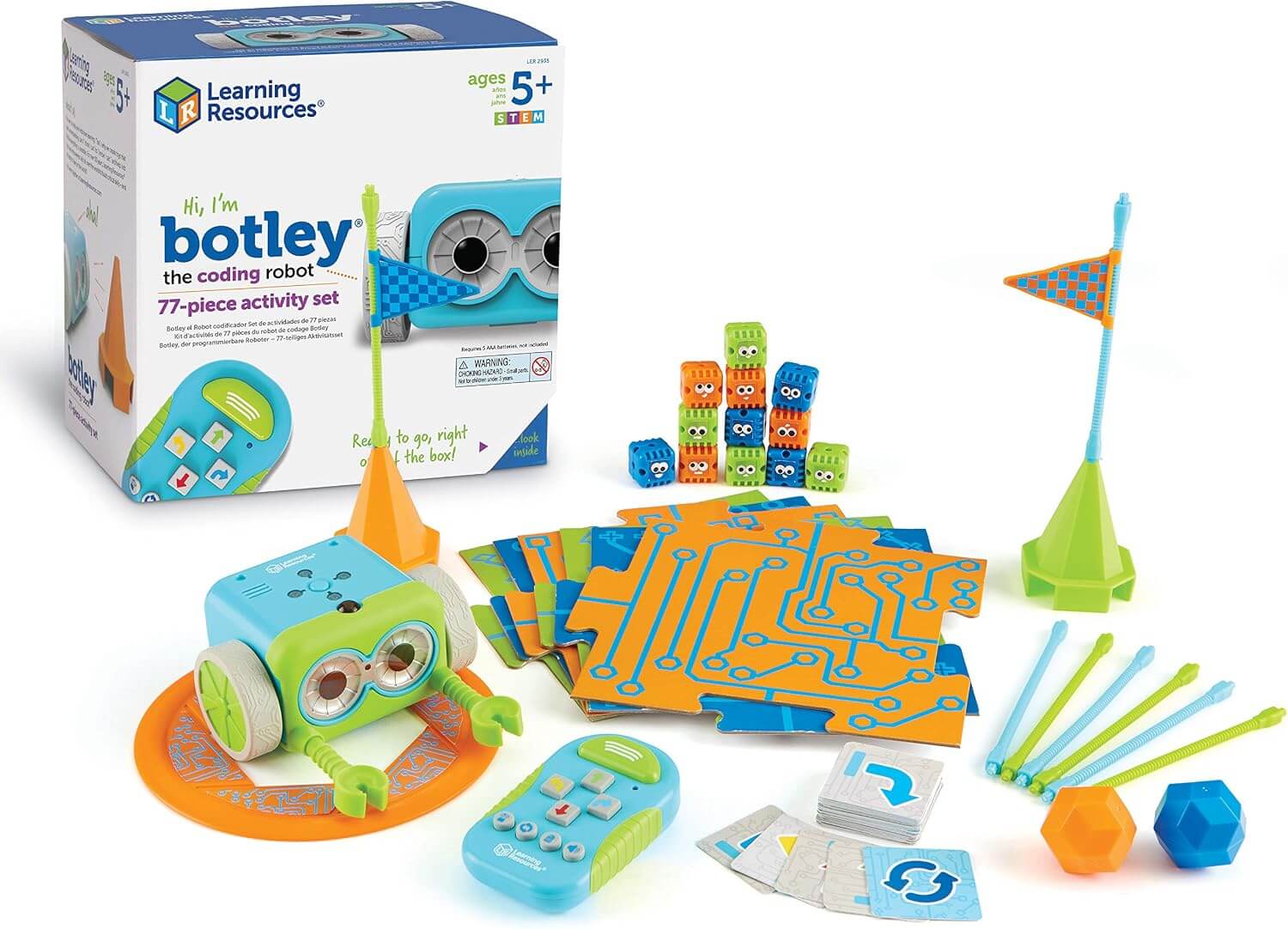
Botley is a small robot you program with a remote — no phone, no tablet, no app (Learning Resources’ own words). Kids code sequences of up to 120 steps, add loops, use if/then logic to steer around detected objects, and switch on a black-line-following mode. The 77-piece activity set adds coding cards, detachable arms and obstacle pieces.
Play runs in a loop: plan the route with the coding cards, tap the sequence into the remote, press go, debug when Botley bonks into a chair leg. That plan-run-fix cycle is the real curriculum — how programmers work, scaled to a kitchen floor. Detachable arms let Botley push a ball into a goal or carry objects through a course; the starter guide adds ready-made challenges for when free play runs dry. The honest costs: 5 AAA batteries (3 for Botley, 2 for the remote, none included), a Phillips screwdriver for the battery doors, and small obstacle pieces to keep away from under-3 siblings. Skip it if your child only wants to build — Botley drives, it doesn’t construct.
- Rare coding toy actually rated from age 5
- Plan-run-fix cycle teaches how programmers work
- Coding cards, detachable arms and obstacle pieces in the set
- 5 AAA batteries — none included
- Phillips screwdriver needed for the battery doors
- Small obstacle pieces — keep away from under-3 siblings
2. LEGO Classic 10696 — the set that outlasts every trend
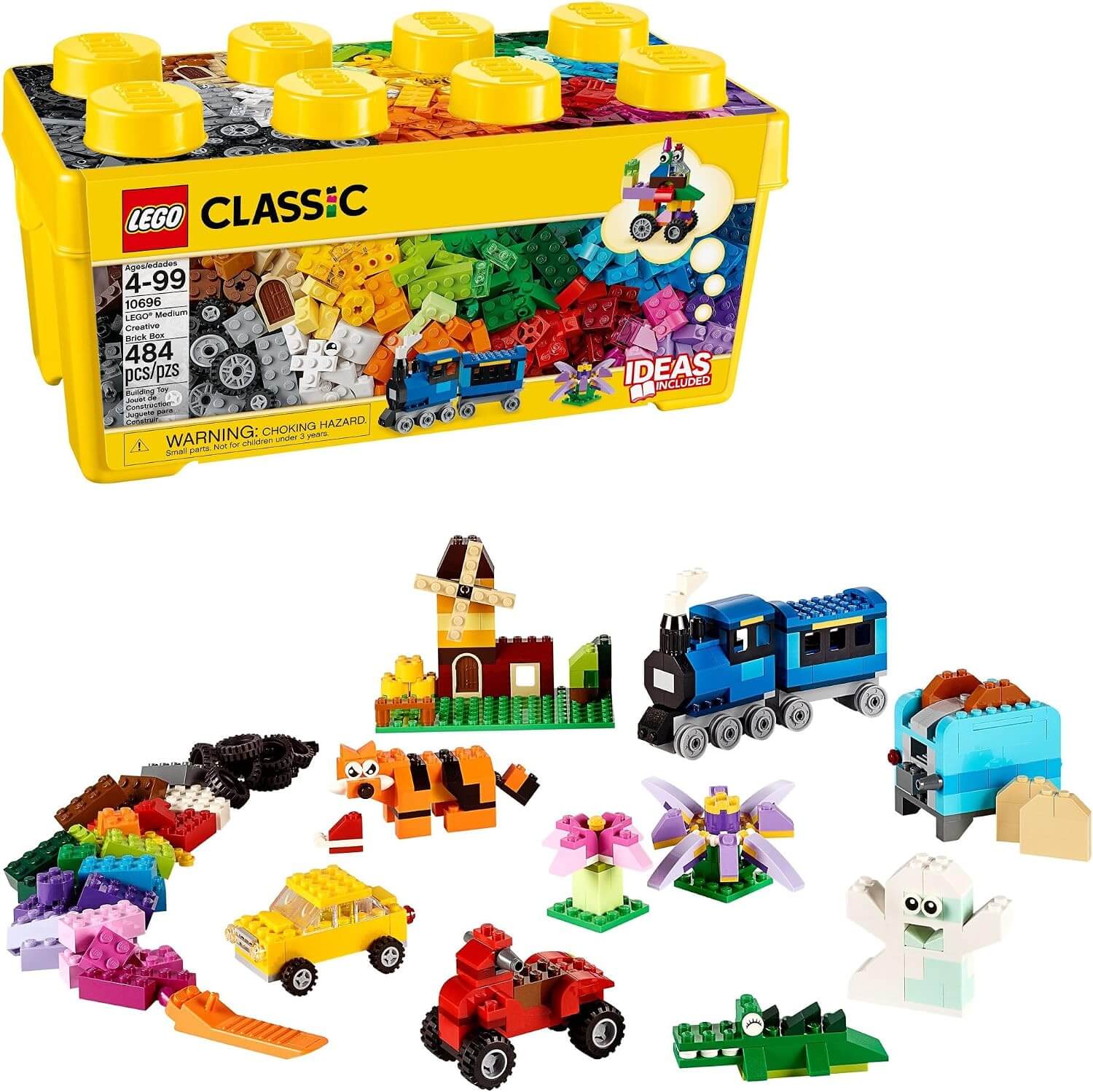
484 bricks in 35 colors, with tires, windows, eyes, a baseplate and a storage box. LEGO rates it 4–99 and describes the Classic line as built to “inspire open-ended creativity” — the honest framing: engineering learned the slow way, through hundreds of self-directed builds, not lessons. It’s listed at $34.99 on lego.com.
Because every brick fits every other LEGO set, this box upgrades themed sets your child owns — tires, windows and eyes are the pieces kids cannibalize for their own vehicles. Two cautions from LEGO’s page: small parts (not for under 3s), and the ideas booklet is a starter, not full instructions — a child who wants step-by-step models may prefer a themed set.
- Every brick fits every other LEGO set
- Storage box included
- Small parts — not for under 3s
- Ideas booklet is a starter, not full instructions
3. Magna-Tiles Classic 32-Piece Set — geometry you can hold
The original magnetic tiles: food-grade, non-toxic MABS plastic (free of BPA, phthalates and latex, per the manufacturer’s own spec), with a lattice design and rivets keeping the magnets secured inside. Magna-Tiles says its sets encourage spatial reasoning, problem-solving, fine motor skills and early STEM learning — and the mechanism backs it: a 5-year-old whose cube collapses learns more about triangles and stability than any worksheet teaches. Rated 3–99 by the manufacturer, listed at $49.99 on magnatiles.com.
Every Magna-Tiles set is compatible with every other — its “Always Compatible” promise — so this box is a foundation, not a dead end. Honest limit: 32 pieces builds small, and tiles only connect within the magnetic-tile system.
- Teaches: geometry, spatial reasoning
- Food-grade, non-toxic MABS — free of BPA, phthalates and latex
- Lattice design and rivets keep magnets secured inside
- Power: None
- Rated 3-99 by the manufacturer
- Always Compatible — every Magna-Tiles set fits every other
- A foundation, not a dead end
- 32 pieces builds small
- Tiles only connect within the magnetic-tile system
4. Elenco Snap Circuits Beginner — the only Snap Circuits actually rated for 5-year-olds
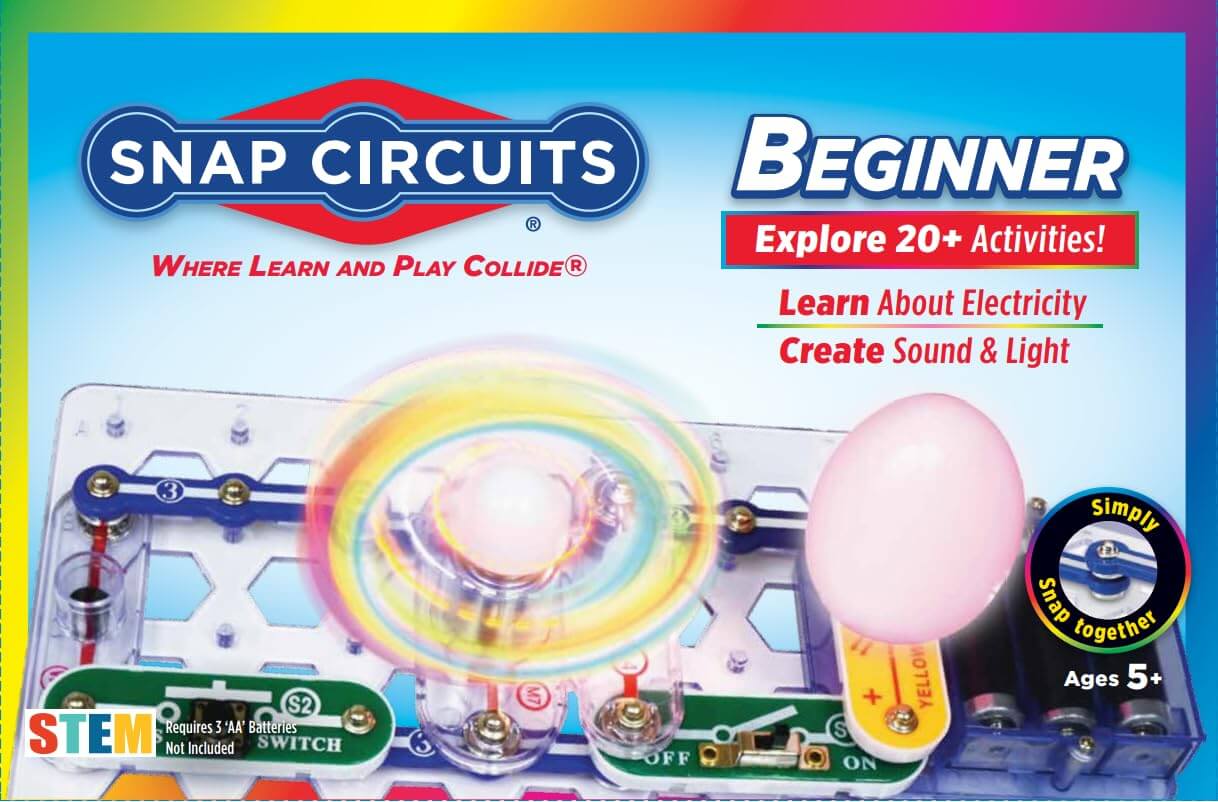
This is the pick most gift guides get wrong by omission. Elenco’s own FAQ states that every Snap Circuits set is ages 8+ except this one — the Beginner (SCB-20) is the line’s only 5+ kit. It has 14 parts and 20+ projects with extra safety features designed for younger engineers, so a 5-year-old builds working circuits by snapping parts onto a grid — no tools, no soldering.
The project book works like a textbook: builds include an electric light, a sound-activated switch, a two-speed fan and a water alarm, each with a full-color diagram and an explanation of how the circuit works. Honest limits: 20 projects is a starter’s runway, not the 100+ of the bigger sets; the parts need a home base (the box), not a toy bin; and it needs AA batteries (not included). Buy this one now — the famous Jr set is a later gift; see below.
- Builds working circuits by snapping parts onto a grid — no tools, no soldering
- Project book with full-colour diagrams and explanations
- 20 projects is a starter’s runway, not the 100+ of the bigger sets
- AA batteries not included
- Parts need a home base (the box), not a toy bin
5. Cubetto Playset — coding before reading
Cubetto is a wooden robot programmed by placing blocks on a control board — forward, left, right, and a function block that introduces the idea of reusing a sequence. A program is a physical sentence: a line of blocks on the board, one press of the blue go button, and Cubetto drives the story across its map. Primo designed it for ages 3–6, Montessori-approved, with no screen, no WiFi and no literacy requirement — the strongest pick here for a non-reader. The playset includes the robot, board, 16 coding blocks, a world map and a story book, and runs on 6 AA batteries.
Honest limits: it’s a premium, classroom-grade product sold mainly through Primo’s store and education suppliers (launch price $225 direct; check the current price live), and since it’s designed to top out around age 6, a confident 5-year-old may outgrow it sooner than Botley. Primo sells extra map packs and block sets separately, so it can grow — at a price.
- Tangible coding for pre-readers — wooden robot, control board and 16 coding blocks
- Includes world map and story book
- Power: 6 AA batteries
- Designed for ages 3-6 (Primo)
- No screen, no WiFi, no literacy requirement
- Strongest pick here for a non-reader
- Montessori-approved design
- Premium, classroom-grade product sold mainly through Primo’s store and education suppliers
- Designed to top out around age 6 — a confident 5-year-old may outgrow it sooner than Botley
- Extra map packs and block sets are sold separately
6. Thames & Kosmos Kids First Coding & Robotics — the most structured teaching here
Sammy is a robot shaped like a peanut-butter-and-jelly sandwich, in the kit closest on this list to a curriculum: 30 lessons covering sequencing, loops, events, conditionals, functions and variables, aligned with CSTA computer-science standards. Programs are built by laying physical code cards in a row; Sammy reads them with an optical scanner underneath as it drives over them — no tablet, smartphone or computer, in the manufacturer’s own words.
Sammy is only the first of six story models: the manual also builds a mouse hunting cheese through a maze, a penguin touring a zoo, a soccer player, a fire truck and a factory robot, each with its own lessons; Sammy’s output gear can also power simple moving creations kids build onto it. Rated 4–8. Honest notes: the robot needs batteries (type/count unverified in our sources — check the box); at 5, the lessons benefit from an adult reading along; small parts — not for under-3s.
- 30 lessons: sequencing, loops, events, conditionals, functions and variables
- Aligned with CSTA computer-science standards
- Six story models built from the manual
- Official age: 4-8
- No tablet, smartphone or computer required
- Closest kit on this list to a curriculum
- Programs built with physical code cards read by an optical scanner
- Robot needs batteries — type and count unverified in our sources
- At 5, the lessons benefit from an adult reading along
- Small parts — not for under-3s
7. Hape Quadrilla Race to the Finish — physics by marble
Quadrilla is Hape’s wooden marble-run system, and Race to the Finish is the set Hape calls the perfect beginner’s set — spins, drops and seesaws that a 5-year-old assembles, then tests. Hape says Quadrilla “actively encourages spatial thinking and problem-solving” as part of STEAM learning, and the loop is: build, drop a marble, watch it fail, rebuild. Rated from 4 years by Hape.
Every Quadrilla set is interchangeable and uses standard-size marbles, so this starter grows piece by piece — Hape sells expansion packs and add-ons like a xylophone rail. Honest notes: marbles are small parts (keep away from toddlers); wooden tracks topple mid-build — that’s the lesson, though frustration-prone kids may need a co-builder at first; Hape offers an optional app with extra build ideas, but the toy itself needs no screen.
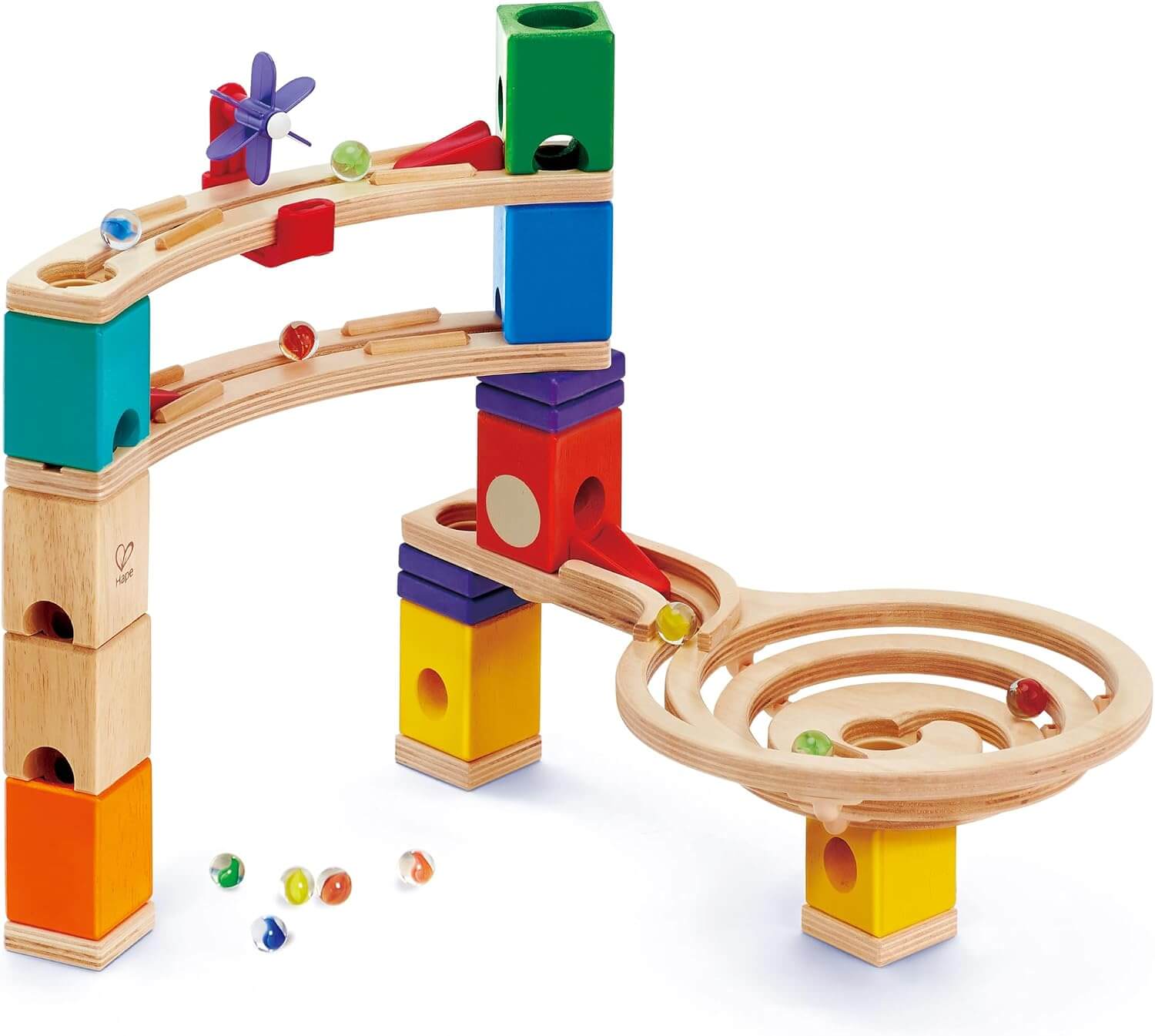
- The set Hape calls the perfect beginner’s set
- Build, drop a marble, watch it fail, rebuild
- Marbles are small parts — keep away from toddlers
- Wooden tracks topple mid-build — frustration-prone kids may need a co-builder at first
8. ThinkFun Rush Hour Jr — pure logic, zero setup
A sliding-block traffic puzzle: set the vehicles up from a challenge card, then slide them forward and back to free the ice-cream truck. The manufacturer’s rating is 5+, and the box carries 40 challenges across four difficulty levels, with solutions printed on the back of each card — so a stuck child can rescue themselves without an adult. ThinkFun positions it around logical reasoning, planning and sequential thinking.
It’s the most travel-shaped toy here: one grid, a deck of cards, no batteries, nothing to charge or assemble — it works in a car seat or on a tray table. One caveat: it’s genuinely solo — a child who’d rather play with vehicles than solve with them will treat the cars as toys and ignore the cards, at first.
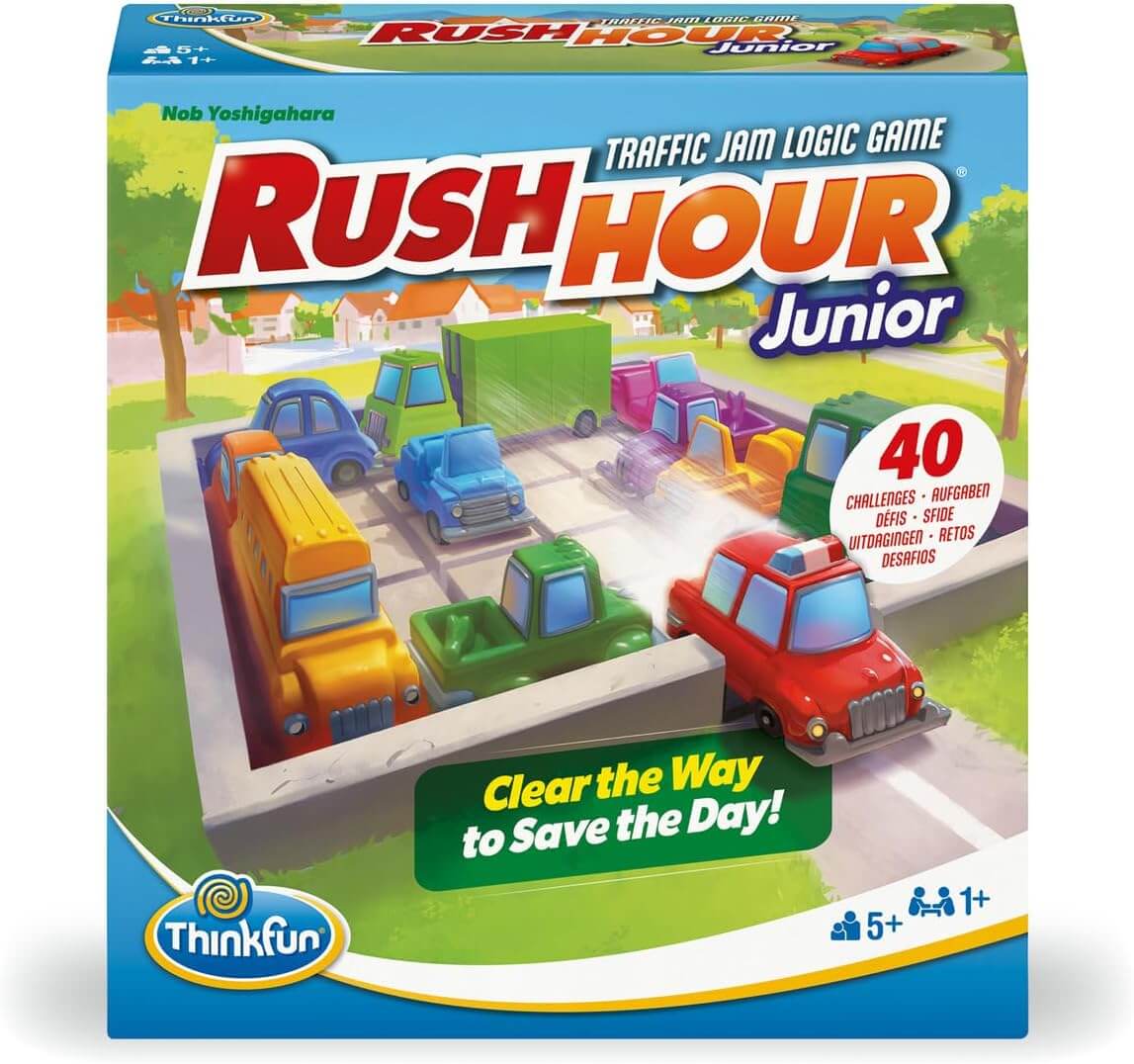
- Most travel-shaped toy here — works in a car seat or on a tray table
- A stuck child can rescue themselves with the solutions on the cards
- Genuinely solo play
- A child who would rather play with vehicles may treat the cars as toys and ignore the cards, at first
9. Plus-Plus — one shape, real engineering
Every Plus-Plus piece is the same double-plus shape, and from that single shape kids build flat mosaics and 3D models. The manufacturer’s manual rates the standard sets 5+, with a small-parts warning for under-3s; the pieces are BPA- and phthalate-free plastic, made in Denmark. The constraint is the teaching: one shape means every build is a problem in planning and fine motor control — flat pictures first, then standing figures, then structures that balance.
The same pieces come in themed tubes (animals, vehicles, figures), so a child who takes to it can grow the collection by subject. Honest notes: the pieces are small and will migrate into carpets and vacuum cleaners, and don’t confuse these with Plus-Plus BIG — that’s the separate, bigger-piece toddler line; for a 5-year-old, standard is right.
- One double-plus shape builds flat mosaics and 3D models
- Teaches: 2D/3D construction, fine motor
- Pieces are BPA- and phthalate-free plastic, made in Denmark
- Power: None
- Official age: 5+ on the manufacturer’s manual
- One shape means every build is a problem in planning and fine motor control
- Themed tubes let a child grow the collection by subject
- Pieces are small and will migrate into carpets and vacuum cleaners
- Small-parts warning for under-3s
- Do not confuse with Plus-Plus BIG — the separate bigger-piece toddler line
10. Tegu 24-Piece Set — the wooden, quiet option
Tegu embeds magnets inside solid wooden blocks, so kids get magnetic building with the weight and feel of hardwood. The blocks are sustainably harvested Central American hardwoods with non-toxic, water-based finishes — no lead, no plastic — and Tegu states its products conform to US (CPSIA) and European (EN71) safety requirements; the sets are safety-tested from age 1+. All Tegu sets are compatible with each other.
At 5, the value isn’t magnetism discovery (a toddler’s lesson) — it’s building stamina: 24 pieces is enough for real structures, and the magnets forgive wobbly engineering that would topple plain blocks. Honest limits: Tegu is the premium-priced wooden option, pieces only connect at their magnetic points (builds behave differently from tiles), and 24 pieces is a start, not a castle — the 42-piece set exists for that reason.
- 24 wooden blocks with magnets embedded inside solid wood
- Sustainably harvested Central American hardwoods, non-toxic water-based finishes
- Teaches: magnetic building, open-ended play
- Power: None
- Safety-tested from age 1+
- Magnetic building with the weight and feel of hardwood
- All Tegu sets are compatible with each other
- Magnets forgive wobbly engineering that would topple plain blocks
- Premium-priced wooden option
- Pieces only connect at their magnetic points
- 24 pieces is a start, not a castle
The popular picks we left out — and why
Snap Circuits Jr (SC-100) is the most-recommended “first electronics kit” on the internet, and the name is a trap: Elenco’s own FAQ states that all Snap Circuits products are for ages 8 and up, except the Beginner set above. The Jr’s 100+ projects are genuinely good — they’re just not rated for a 5-year-old.
GraviTrax (Ravensburger) appears in most “best STEM toys” lists regardless of age. Ravensburger’s own store rates the Starter Set 8+. It’s an excellent gravity-and-kinetics system — for an 8-year-old.
Osmo makes clever games, but every kit works by pointing a tablet camera at the table. A tablet-required toy can’t appear in a screen-free guide, however good it is.
SmartMax is a smaller miss, and a fit issue rather than a safety one: the line is designed for ages 1–5, so a kindergartner sits at its ceiling. It’s a reasonable buy for a mixed-age house with a toddler; it’s not the strongest single gift for a 5-year-old.
What a starter setup really costs
Only two picks carry a manufacturer price we could verify on the brand’s own site — those two are exact; the rest is honest framing:
- Cheapest strong start: LEGO Classic 10696 — $34.99 on lego.com, storage box included; nothing else to buy.
- Best building upgrade: Magna-Tiles Classic 32 — $49.99 on magnatiles.com — expect a second set in year two.
- The splurge: Cubetto. Primo sells it direct and through education suppliers; its launch price was $225. Botley and Kids First sit between the building sets and Cubetto — check live prices above rather than trusting any guide’s numbers, ours included.
- The hidden line item is batteries. Botley needs 5 AAA, Cubetto 6 AA — neither included; Beginner needs AAs. Rechargeables pay for themselves fast in the robots.
- Upgrade paths save money later. Beginner → Jr is the Snap Circuits ladder at 8; Quadrilla and Magna-Tiles grow by expansion; LEGO, Magna-Tiles and Tegu have no age ceiling (4–99, 3–99, 1+), so they’re never outgrown by rating — only by interest.
Which to buy for which 5-year-old
- Wants to code, can’t read yet: Cubetto (blocks and symbols, no reading) or Botley (cards + remote)
- Wants structured lessons, likes workbooks: Thames & Kosmos Kids First Coding & Robotics (30 CSTA-aligned lessons)
- Builder who never stops: LEGO Classic 10696 first, Magna-Tiles when geometry clicks
- Future engineer, loves how things work: Snap Circuits Beginner — the age-correct one
- Puzzle kid: Rush Hour Jr (solo, progressive, self-checking)
- Calm, wooden-toy household: Tegu for building, Quadrilla for marble-run physics
- Travel and waiting rooms: Rush Hour Jr — no batteries, no loose track, self-contained cards
- A gift that has to impress (grandparents, take note): Tegu for feel, Magna-Tiles for instant wow, Cubetto if the budget is truly open
- Homeschool or classroom shelf: Kids First (a real lesson sequence); Botley, with Learning Resources’ free CSTA-aligned classroom activities
- Small pieces are a problem (toddlers in the house): Botley’s cards and Quadrilla’s blocks are manageable with supervision; skip Plus-Plus and Rush Hour Jr until the baby is older
Care, storage and replacement parts
- Storage is a feature; check for it. The LEGO box is a storage box. No building system here has consumables — give each a bin from day one; every set is less fun at 80% complete.
- Magnet warranty worth knowing: Magna-Tiles’ 1-year limited warranty is honored no matter where you bought the set (keep the receipt; damage needs photos). Any cracked magnetic toy with a loose magnet should still leave play immediately.
- Lost a circuit piece? Elenco sells replacement parts directly — a lost piece doesn’t end the kit.
- Code cards are equipment, not paper. Thames & Kosmos’ own support guidance: keep Sammy’s code cards clean, dry and out of direct sunlight — dirt and fading interfere with the scanner that reads them. The same flat-and-dry rule protects Botley’s 40 planning cards.
- Wooden sets wipe down. Hape rates its wooden sets wipe-clean, Tegu publishes care instructions for its blocks, and Cubetto’s world maps are machine-washable (Primo’s FAQ).
Frequently asked questions
If they’re screen-free, why do three picks need batteries? Screen-free means no display, tablet or app in play. Botley, Cubetto and Snap Circuits Beginner use batteries for motion, light and sound; the thinking is the child’s — remote, physical blocks, circuit diagram — not software.
Do the robots need WiFi, Bluetooth or an account? No. Cubetto needs no internet (Primo’s FAQ is explicit); Botley talks only to its own remote. Neither pairs with a phone or asks for a login.
Do STEM toys really teach, or is it marketing? Both exist, which is why every pick names the maker’s specific claim. The structured picks (Kids First’s 30 lessons, Rush Hour Jr’s 40 graded challenges, Snap Circuits’ project manual) teach in steps. The open-ended picks (LEGO, Tegu, Magna-Tiles) build spatial and engineering intuition through free play — real learning, but slower and self-directed.
Why is Snap Circuits Jr not on the list if it’s made for kids? Because Elenco rates it 8+. “Jr” refers to its place in the Snap Circuits range (fewer parts than the 300/500 sets), not to age. Elenco’s FAQ confirms Beginner is its only 5+ set.
What age rating should I trust — the box or the blog posts? The manufacturer’s — the rule this guide used throughout. Where a retailer or blog disagreed with the maker (twice in our research), we printed the maker’s number.
My 5-year-old can’t read yet. Which picks still work? Cubetto (symbols only), Botley (picture cards and a remote) and the building sets (LEGO, Magna-Tiles, Tegu, Plus-Plus) need no reading. Kids First and Snap Circuits reward an adult reading alongside — plan to co-play those two at first.
Can siblings share these? Mostly yes. The building systems overlap across ages — Tegu is safety-tested from 1+, Magna-Tiles from 3+, LEGO from 4+ — so a 5-year-old and a sibling can build side by side. The robots are single-programmer toys, so expect turn-taking.
Which of these work for homeschool or a classroom? Kids First is the natural fit — its 30 lessons are aligned to CSTA standards and Thames & Kosmos publishes a curriculum correlation guide. Botley is the other classroom regular: Learning Resources publishes free CSTA-aligned activity downloads for it.
What if a piece breaks or gets lost? See “Care, storage and replacement parts” above. Short version: Elenco sells parts; Magna-Tiles warranties tiles for a year wherever bought; lost wooden pieces shrink a build rather than breaking it; Quadrilla’s standard-size marbles are the easiest part here to replace.
When should we move up to the bigger, famous sets? At the makers’ own step-ups: Snap Circuits Jr and GraviTrax are both 8+ — natural “big kid” gifts in three years. Building systems never need a move-up: LEGO (4–99), Magna-Tiles (3–99) and Tegu (1+) grow by adding sets.
Are magnetic toys safe for a 5-year-old? The magnetic picks here are built so magnets can’t come out — Magna-Tiles uses a lattice-and-rivet construction, Tegu embeds magnets inside solid wood. The rule that matters: a cracked magnetic toy with a loose magnet should be retired immediately, for any age.
How this guide was researched
We compared manufacturer pages and published specifications (age ratings, set contents, power requirements, stated learning goals) on 2026-10-20. No hands-on testing was performed. Where a fact came from retailer listings rather than the manufacturer, the pick notes it. Prices change constantly — the two quoted above are the manufacturers’ own listed prices on the research date; check the live price before buying.
Magnetic tiles are a mainstay of this list, and our Connetix vs Magna-Tiles comparison explains how the two big tile brands differ. For journeys, pack a few of our quiet travel toys that make no noise and no mess. For younger siblings, see our guide to Montessori toys for 2 year olds. And for more screen-free play, browse these screen-free toddler activities for indoors.